

Website traffic tells you people are showing up. The harder question is who those visitors are and which visits deserve your attention.
Traditional website analytics tools can show traffic trends, acquisition sources, session duration, and other behavioral data. Website visitor tracking software can add another layer by connecting website activity to identifiable companies or, with certain platforms, individual visitors.
That information can give sales and marketing teams a much clearer picture of the demand already reaching your site. For example, a return visit to a pricing page means a lot more when you can connect it to a potential buyer and act on the signal.
Plenty of tracking tools now offer some form of visitor identification, but they differ considerably in coverage, data depth, targeting options, and what you can do after identifying visitors.
In this article, we’ll go over the nine best website visitor tracking software options in 2026.
TL;DR
These are the nine best website visitor tracking software options in 2026:
- Capturify
- RB2B
- Warmly
- Dealfront / Leadfeeder
- Lead Forensics
- Leadinfo
- Albacross
- Vector
- Snitcher
What Is Website Visitor Tracking Software?
Website visitor tracking software is technology that records activity on your website and helps you understand or identify the people and companies behind those visits.
A typical visitor tracking tool uses a tracking script, identity resolution technology, IP address matching, or other data sources to connect anonymous traffic with useful visitor data.
Depending on the platform, you may see company-level data, contact details, pages viewed, repeat visits, and other signals related to visitor behavior.
Website visitor tracking is different from standard website analytics. Google Analytics can show traffic trends and user behavior, but it generally does not reveal which specific businesses or people are browsing your site.
More advanced visitor identification software can go further.
For instance, Capturify uses person-level identification to reveal anonymous website visitors and can return details such as name, email, phone number, location, and additional profile data. Identified visitors can then move into follow-up through connected sales and marketing workflows.
Want to see how much of your traffic you can identify? Book a demo with Capturify to see the platform in action.
Benefits of Website Visitor Tracking Software
A website visitor tracking tool gives you more context around traffic that would otherwise appear as anonymous sessions.
Useful benefits include, but are definitely not limited to:
- Identify potential leads earlier: Website visitor identification can reveal companies or individual visitors before they submit a form, which can give your team more chances to act on existing demand.
- Spot buying intent: Website behavior can show which visitors may be closer to taking action, especially when they return or view high-intent pages such as pricing.
- Give sales reps better context: Sales teams can see what an account explored before outreach, which can make conversations more relevant.
- Improve marketing decisions: Marketing teams can connect visitor data with campaigns to better understand which sources are bringing in valuable traffic.
- Support account-based marketing: Company-level data can help you prioritize target accounts that are actively engaging with your site.
- Create faster workflows: Real-time alerts and integrations can move qualified visitor data into your CRM or marketing automation tools soon after a visit.
Visitor tracking data is most useful when it helps your team decide what to do next, not when it simply adds another dashboard to check.
Top 9 Tools for Website Visitor Tracking in 2026
The right tool depends on how much you want to know about your website visitors and what you plan to do with that information.
To help you narrow it down, here are nine options with different strengths:
1. Capturify
Capturify is an AI-powered revenue recovery and identity resolution platform that identifies anonymous website visitors, finds high-intent prospects, and helps businesses activate those audiences through marketing channels.
Its website visitor identification software is designed to identify individual visitors rather than stopping at aggregate analytics or company-level information.
Capturify can capture names, email addresses, phone numbers, location, and more than 35 additional data points from unidentified visitors.
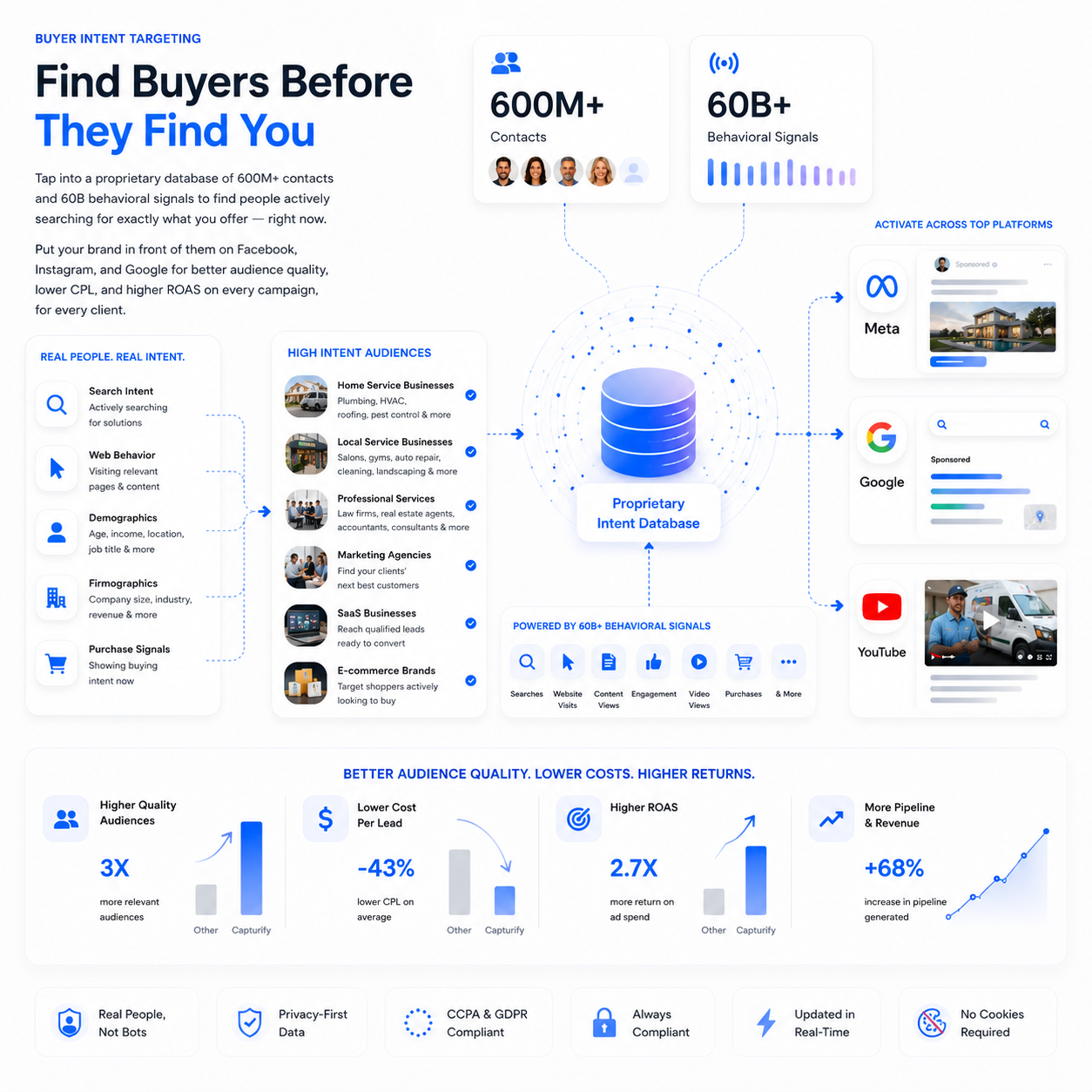
The platform has a broader scope than website tracking alone.
Buyer Intent Targeting lets businesses build audiences based on current online interests and behavioral signals, including a rolling 30-day intent window. Those audiences can then be used for paid media activation through Meta and Google.
After a website visitor leaves, Capturify can put the identification data to work through automated follow-up. Depending on the plan and connected tools, that may include email campaigns, CRM workflows, advertising, phone outreach, or direct mail.
Capturify is ideal if you want visitor tracking to feed directly into lead generation rather than live in another analytics dashboard.
Best Features
- Real-time visitor identification: Capturify matches anonymous website traffic against its identity data to reveal individual visitors as activity happens. The company reports identification of up to 60% of anonymous traffic.
- Detailed visitor profiles: Identified records can include contact data along with demographic and behavioral information, so your team has greater context than a raw IP address or company name.
- Buyer intent targeting: You can target people based on recent online interests and behavior before they visit your website. Capturify currently lists more than 40,000 interest-based keywords for targeting.
- Automated revenue recovery: Identified visitors who leave without converting can enter follow-up workflows based on their profile and website activity.
- Advertising integrations: Capturify connects with Meta and Google Ads, allowing businesses to bring visitor and intent data into paid media campaigns.
- CRM and marketing connections: Integrations include platforms such as HubSpot, Salesforce, GoHighLevel, Klaviyo, and Mailchimp.
Pros
- Supports individual-level visitor identification
- Combines website tracking with intent targeting
- Built for B2C as well as B2B use cases
- Supports multichannel follow-up
- Starts at a comparatively accessible price point
Get 500 free leads with Capturify and start turning anonymous website traffic into people you can actually reach.
2. RB2B
RB2B is website visitor identification software built to reveal the people and companies visiting a website and route identified prospects into sales workflows.
Person-level identification is one of its most recognizable features. RB2B can provide names, LinkedIn profiles, and validated business email addresses for eligible U.S. traffic. Its company-level identification works globally through a partnership with Demandbase.
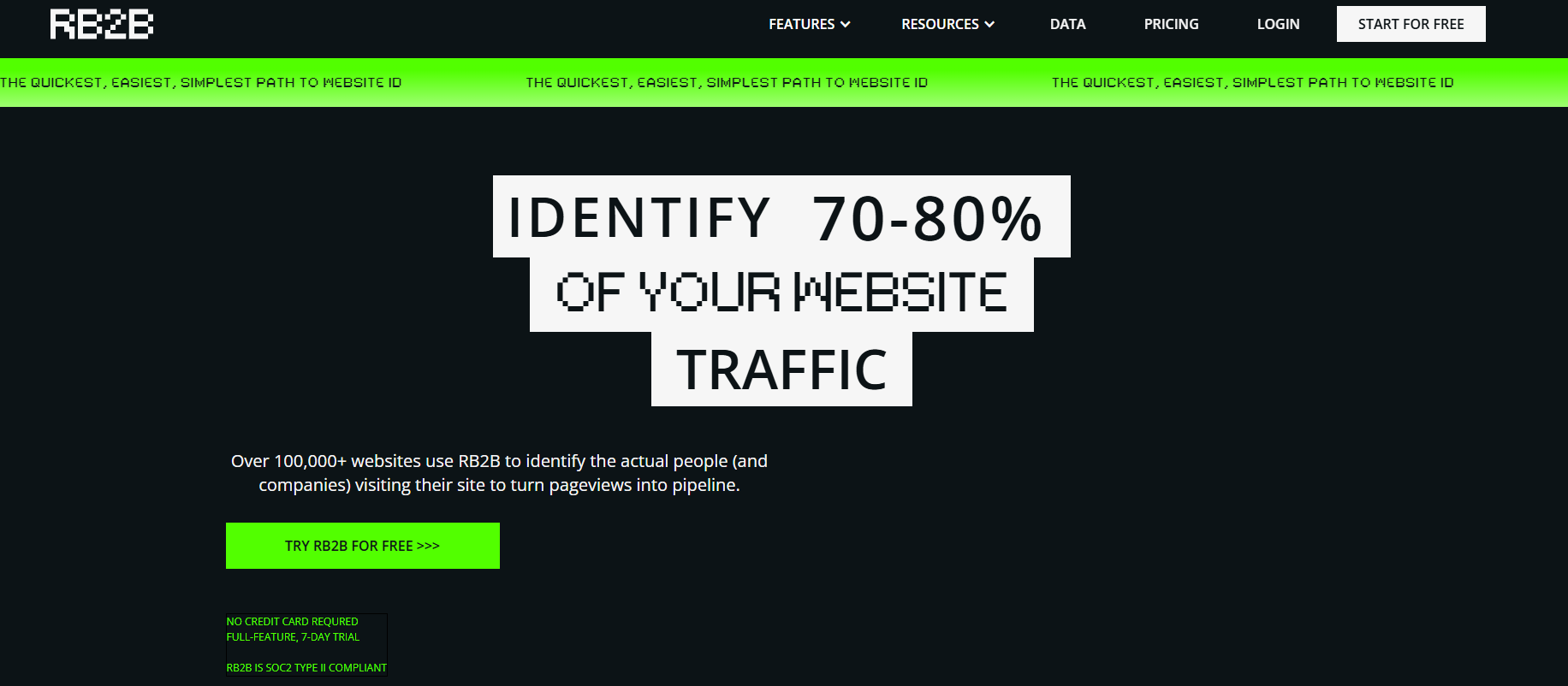
RB2B is designed heavily around sales activation. You install its pixel, define the types of visitors you care about, and then send qualified records into tools your team already uses.
Hot Leads lets you filter visitors using factors such as company size, revenue, seniority, department, category, and geography. A visitor fitting your ideal customer profile could trigger a Slack alert, enter an email sequence, or be pushed into a CRM.
The platform can identify 70% to 80% of website traffic when combining person-level and company-level identification.
Best Features
- Person-level visitor identification: RB2B can reveal names, LinkedIn profiles, and validated business email addresses for eligible U.S. website visitors.
- Global company identification: Company-level identification extends beyond the U.S. to help teams see which businesses are visiting their site.
- Hot Leads filtering: You can narrow visitor data using criteria such as seniority, company size, department, and revenue to surface higher-value prospects.
- Traffic Insights: RB2B shows website activity tied to identified visitors so sales teams can see which pages prospects viewed and how they engaged.
- Sales workflow integrations: Identified visitors can be routed into tools such as Slack, Microsoft Teams, CRMs, Clay, and other automation platforms.
Pros
- Strong fit for outbound sales workflows
- Person-level contact information
- Fast setup
- Free plan available
- Useful filtering and routing controls
3. Warmly
Warmly is an AI-powered website visitor identification and engagement platform that identifies individual B2B visitors and can engage them while they are still browsing your site.
Warmly combines visitor identification with real-time sales action. Its website visitor identification software can reveal details such as a visitor's name, work email, job title, company, and LinkedIn profile when a match is available.
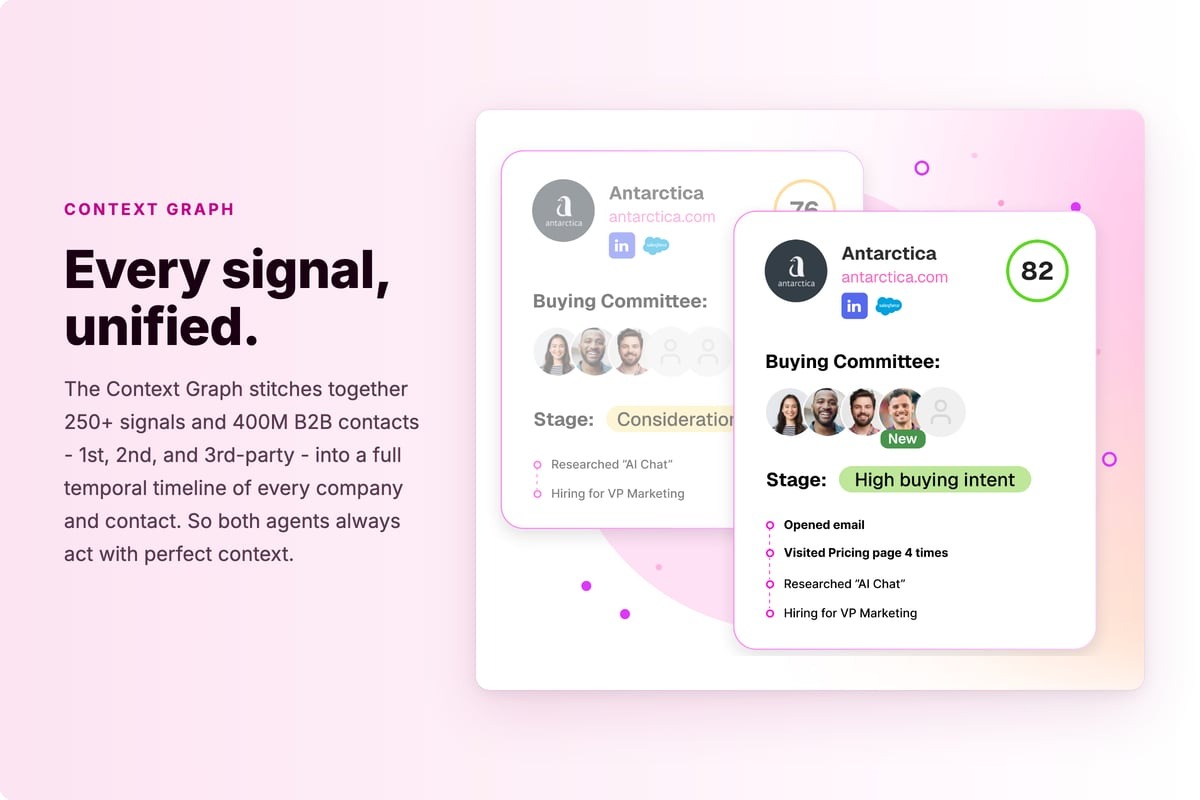
Website activity can then feed AI-powered engagement. For example, a high-intent visitor could be routed toward AI chat or an email workflow based on what the platform knows about the person and their behavior.
Its identification, lead enrichment, scoring, and engagement process can run in under three seconds.
The combination makes Warmly interesting for B2B website teams that want to interact with prospects during an active research session. You are not limited to studying visitor tracking data later.
Best Features
- Person-level B2B identification: Warmly can reveal details such as a visitor's name, work email, job title, company, and LinkedIn profile when a match is available.
- Real-time AI engagement: High-intent website visitors can be engaged while they are actively browsing through AI-powered website conversations.
- Contact and company enrichment: Warmly adds additional information to identified visitors so teams have more context before taking action.
- Behavior-based intent signals: Website activity can help indicate which visitors are showing stronger buying intent and may deserve faster follow-up.
- Automated sales activation: Qualified visitors can be routed to sales reps or placed into email and outreach workflows based on predefined criteria.
Pros
- Strong real-time engagement capabilities
- Identifies individual contacts
- Good fit for B2B sales teams
- Combines identification with AI chat
- Supports automated follow-up
4. Dealfront / Leadfeeder
Leadfeeder is Dealfront's website visitor tracking product for identifying companies that visit a website and analyzing what those companies do during their sessions.
The platform installs through a JavaScript Web Visitors Tracker. It analyzes technical signals such as an IP address, matches the visit against company databases, and enriches the result with firmographic information.
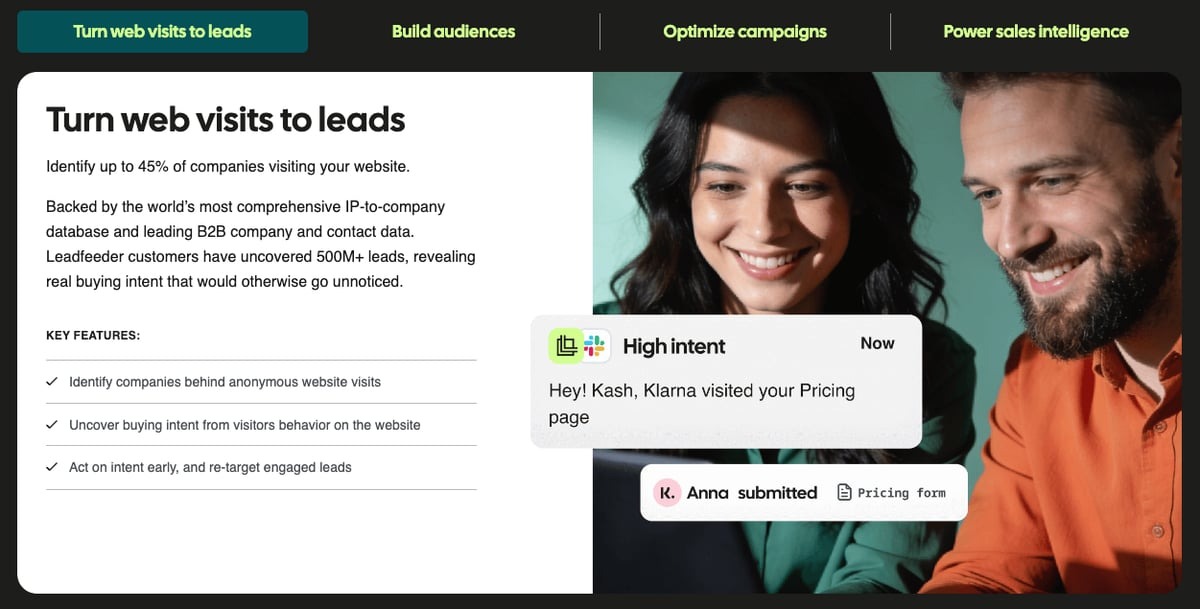
Leadfeeder primarily works at the company level. For an identified business, you can review traffic source, pages viewed, visit timing, and the length of the session. Data generally appears within five to ten minutes.
Those signals can help sales reps recognize companies already researching their offering. Filters and feeds make it easier to separate relevant accounts from routine website traffic, while Dealfront's broader data products can help teams find contacts connected to the identified business.
Best Features
- Company-level visitor identification: Leadfeeder identifies businesses behind anonymous website visits using its Web Visitors Tracker and company data.
- Website activity tracking: Teams can review information such as pages viewed, traffic source, visit timing, and session length for identified companies.
- Custom visitor feeds: Filters let you create targeted feeds around specific company characteristics or website behaviors.
- Company and contact intelligence: Dealfront can enrich identified businesses with additional firmographic information and relevant contact data.
- CRM integrations: Visitor insights can be connected with sales systems so reps can incorporate website activity into their existing workflows.
Pros
- Established B2B visitor tracking product
- Clear company-level website insights
- Free version available
- Useful filtering capabilities
- Works well alongside Google Analytics
5. Lead Forensics
Lead Forensics is a B2B website visitor identification platform that reveals which businesses are visiting your website and combines those visits with company information and behavioral context.
The product centers heavily on anonymous website visitor identification at the organization level. A tracking snippet captures session information, and Lead Forensics matches IP data against its proprietary B2B IP database.
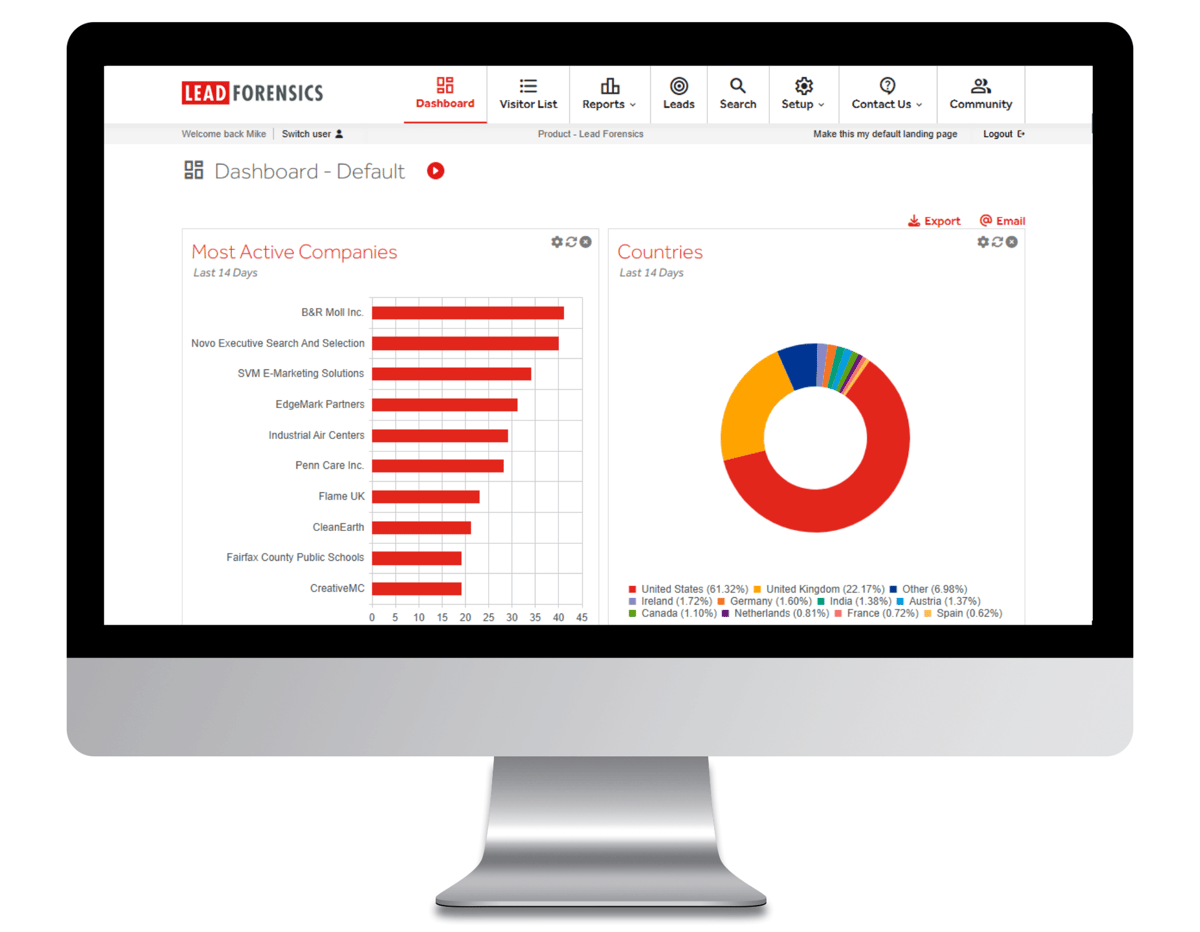
Once a company has been identified, you can see information such as its industry, location, size, pages viewed, visit frequency, and session duration. Available decision-maker contact details can give sales teams a route from website activity to outreach.
Real-time alerts can flag target businesses when they appear on your website. Teams can then prioritize companies showing stronger intent signals, including repeat visits or activity on high-value pages.
Generally, Lead Forensics is geared toward B2B organizations that place a high priority on data accuracy and company identification.
Best Features
- B2B IP identification: Lead Forensics uses its proprietary database to match anonymous website traffic with identifiable businesses.
- Detailed visitor history: Teams can review pages viewed, visit frequency, session duration, location, and other behavioral data tied to an identified company.
- Decision-maker contact data: Available contact information can help sales reps identify people associated with companies showing interest.
- Real-time alerts: Notifications can flag target businesses when they visit your site, which can give sales teams an opportunity to respond sooner.
- CRM workflow support: Visitor information can feed into connected sales systems to help teams organize follow-up and account activity.
Pros
- Built specifically for B2B visitor identification
- Strong company-level data focus
- Detailed visitor sessions
- Useful for enterprise sales teams
- One-week free trial available
6. Leadinfo
Leadinfo is B2B lead generation and visitor identification software that identifies companies visiting your website and helps your team reach potential buyers from the same platform.
Leadinfo turns anonymous website traffic into company profiles and buying intent signals. After identifying a business, the platform can surface decision-makers and provide contact details that sales teams can use for outreach.
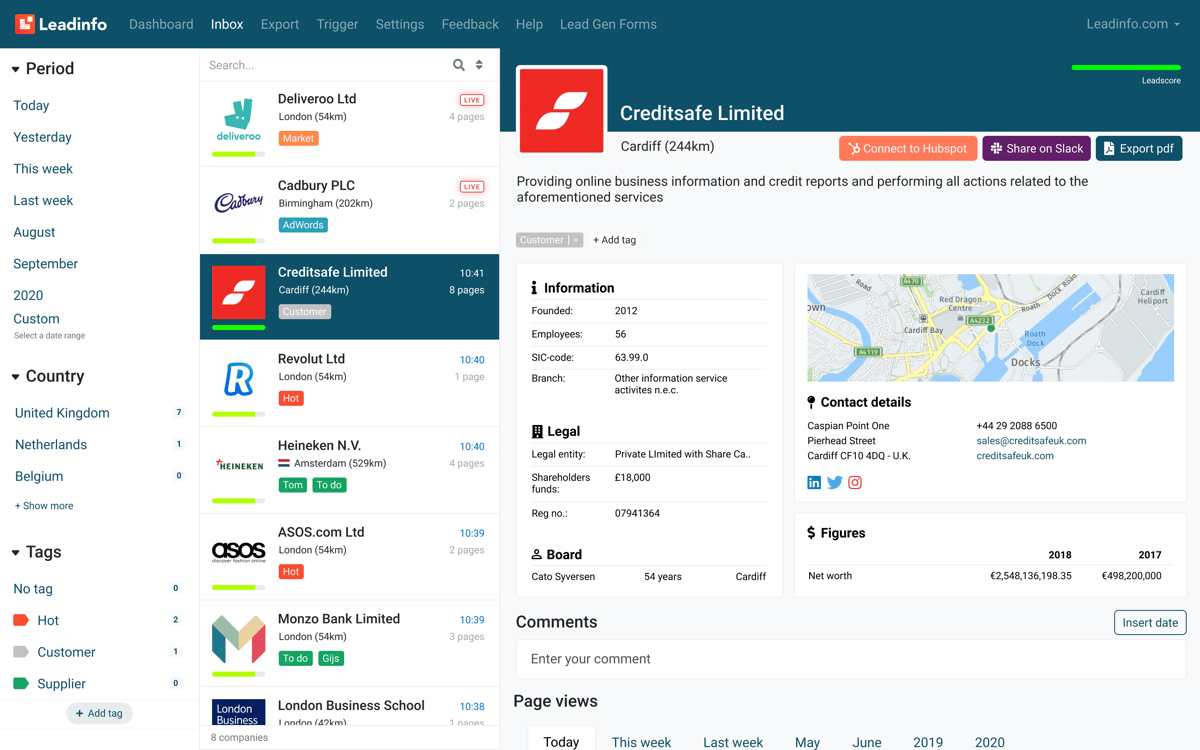
The built-in outreach functionality gives Leadinfo a slightly different flavor from a visitor tracking tool focused purely on analytics. Teams can create multichannel campaigns and send visitor information into connected sales systems.
Leadinfo currently offers more than 70 integrations, including common CRM and marketing tools. It connects with platforms such as Salesforce, HubSpot, Pipedrive, LinkedIn Ads, Slack, Microsoft Teams, and Google Analytics.
Best Features
- Real-time company identification: Leadinfo reveals businesses visiting your website and turns anonymous traffic into recognizable company profiles.
- Buying intent insights: Website activity helps teams see which companies may be showing stronger interest based on the pages they visit.
- Decision-maker discovery: Leadinfo can surface relevant people and contact details associated with identified companies.
- Multichannel outreach: Teams can move from identification into outreach through campaigns and connected sales tools.
- Broad integration support: Leadinfo connects with more than 70 tools, including Salesforce, HubSpot, Pipedrive, Slack, Microsoft Teams, and Google Analytics.
Pros
- Identification and outreach in one platform
- Broad integration selection
- Helpful for European B2B companies
- Free 14-day trial
- Flexible traffic-based pricing
7. Albacross
Albacross is a B2B intent and website visitor identification platform that reveals companies researching your business and turns their activity into signals for sales and marketing automation.
The platform identifies companies visiting your site and enriches each account with firmographic information. Albacross can then evaluate more than 100 buying intent signals to help teams judge which visitors deserve attention.
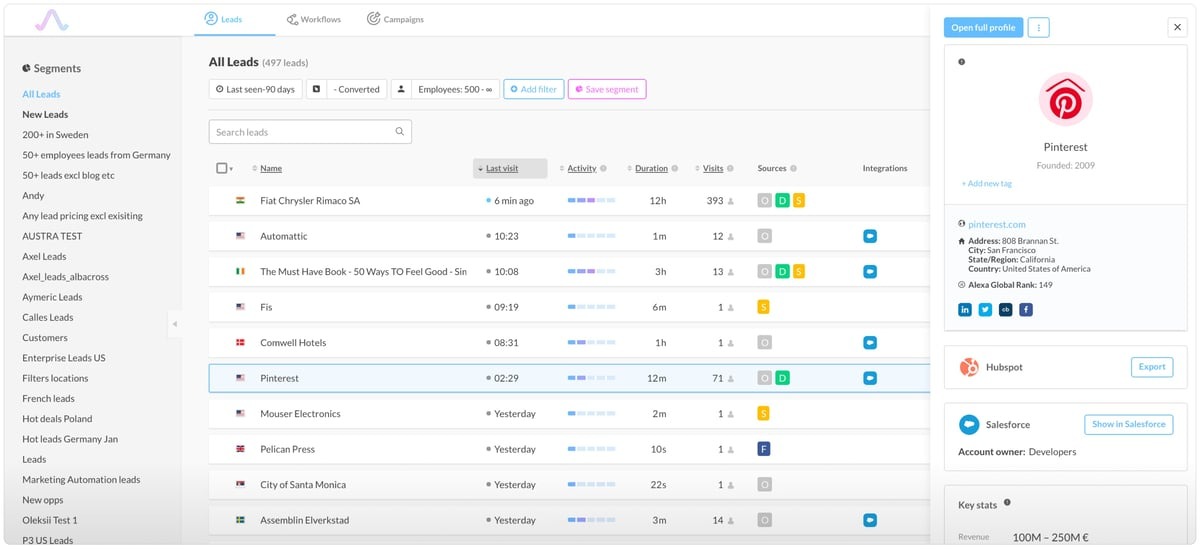
Its tracking strategy covers activity beyond a simple list of website visits. Albacross supports on-site and off-site intent, account scoring, audience segmentation, and automated actions triggered through connected GTM tools.
For account-based marketing teams, those capabilities can help connect anonymous website activity to existing target accounts. A company showing renewed interest can enter an outreach workflow or become part of a more targeted marketing campaign.
Best Features
- Company-level identification: Albacross reveals which businesses are visiting your website and enriches them with firmographic information.
- Buying intent signals: The platform evaluates more than 100 signals to help teams recognize accounts that may be actively researching a purchase.
- Account scoring: Companies can be prioritized based on fit, behavior, and intent so teams know where to focus attention.
- Audience segmentation: Marketing teams can group identified accounts based on characteristics or engagement for more targeted campaigns.
- Automated GTM workflows: Website activity and intent data can trigger actions inside connected sales and marketing systems.
Pros
- Strong intent-data capabilities
- Designed for B2B use
- Useful for ABM programs
- Automation built around visitor signals
8. Vector
Vector is a B2B identity and advertising platform that reveals named website visitors and turns contact-level intent into advertising audiences and sales-ready data.
Vector takes an interesting approach to visitor identification because paid media activation plays a major role in the product. Its Reveal product can de-anonymize site visitors into information such as name, title, and company, then sync those records into Salesforce or HubSpot.
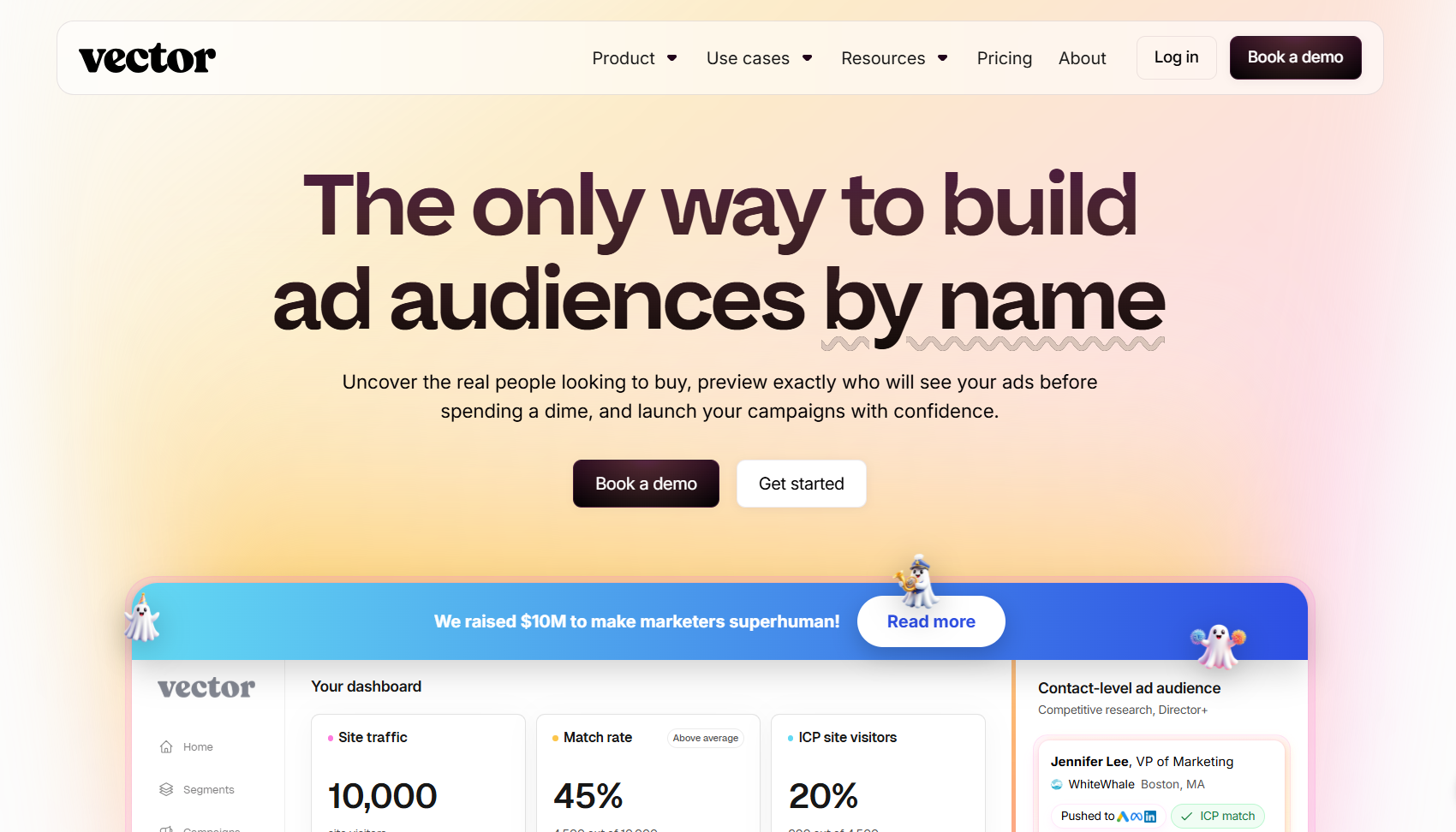
The platform's visitor feed gives marketers a view of individual visitors and the accounts behind them. Teams can build segments around behaviors or ICP criteria, then use those groups for paid media campaigns.
Vector's Target product extends the concept further by creating contact-level advertising audiences. Its current site shows support for channels including Google Ads, Meta, LinkedIn, and Reddit in different audience workflows.
That makes Vector relevant when your marketing strategy connects website behavior closely to advertising. A known visitor does not have to move directly into sales outreach. The same behavioral signal can shape who sees the next ad.
Best Features
- Person-level visitor identification: Vector's Reveal product can de-anonymize website visitors into contact information such as name, title, and company.
- Visitor feed: Teams get a contact-level view of website activity, so it's easier to see who is visiting and how they are engaging.
- ICP-based segmentation: Visitors can be grouped based on ideal customer profile criteria and website behavior.
- Paid media activation: Identified contacts can be turned into advertising audiences for channels such as Google Ads, Meta, LinkedIn, and Reddit.
- CRM syncing: Visitor data can flow into platforms such as Salesforce and HubSpot so sales teams can use it in existing workflows.
Pros
- Strong connection between intent and advertising
- Contact-level identification
- Built for B2B marketers
- Salesforce and HubSpot integrations
9. Snitcher
Snitcher is a B2B visitor identification and go-to-market platform that identifies companies behind anonymous website visits and helps teams act on their buying intent.
Its platform follows website visitors, identifies in-market companies, and records what those businesses are interested in. Snitcher can then trigger workflows based on visitor activity, bringing web behavior into sales, marketing, and RevOps processes.
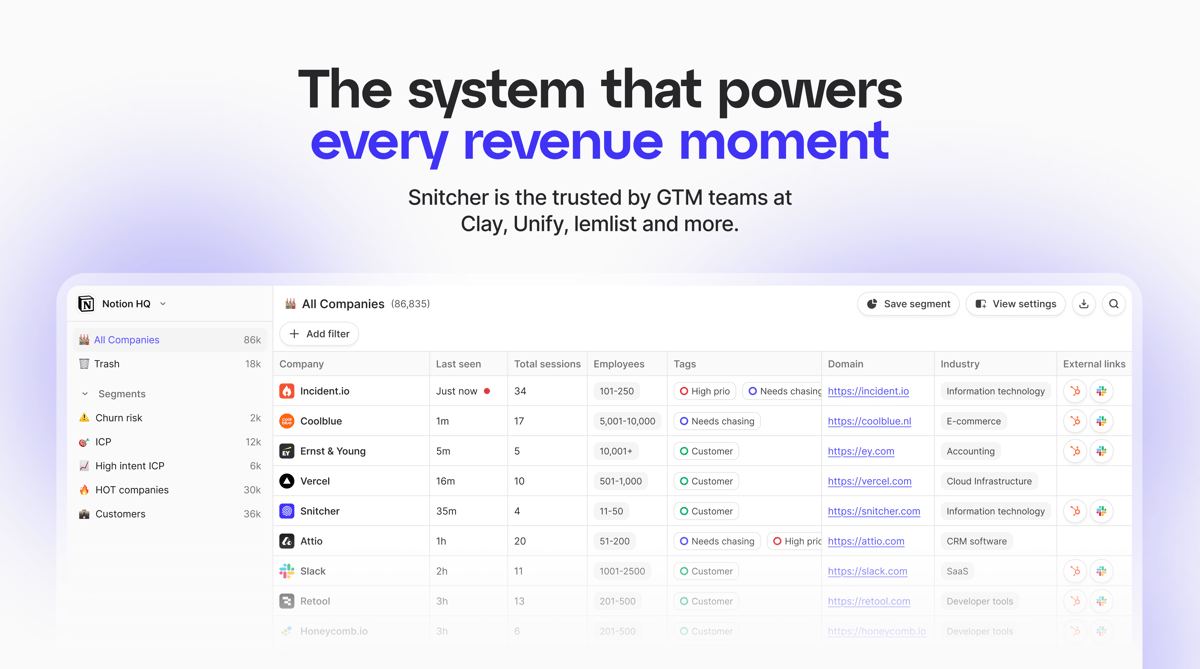
Company-level identification forms the foundation of the product, but Snitcher can provide contacts associated with those accounts too. Verified contact information can be sent into your CRM alongside live intent data, which gives sales reps useful context before outreach.
Snitcher includes tools for account scoring, contact reveal, GA4 enrichment, marketing attribution, and workflow automation. Developers can use its IP-to-company API when they want to bring identification into their own systems.
Best Features
- B2B company identification: Snitcher identifies companies behind anonymous website traffic and connects those visits with account information.
- Live intent data: Teams can see what identified businesses are viewing and use website behavior to gauge buying interest.
- Contact reveal: Snitcher can surface verified contact information associated with identified companies for potential outreach.
- Workflow automation: Visitor activity can trigger actions in connected sales, marketing, or RevOps systems.
- GA4 enrichment: Snitcher can enrich Google Analytics 4 data with company information, giving teams more context around website traffic.
Pros
- Straightforward visitor identification
- Strong automation options
- Useful for sales and RevOps
- Flexible traffic-based pricing
Turn More of Your Existing Traffic Into Customers With Capturify
Choosing the best website visitor tracking software comes down to what you want to happen after someone visits your site.
Company-focused tools like Leadfeeder, Lead Forensics, Leadinfo, Albacross, and Snitcher can help B2B teams identify businesses showing interest. RB2B and Warmly push further into person-level visitor identification, while Vector connects visitor identity closely with advertising.
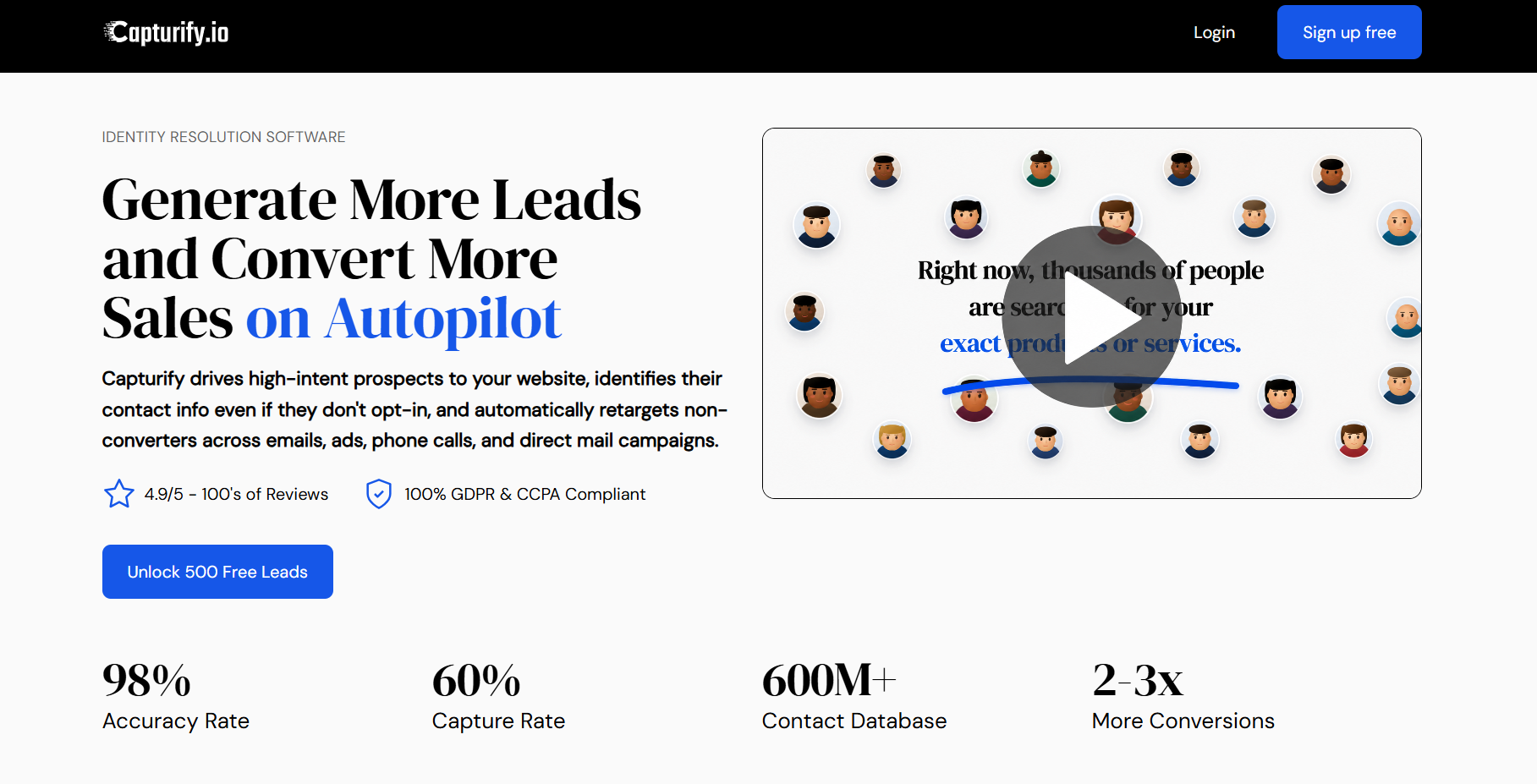
Capturify gives you another option if you want to identify individual website visitors and take action throughout a broader marketing funnel.
You can reveal anonymous visitors in real time, use recent buying intent to find potential customers before they arrive, and activate identified audiences through channels including Meta and Google Ads.
Capturify can then send visitor information into connected marketing and sales systems for continued follow-up.
What you get is a website tracking setup built around conversion rather than reporting alone.
If you want to see how many unknown visitors your current traffic could be turning into usable leads, choose Capturify.
FAQs About Website Visitor Tracking Software
Can I track visitors to my website?
Yes. Website tracking tools can record visitor sessions, traffic sources, pages viewed, repeat visits, and other website behavior. Website visitor identification software can go further by connecting anonymous traffic to identifiable companies or, in some cases, individual visitors. Available data depends on the provider, traffic type, and privacy requirements.
What is the best website visitor identification software?
The best website visitor identification software depends on the visitors you want to identify and how you plan to use the data. Capturify is a strong option for individual visitor identification, buyer-intent targeting, and marketing activation.
What is the best website tracking tool?
The best website tracking tool depends on your objective. Google Analytics works well for traffic trends and aggregate user behavior, while a visitor identification tool is better for connecting anonymous traffic with potential buyers. For lead generation, look for tracking software with actionable insights and integrations for sales or marketing workflows.
What is the best visitor management software?
Visitor management software usually refers to tools for managing physical guests at offices or other locations. For online traffic, look for visitor tracking or website visitor identification software. Those platforms can help you understand web visits, identify anonymous website traffic, and give sales and marketing teams useful data for follow-up.