
Getting people to your website is only half the battle. Traffic can look great in an analytics dashboard, but visits alone do not generate revenue.
Think about how many times a potential customer might land on a product page or come back several times without taking the next step. If that keeps happening, you need to look at what is stopping people from moving forward.
Bounce rate can offer one useful clue. Contentsquare reports that average bounce rates can range from 26% to 70% for most websites, depending on factors like industry, traffic source, and content type.
So, how do you turn more of your existing traffic into actual customers?
Learning how to convert website visitors into customers starts with understanding what brought people to your site, where they lose interest, and what could make the next step feel easier.
Improving those points can help you increase conversion rates before you spend more money trying to attract additional traffic.
TL;DR
- Understand what visitors want, remove friction from the experience, and give them a clear next step toward conversion.
- Improve the basics first. Clear messaging, strong calls to action, social proof, and a smoother user experience can help more visitors take action.
- Use visitor behavior to guide your strategy. Look at browsing behavior, repeat visits, high-intent pages, and other signals to see where interest is strongest.
- Keep the conversation going. Retargeting ads, personalization, and email campaigns can bring returning visitors back when they are closer to making a decision.
- Capturify helps you act on existing demand. Identify anonymous website visitors, uncover buyer intent, and activate high-intent audiences through channels like email and paid advertising. Start your 14-day free trial today.
What Does It Mean to Convert Website Visitors Into Customers?
Converting website visitors means moving someone from browsing your site toward a meaningful action that eventually generates revenue.
For an ecommerce business, the conversion might be a first purchase. Or a service company may want prospective customers to request a quote or book an appointment. SaaS companies may focus on trial registrations or demo requests.
Common website conversions include:
- Completing a purchase
- Booking an appointment
- Requesting a quote
- Starting a free trial
- Creating an account
- Joining an email list
- Contacting your sales team
It's a given fact that not every visitor will become a paying customer during their first visit. The customer journey can involve several interactions before someone feels comfortable taking the next step.
Still, your website can support each stage by helping potential customers understand your offer and find a clear path toward conversion.
Why Website Visitors Leave Without Converting
Visitors leave websites for plenty of reasons. Some common causes include:
- Unclear messaging: Visitors cannot quickly figure out what you offer or why they should choose your business.
- Poor user experience: Confusing navigation, broken pages, or difficult mobile layouts can push interested users away.
- Slow performance: Pages that fail to load quickly can increase your bounce rate before someone even sees your offer.
- Weak trust signals: A visitor may hesitate if there are few reviews, testimonials, guarantees, or other signs that your company is credible.
- Too much friction: Long forms, complicated checkout flows, and unnecessary steps can make people abandon the process.
- Wrong visitor intent: Some visitors may be researching a topic without having any immediate intention to buy.
How to Convert Website Visitors Into Customers
Turning website visitors into customers usually requires several improvements working together. Start with the places where visitors show the most interest or where you see the biggest drop-off, then work outward from there.
Small changes can make a noticeable difference when they remove hesitation or make the next action easier. We've compiled a few actionable steps you can start implementing today:
1. Understand What Your Visitors Are Looking For
Start with user intent.
For example, someone reading an educational article may want information, and a visitor repeatedly checking your pricing page probably has a different level of interest. Treating both visitors the same can lead to irrelevant messaging.
Visitor behavior analytics tools can help you understand browsing behavior through signals such as:
- Pages viewed
- Time spent
- Traffic source
- Repeat visits
- Exit pages
Look for patterns that reveal what keeps users engaged. For instance, repeat visitors spending time on product descriptions may be closer to making a decision than new users landing on an introductory blog post.
Search terms can also reveal useful pain points. If visitors regularly reach your site after searching for a specific problem, your homepage content and landing pages should speak directly to that need.
Remember: Strong conversion rate optimization starts with understanding what visitors came to accomplish.
2. Improve Your Website User Experience
A visitor should be able to move around your website without having to figure out where everything is located. Things like clear menus, readable pages, and prominent next steps make the experience feel easier.
Pay attention to basic usability issues, such as slow loading times or buttons that are difficult to use on mobile devices. A poor user experience can quickly push people away. In fact, as many as 88% of online consumers say they are less likely to return to a website after a bad experience.
Your highest-traffic pages are a good place to start. Look for areas where users leave unexpectedly or spend very little time, then review what might be creating unnecessary friction.
3. Make Your Value Proposition Clear
Visitors should understand what you sell and why it is useful within a few moments of landing on an important page.
Vague marketing copy often creates unclear messaging. Phrases such as "innovative solutions" can sound polished without telling the reader what the business actually does.
On the flip side, a clear value proposition should answer questions like:
- What do you offer?
- Who is it for?
- What problem does it solve?
- Why should someone choose you?
Keep the message specific. For example, "Software that helps plumbing companies schedule jobs and follow up with missed leads" gives a prospective buyer more useful information than "A smarter platform for business growth."
Supporting copy can go deeper into features and additional benefits. However, the main message still needs to be crystal clear.
4. Use Strong Calls to Action
A visitor can be interested in your offer and still leave if the next step is unclear. Calls to action give people a direct line toward the action you want them to take.
Good CTAs usually match the visitor's stage of interest. Someone reading a beginner guide may not be ready to buy, but they might download a resource or subscribe to an email list. Someone reviewing pricing may respond better to a demo or purchase CTA.
Examples include:
- Start your free trial
- Get a quote
- Book a demo
- See pricing
- Shop now
Avoid putting too many competing actions in the same area. Several equally prominent buttons can create hesitation. Placement also plays a role. Put important CTAs near relevant content so visitors do not have to hunt for the next step.
5. Build Trust With Social Proof
Buying from an unfamiliar company can feel risky, especially if a visitor has never heard of your brand before. Social proof helps reduce that perceived risk by showing that real customers have already had a positive experience.
The strongest trust signals usually give visitors something concrete to evaluate, such as:
- Customer reviews: Show what buyers liked about the product or service and give prospective customers a sense of what to expect.
- Detailed testimonials: Add context around the problem a customer had and the result they experienced.
- Case studies: Work well for higher-consideration purchases because they can show how your business helped solve a specific challenge.
- Ratings and client logos: Provide quick visual reassurance, especially near important conversion points.
Placement also makes a difference. Ecommerce websites can put verified reviews close to product descriptions, while service businesses can feature testimonials near booking or quote forms.
Pro tip: Keep your strongest social proof close to the places where visitors are most likely to hesitate. That can make the next step feel less risky and easier to take.
6. Reduce Friction in Forms and Checkout
Every extra step creates another opportunity for someone to leave. Forms are a common source of friction, especially when visitors are asked for too much information before they have built much trust.
Only request what you genuinely need at that stage. For example, a consultation form may only require a name, email address, and short description of the request. Additional qualification questions can come later.
Checkout deserves the same attention. Baymard Institute found that 39% of shoppers abandon checkout because of additional costs such as delivery charges and taxes, while 19% leave when they are forced to create an account.
Make pricing and requirements clear before the final step, and remove unnecessary barriers where you can.
You can also offer incentives when they make sense. A discount code for a first purchase may encourage hesitant window shoppers to act, although frequent discounting can train customers to wait for lower prices.
7. Identify Anonymous Website Visitors
Most website visitors never fill out a form, which means a large share of your traffic can disappear without giving you a direct line for follow-up.
Anonymous visitor identification helps you recover more context from those sessions. Capturify can identify a portion of anonymous website visitors and connect available identity data with additional profile information, which gives you a clearer view of who is showing interest.
You can use that data to look at signals such as:
- Repeat visits
- High-intent page activity
- Time spent on key pages
- Browsing behavior tied to specific interests
Capturify can also help you move beyond identification. Once a visitor is matched, you can build audience segments, sync data into your CRM, and activate those audiences through channels like email, Meta, Google, or direct mail.
For example, someone who repeatedly visits a pricing page but never fills out a form may still be worth prioritizing for follow-up.
8. Use Buyer Intent to Find High-Intent Visitors
Buyer intent can help you distinguish casual browsing from activity that suggests stronger purchase interest.
A single homepage visit may tell you very little. On the other hand, repeated visits to pricing or service pages can offer a stronger signal, particularly when the activity happens over a short period.
Useful intent signals may include:
- Returning to high-intent pages
- Comparing multiple solutions
- Spending significant time on product content
- Repeated visits within a short window
Capturify also provides intent targeting that can help businesses find people researching relevant topics beyond their own website.
Buyer intent gives sales and marketing teams another way to prioritize attention. Someone showing strong interest may deserve faster outreach or more relevant content, while an early-stage visitor may be better suited to a lighter nurture sequence.
9. Personalize the Visitor Experience
Personalization works best when it helps visitors find something relevant faster. You can use signals such as browsing history, referral source, or previous interactions to shape what someone sees next.
For example, an ecommerce store might show returning visitors products they viewed earlier. A software company could adjust landing page messaging based on the campaign that brought someone to the site.
Dynamic content can also help match the page more closely to user intent, but keep the experience simple. Too many pop-up messages or constant changes can feel distracting rather than useful!
Focus on a few moments where relevant messaging can make the next step easier. Returning visitors may benefit from content tied to pages they already explored, while new visitors may need a clearer introduction before they are ready to act.
Good personalization should feel natural, useful, and connected to what the visitor has already shown interest in.
10. Retarget Visitors Who Leave
Many interested visitors will leave before converting, but retargeting ads give you another opportunity to reach people after they leave your website.
Campaigns can focus on previous visitors and show ads based on their earlier interest. For example, someone who viewed a specific service page could later see an ad related to that service, which can make the message feel more relevant than a general promotion.
Segmentation can make retargeting more relevant too. Someone who spent a few seconds on a blog post may deserve different messaging from a visitor who reached checkout.
You should also pay attention to frequency. Showing the same ad constantly can become irritating rather than persuasive, so keep the experience useful and connected to the visitor's browsing behavior.
Retargeting is a powerful tool when the ads reflect what the visitor actually cared about during the original visit and give them a clear reason to come back.
11. Follow Up With Interested Prospects
Some visitors need several interactions before becoming customers, so follow-up can help keep the conversation going after the initial visit.
The best approach depends on what the visitor already did. Useful options include:
- Send relevant content: Share resources that match the visitor’s original interest and help answer the questions they may still have.
- Follow up after a request: If someone asked for information or an estimate, send a timely message explaining what happens next.
- Remind shoppers about products: Email campaigns can bring people back to items they viewed or left in their cart.
- Adjust timing based on intent: High-intent activity may call for faster outreach, while early research may be better suited to a slower nurture sequence.
Keep the messaging connected to the visitor’s behavior rather than sending the same follow-up to everyone.
A useful follow-up gives returning visitors a reason to come back when they are ready to make a decision. Over time, that can help turn new customers into loyal customers.
12. Test and Improve Your Conversion Funnel
Conversion work does not end after one website update. First impressions can change as your audience, offers, and digital marketing strategy evolve, so pages that once performed well may start losing effectiveness over time.
A good next step is to review your main conversion points regularly. Look at metrics such as conversion rates, bounce rate, form completions, and checkout abandonment to see where visitors are moving forward and where they are dropping off.
From there, testing can help you compare changes to elements such as:
- Headlines
- Calls to action
- Form length
- Landing page layouts
- Offer positioning
However, try to change one meaningful element at a time when possible. Testing several major updates together makes it harder to tell what actually influenced the result.
For example, you might test a shorter quote form before redesigning the entire landing page. Resist the pull of instant gratification and give each test enough time to produce useful data.
The ultimate goal is to keep improving the path from visit to conversion based on real customer behavior rather than assumptions.
Turn More Website Interest Into Customers With Capturify
More web traffic can create more opportunities, but existing visitors may already be showing valuable buying interest.
Capturify helps businesses identify anonymous website visitors, uncover buyer intent, and turn that information into actionable audiences.
You can use visitor and intent data to find prospective customers, prioritize stronger signals, and activate audiences through channels such as email and paid advertising.
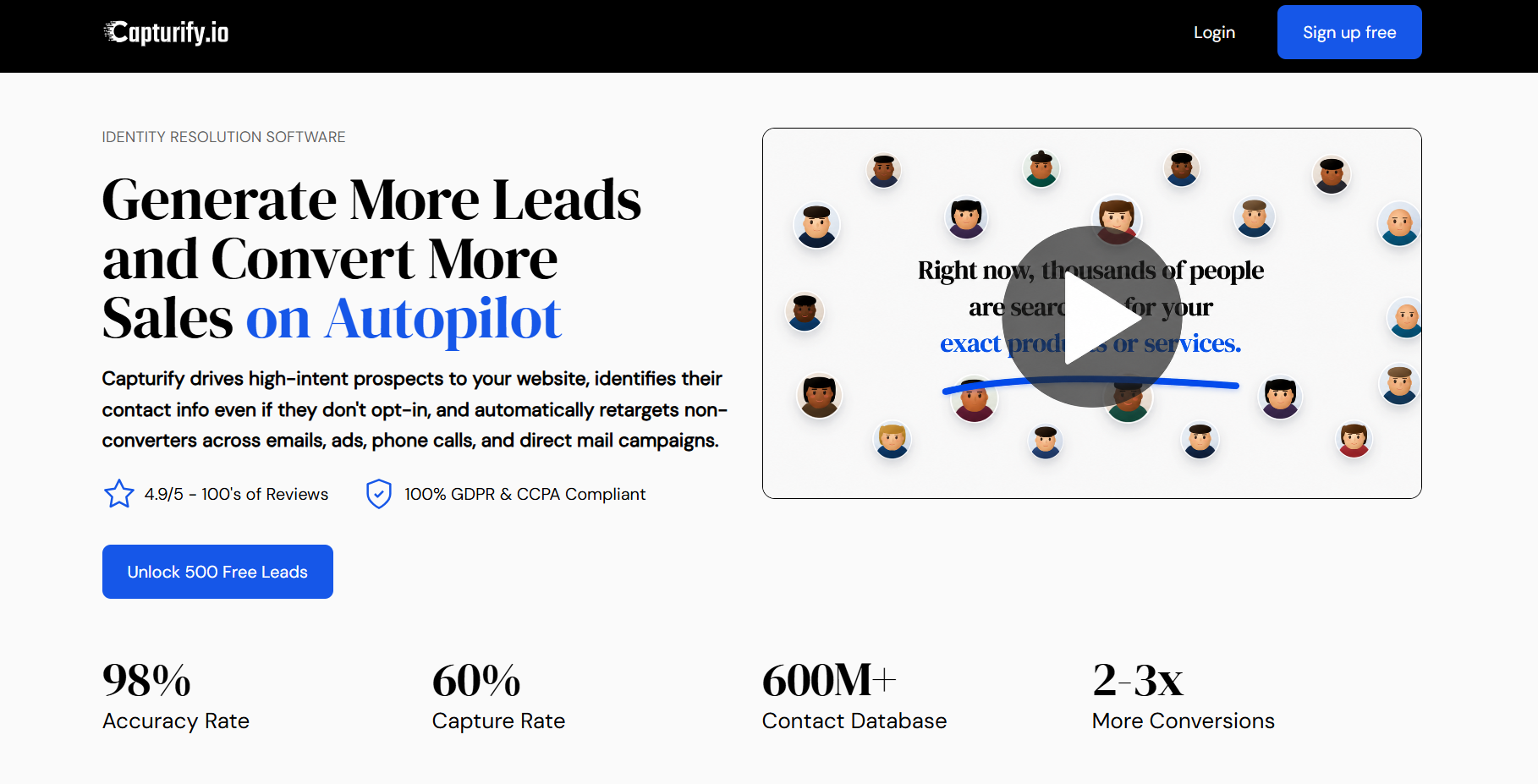
The platform can also help you reach high-intent leads beyond the people already visiting your site, giving you another route to new customers without depending entirely on additional traffic.
Connecting those signals with your existing marketing strategy can help you follow up with people while their interest is still fresh.
If you want to convert more website visitors into customers, start with the demand you already have.
Unlock 500 free leads with Capturify now.
FAQs About How to Convert Website Visitors Into Customers
How to turn viewers into customers?
Start by understanding what visitors came to your website to find, then make the path to action simple. Clear messaging, strong calls to action, social proof, and a smooth user experience can improve conversions. Visitor identification, buyer intent, retargeting, and follow-up campaigns can also help you reconnect with people who leave before purchasing. Focus first on the points where visitors hesitate or abandon the process so you can convert website visitors without relying entirely on more traffic.
How do I get 1,000 website visitors per day?
Reaching 1,000 daily visitors usually takes a mix of traffic sources. Search engine optimization can build organic traffic over time, while paid advertising can increase visits faster. Social media, referrals, and email marketing can also drive traffic when they fit your audience. Before chasing higher volume, check how well your current traffic converts. More visitors will not help much if a poor user experience or unclear offer is limiting sales.
Why am I getting website visits but no sales?
High traffic with few sales can point to several issues. Your visitors may not match your ideal audience, or your offer may be unclear. Pricing concerns, weak product descriptions, missing trust signals, slow pages, and checkout friction can also contribute to lost sales. Review where visitors leave and use analytics tools to identify drop-off points. Improving those areas can be more effective than simply trying to attract more visitors.
How to retarget website visitors?
Retargeting usually starts with adding the required advertising platform tracking to your website and building audiences based on visitor activity. You can create segments around behaviors such as viewing a product, visiting a pricing page, or abandoning checkout. Retargeting ads can then use relevant messaging tied to that previous interest. Visitor identification and intent data can also provide more context for follow-up outside traditional ad retargeting.