
Most buyers do their research long before ever speaking to sales. That’s why intent data marketing is so powerful. It helps sales and marketing teams reach high-intent prospects at exactly the right moment.
However, to act on that data, you need the right tools.
Intent-based marketing tools track buyer intent signals across websites, keywords, and platforms.
They reveal important information like which companies are in market, what they’re researching, and when to engage, so your marketing efforts are sharper, your sales process is faster, and your lead generation gets better results.
Looking for one for your business? Here are the top nine tools to help your marketing and sales teams turn intent into revenue.
TL;DR
The top 9 intent-based marketing tools for 2026 are:
- Capturify
- Bombora
- 6sense
- Demandbase
- Leadfeeder
- ZoomInfo Intent
- G2 Buyer Intent
- Breeze Intelligence by HubSpot
- Priority Engine
What Are Intent-Based Marketing Tools?
Intent-based marketing tools help you detect when potential customers are actively researching topics related to your product or service.
These tools monitor data signals across websites, search engines, and third-party platforms to surface buyer intent, which gives your sales and marketing teams the chance to act before competitors do.
Unlike traditional tools that rely mainly on static customer data, intent-based platforms can combine first-party intent data from your own site with third-party intent data collected from external sources.
Intent data sources may include keyword activity, content consumption, website behavior, search intent, and company-level page visits.
The strongest intent data providers focus heavily on data quality so marketing teams can distinguish active intent from weaker or more passive intent signals.
By showing you in-market accounts and high-intent leads, these tools allow you to align your marketing campaigns and sales strategies with actual demand, not guesswork.
9 Best Intent-Based Marketing Tools to Identify and Engage High-Intent Buyers
Whether you're running lead generation campaigns or looking to align sales and marketing around shared goals, these intent-based marketing tools allow your team to act on real-time intent signals.
Here are nine top tools to help you do just that.
1. Capturify
Capturify is an AI-powered intent data and identity resolution platform that helps you identify anonymous website visitors, find high-intent prospects based on recent online behavior, and convert more buyer interest into actionable sales leads.
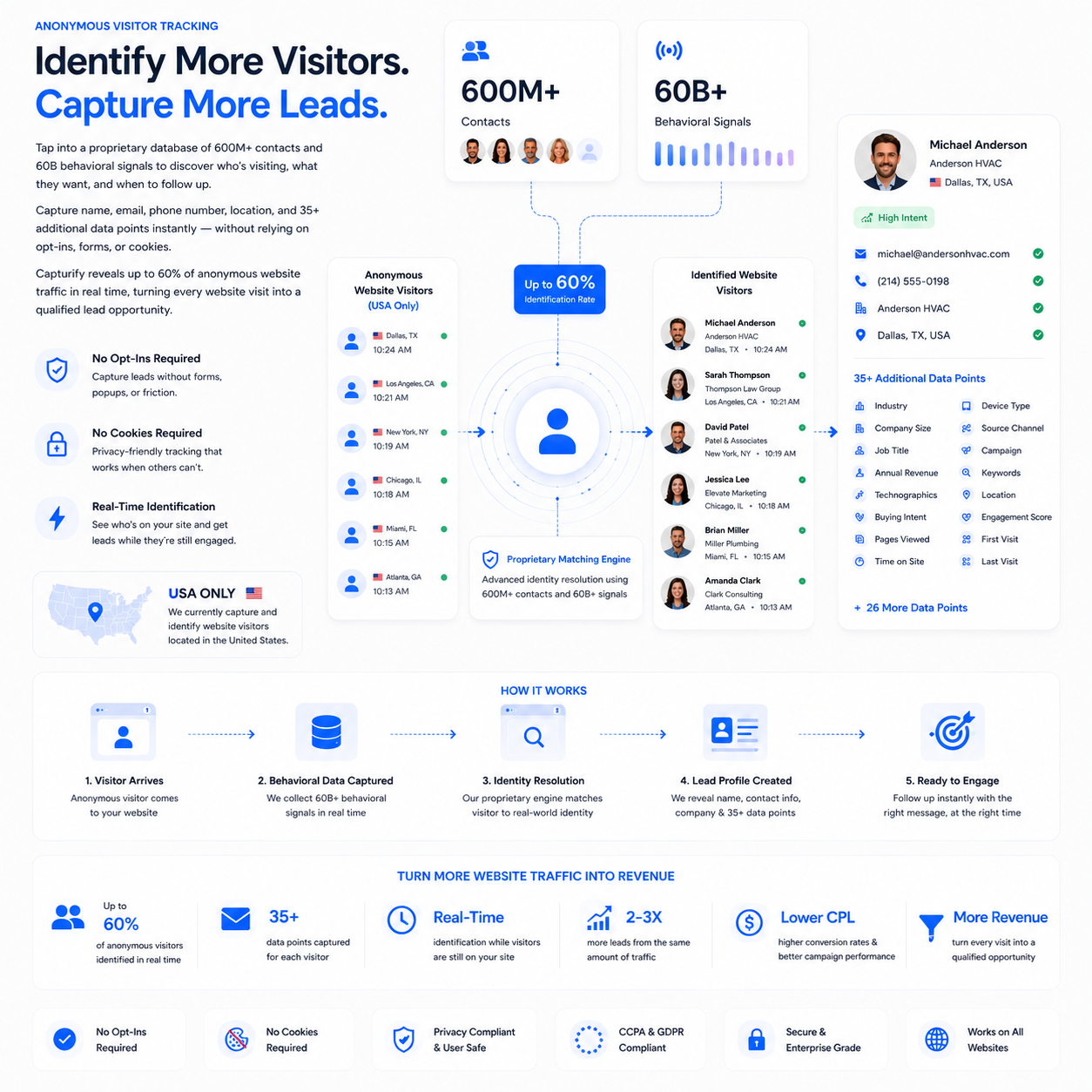
It bridges the gap between unknown website behavior and actionable identity, so your sales and marketing teams can launch more effective, data-driven campaigns by making it easy to:
Identify Website Visitors Showing Intent
Capturify turns anonymous website visitors into named leads by matching behavioral data with accurate contact information. Instead of relying on form fills or outdated lead lists, it can show you which people are already showing purchase intent on your own site.
With access to over 40 unique data points per visitor, your team can uncover behavioral signals, understand visitor activity, and prioritize prospects based on buying intent.
Capture High-Intent Leads Automatically
Using first-party data, identity resolution technology, and data enrichment, Capturify can identify high-intent users from your site traffic. Verified contact data can then give your team a clearer path from website activity to personalized outreach.
Capturify’s buyer intent targeting can go further by helping businesses reach people based on recent interests and online behavior, including prospects who have not visited the website yet. Its Accelerate plan includes more than 40,000 interest-based keywords and a rolling 30-day behavioral window.
That gives your team another way to find high-intent buyers who may be actively in market for relevant solutions.
Align Sales and Marketing With Actionable Insights
Capturify helps marketing and sales teams stay aligned by giving them a shared view of buyer activity. Your sales team can prioritize high-intent leads, while your marketing team can tailor marketing campaigns to match where users are in the buying journey.
You also get real-time website visitor identification, CRM integrations, and audience segments that can be pushed to platforms like Meta and Google for more targeted ads.
Those connections can help move buying signals into CRM records and the rest of your tech stack without creating another disconnected source of customer data.
Why Capturify Stands Out
- Identifies up to 60% of website traffic
- Deep data enrichment with 40+ data points per visitor
- Buyer intent targeting based on recent online interests and behavior
- Integrations with your existing CRM and marketing tech stack
- Audience segmentation for more precise sales outreach and advertising
Capturify is particularly useful if your intent-based marketing strategy includes both finding new high-intent prospects and identifying the anonymous visitors already reaching your site.
Pricing
Capturify offers three main pricing plans:
- Identify: Starts at $97/month. Includes anonymous website visitor identification, 40+ data points per visitor, CRM integrations, and up to 500 lead captures per month.
- Accelerate: Starts at $197/month. Includes everything in Identify, plus buyer intent targeting with 40,000+ interest-based keywords, a 30-day rolling behavioral window, geo-level targeting, and direct Meta and Google Ads integrations.
- Automate: Starts at $447/month. Adds automated email follow-up campaigns with AI-personalized messaging, plus integrations with phone call and direct mail platforms for multi-touchpoint campaigns.
Quarterly billing is available at discounted rates, and plans can be upgraded, downgraded, or canceled as your needs change.
Get started with 500 free leads today!
2. Bombora
Bombora is an intent-based marketing platform that uses third-party data to capture company-level intent signals from its network of B2B content sources.
Its Company Surge product identifies changes in account research activity around relevant topics, helping marketing and sales teams surface accounts that may be actively searching for products or services in their category.
What Makes It a Good Intent-Based Marketing Platform
- Offers category-level intent data across thousands of topics, helping you spot high-intent accounts earlier
- Uses Company Surge data to highlight target accounts showing elevated research activity
- Provides actionable insights and audience data that can move into ad platforms, CRMs, and other workflows
- Gives teams another layer of account intelligence beyond activity happening on their own websites
Pricing
Pricing is not publicly available.
3. 6sense
6sense is an AI-powered account-based marketing (ABM) and sales intelligence platform that monitors digital signals to uncover buyer intent data.
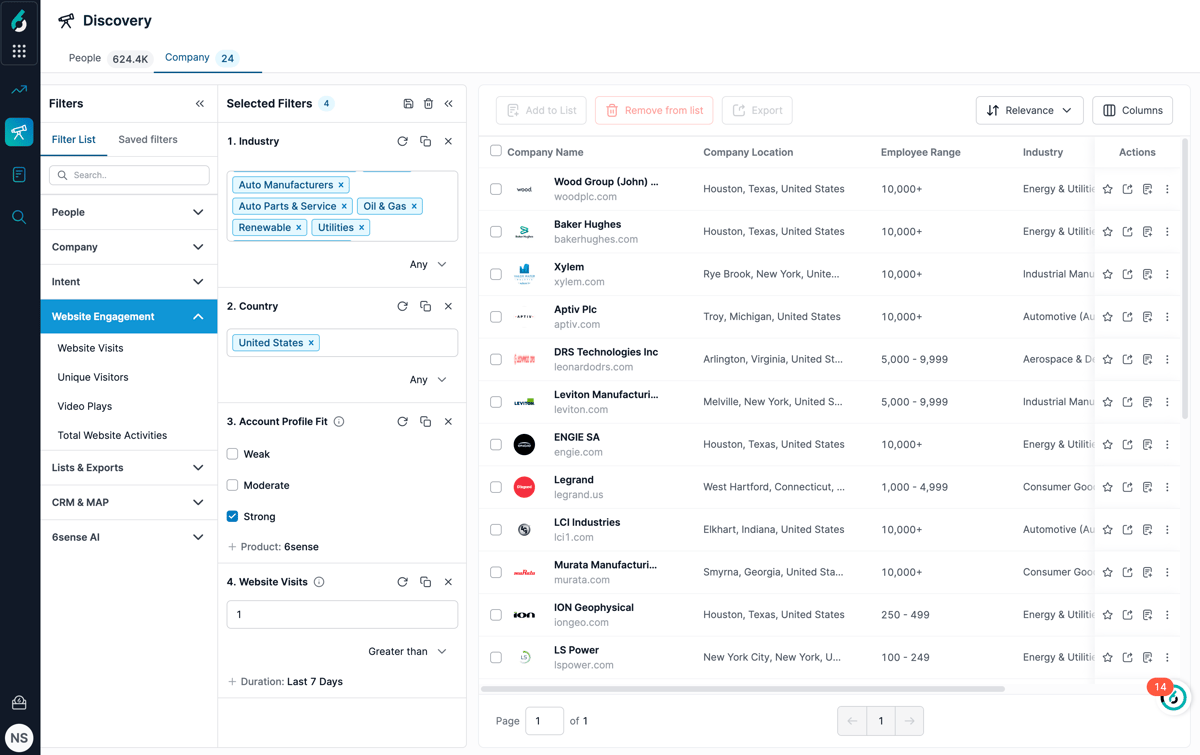
It uses predictive analytics to match anonymous behaviors like web visits, content downloads, and research activity to specific companies, so marketing and sales teams can identify high-intent accounts earlier in the buying journey.
What Makes It a Good Intent-Based Marketing Platform
- Utilizes AI-driven predictive account scoring to detect in-market accounts before they convert
- Combines first-party data with intent signals gathered from third-party sources
- Enables multi-channel orchestration for ads, emails, and website experiences based on account behavior
- Integrates with CRM and marketing automation systems, which helps align sales strategies with target accounts
Pricing
Pricing is not publicly available.
4. Demandbase
Demandbase is an ABM platform that combines buyer intent data, firmographics, and real-time analytics to help marketing and sales teams find and engage high-value accounts.
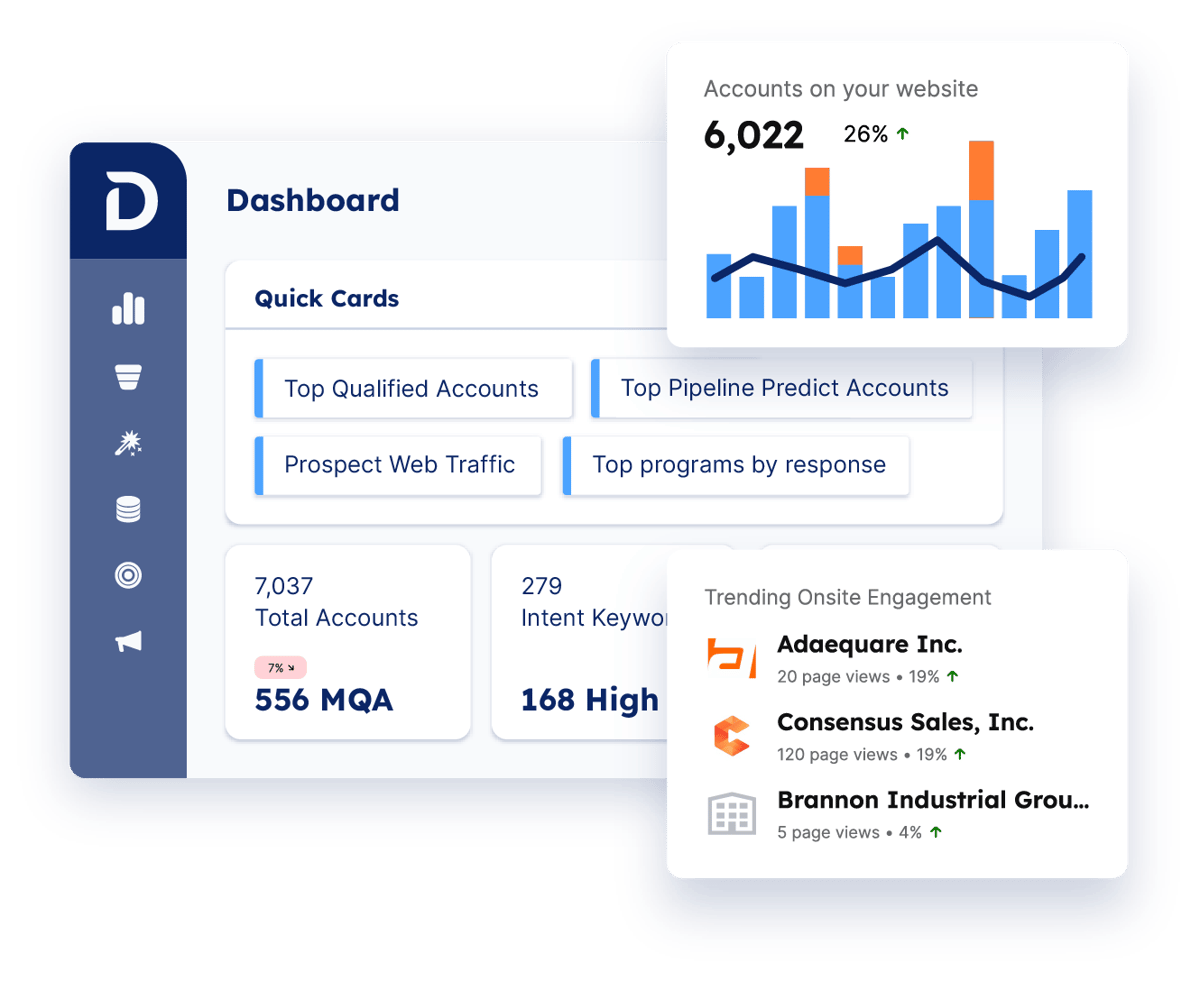
It surfaces intent signals from first-party and third-party sources, which can help teams coordinate account-based marketing campaigns around target accounts showing stronger buying intent.
What Makes It a Good Intent-Based Marketing Platform
- Uses account behavior and external research activity to surface category-level intent data
- Offers account intelligence that can highlight trending topics and changes in engagement
- Allows teams to deploy targeted ads, adjust website experiences, and update CRM records based on account intent
- Combines first-party signals with third-party intent integrations such as Bombora, G2, and TrustRadius
Pricing
Pricing is not publicly available.
5. Leadfeeder
Leadfeeder is a B2B intent-based marketing tool that turns anonymous website traffic into actionable account insights.
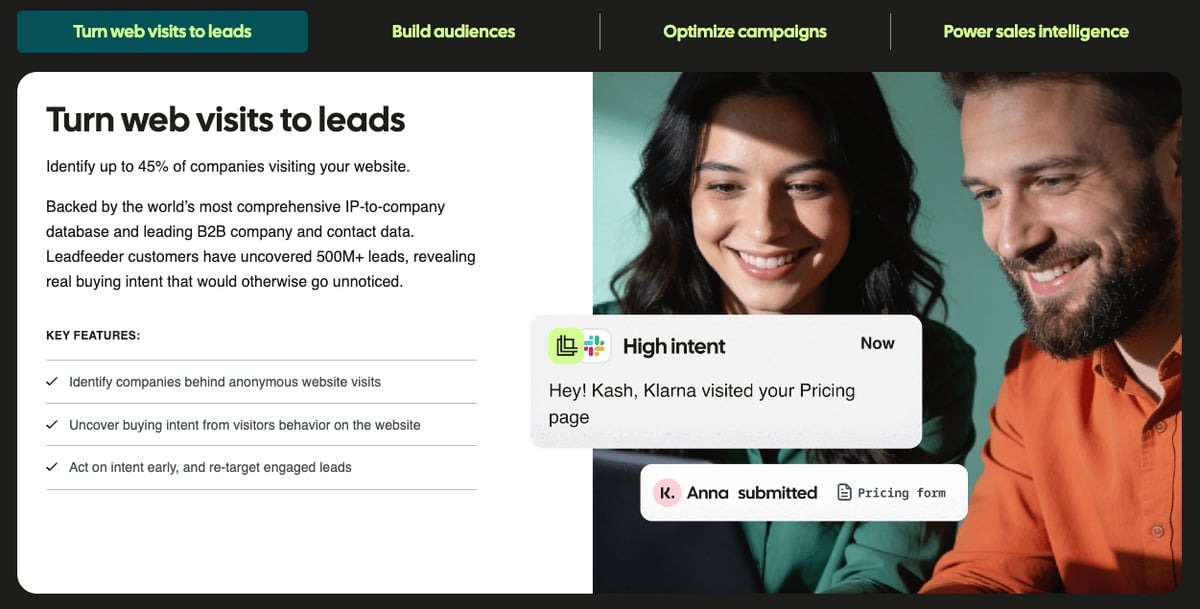
It identifies companies visiting your website and helps sales and marketing teams prioritize accounts based on visitor behavior and intent signals, including activity that happens without a form fill.
What Makes It a Good Intent-Based Marketing Platform
- Discovers company-level interest in real time
- Tracks account behavior on your website and can alert teams when important accounts return
- Connects identified businesses with CRM workflows for faster follow-up
- Higher plans add contact enrichment, verified emails and phone numbers, prospecting filters, and activation features
Pricing
Leadfeeder currently offers four main plans:
- Lite: Free. Includes core features, unlimited users, seven days of visitor history, and the last 100 identified companies per month.
- Discover: Starts at €113/month. Includes website visitor identification, real-time account alerts, CRM syncing, and automated outreach and retargeting.
- Activate: Starts at €527/month. Includes everything in Discover, plus verified emails and phone numbers, intent-signal filtering, B2B display campaigns, CRM automations, and AI-powered prospect list building.
- Scale: Starts at €599/month when billed annually. Includes everything in Activate, plus free company data exports and automatic CRM data updates.
6. ZoomInfo Intent
ZoomInfo Intent taps into digital research activity and third-party data sources to deliver buyer intent data for marketing and sales teams.
It flags companies showing elevated interest in selected topics, helping sales teams find accounts that may be actively in market before those potential customers enter the funnel directly.
What Makes It a Good Intent-Based Marketing Platform
- Combines intent data with ZoomInfo’s company and contact data
- Surfaces accounts showing stronger topic interest so teams can prioritize sales outreach
- Connects buying signals with contact data for faster prospecting
- Uses account-level research patterns to help distinguish stronger intent from general web activity
Pricing
Pricing is not publicly available.
7. G2 Buyer Intent
G2 Buyer Intent captures signals from buyers browsing software profiles, comparison pages, reviews, pricing, and category listings.
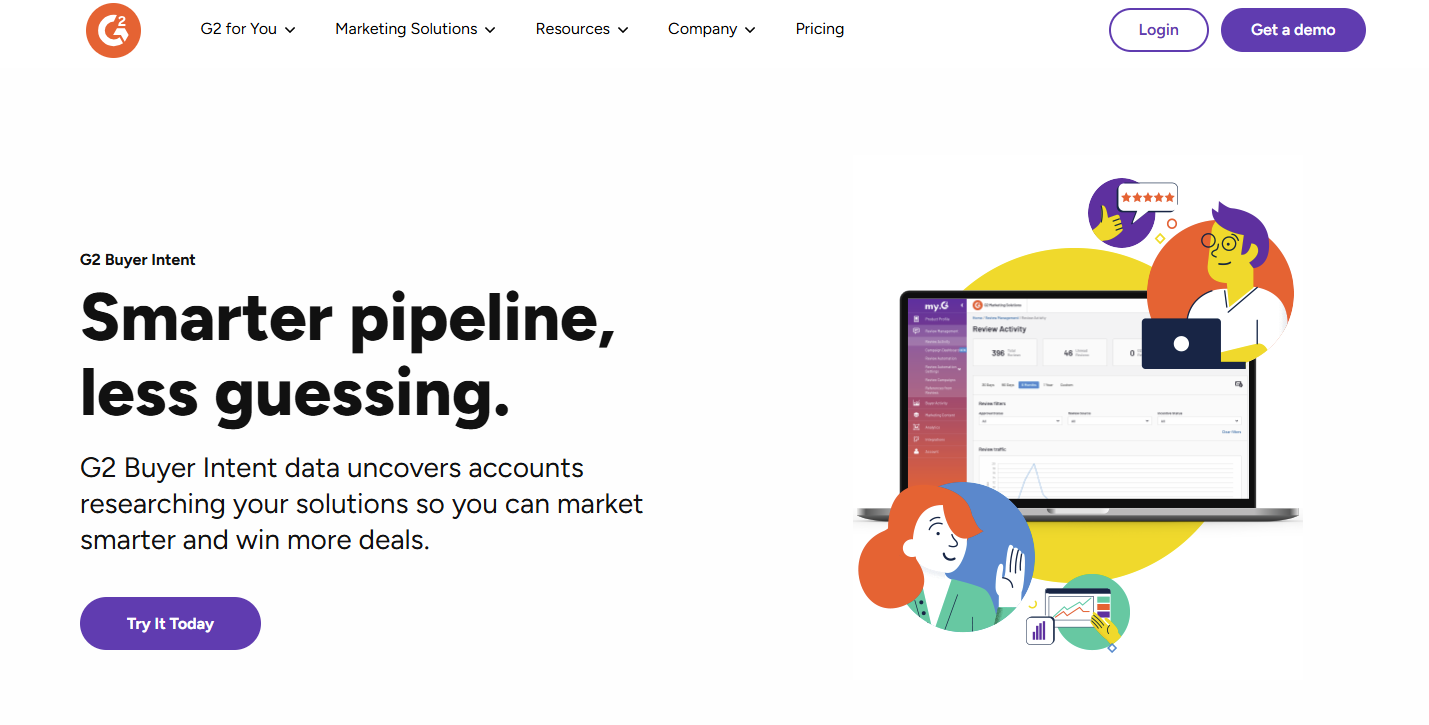
The platform gives marketing and sales teams visibility into buyer intent within a software-research environment, so they can respond based on where accounts appear to be in their buying journey.
What Makes It a Good Intent-Based Marketing Platform
- Tracks intent signals such as profile views, review activity, pricing research, and comparison page visits
- Helps prioritize accounts based on the level and type of activity taking place
- Can help sales teams spot prospects researching competing or relevant solutions
- Integrates with major CRMs, marketing platforms, and ABM tools to move signals into existing workflows
Pricing
Pricing is not publicly available.
8. Breeze Intelligence by HubSpot
Breeze Intelligence, which incorporates technology from Clearbit, is a HubSpot data enrichment solution that can help you identify website visitors, enrich CRM records, and build targeted lists.
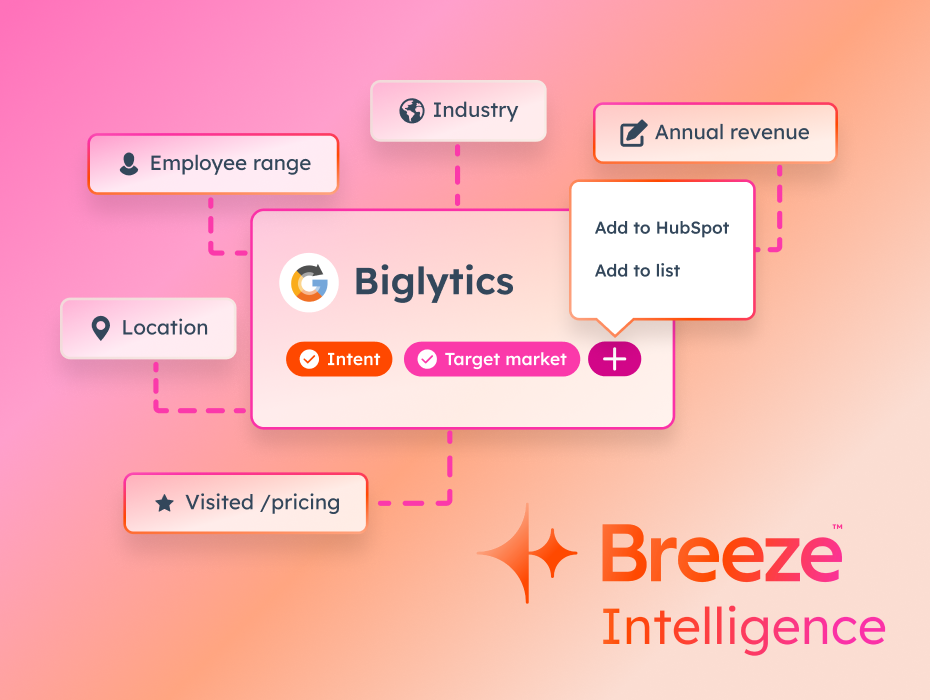
It brings external business data into HubSpot so companies can strengthen records, understand the businesses interacting with them, and build more useful segments.
What Makes It a Good Intent-Based Marketing Platform
- Helps reveal companies visiting your website for earlier visibility into account interest
- Enriches customer and company records with additional business data
- Works within the broader HubSpot ecosystem, reducing the need to move data between separate platforms
- Gives marketing teams more context for segmentation, lead routing, and account-based marketing efforts
Pricing
Breeze Intelligence and related HubSpot data features use a credit-based model, so pricing depends on your HubSpot subscription and the amount of data or enrichment activity your team needs.
9. Priority Engine
Priority Engine by Informa TechTarget delivers account-level buyer intent data based on research activity within its network of technology content properties.
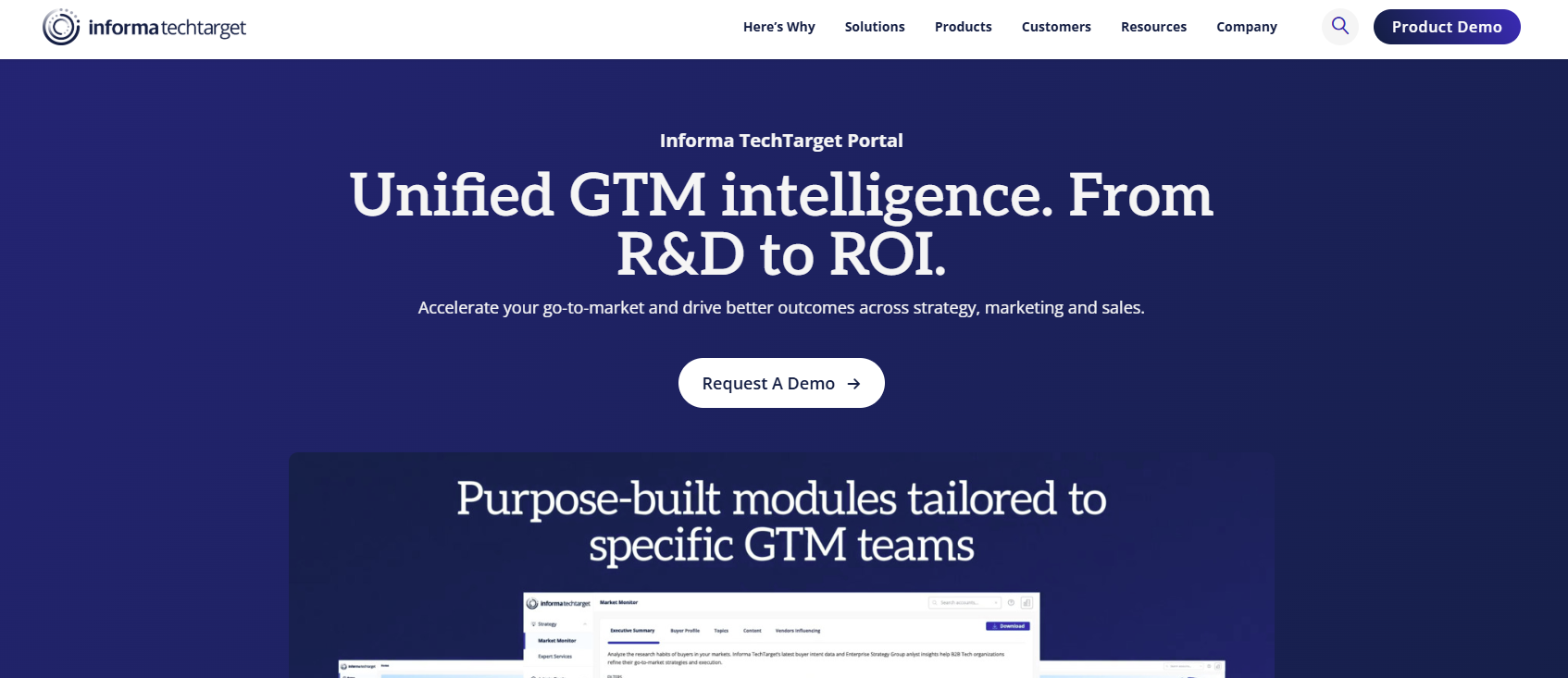
It identifies in-market accounts researching relevant technology topics, so marketing and sales teams can engage high-intent buyers based on demonstrated content consumption and research behavior.
What Makes It a Good Intent-Based Marketing Platform
- Tracks research activity to help surface accounts showing stronger buying signals
- Sends intent scores and engagement insights into CRM or ABM workflows
- Provides account intelligence around organizations and buying groups researching relevant topics
- Integrates with sales and marketing tools so teams can act on intent within their existing workflows
Pricing
Pricing is not publicly available.
Choosing the Right Intent-Based Marketing Tool for Your Business
Not all intent-based marketing platforms work the same, and choosing the right one can mean the difference between overwhelming your pipeline with noise or filling it with high-intent leads who are worth prioritizing.
The best tool depends on how your sales and marketing teams operate, what kind of buyer intent data you need, and how well the platform fits into your wider marketing strategy.
Intent-based marketing matters most when the signals lead to useful action. A platform can collect enormous amounts of data, but intent data helps only when your team can use it to identify potential customers, focus sales outreach, or improve campaign targeting.
Here are some pointers to consider.
Match Capabilities to Your Campaign Objectives
If your team relies on account intelligence, look for tools that provide category-level intent data, predictive analytics, and buyer behavior modeling. Those capabilities can help you surface target accounts early and adapt messaging as prospects move through the buying journey.
For leaner intent marketing campaigns, prioritize platforms that simplify data collection, provide up-to-date contact details, and help you reach target users with less setup.
Your intent-based marketing strategy may need to identify high-value accounts, uncover people visiting a pricing page, or find prospects actively searching for a category before they reach your website. Start with the use case your sales teams actually need to solve.
Evaluate Data Coverage and Source Transparency
Intent data is only as useful as the data collected behind it. Choose a provider that clearly explains its data sources and methods for identifying purchase intent.
First-party intent data comes from interactions your business can observe directly, such as visits to your own site. Third-party intent data is collected outside your properties through publishers, research networks, advertising ecosystems, or other third-party sources.
If your strategy uses third-party intent, ask where the information comes from, how recently signals were captured, and how third-party data providers maintain compliant data practices.
Strong buyer intent data providers should make it easier to understand the difference between meaningful buying signals and general browsing behavior.
Consider Speed, Setup, and Scalability
Enterprise platforms can offer comprehensive analytics and advanced segmentation, but they often come with longer implementation cycles. If you're aiming to shorten the sales cycle and move quickly, look for tools that deliver useful insights without weeks of configuration.
Consider how easily the platform moves intent data into CRM records, ad audiences, and sales workflows. Fast activation is particularly useful when a prospect shows active intent through repeated visits, searches, or high-value page activity.
For many businesses, intent-based marketing delivers the most useful results when sales teams receive actionable sales data quickly enough to follow up while interest is still current.
Capturify Helps You Find and Engage High-Intent Buyers
Capturify combines buyer intent targeting with anonymous website traffic identification, giving businesses visibility into prospects before and after they reach the website.
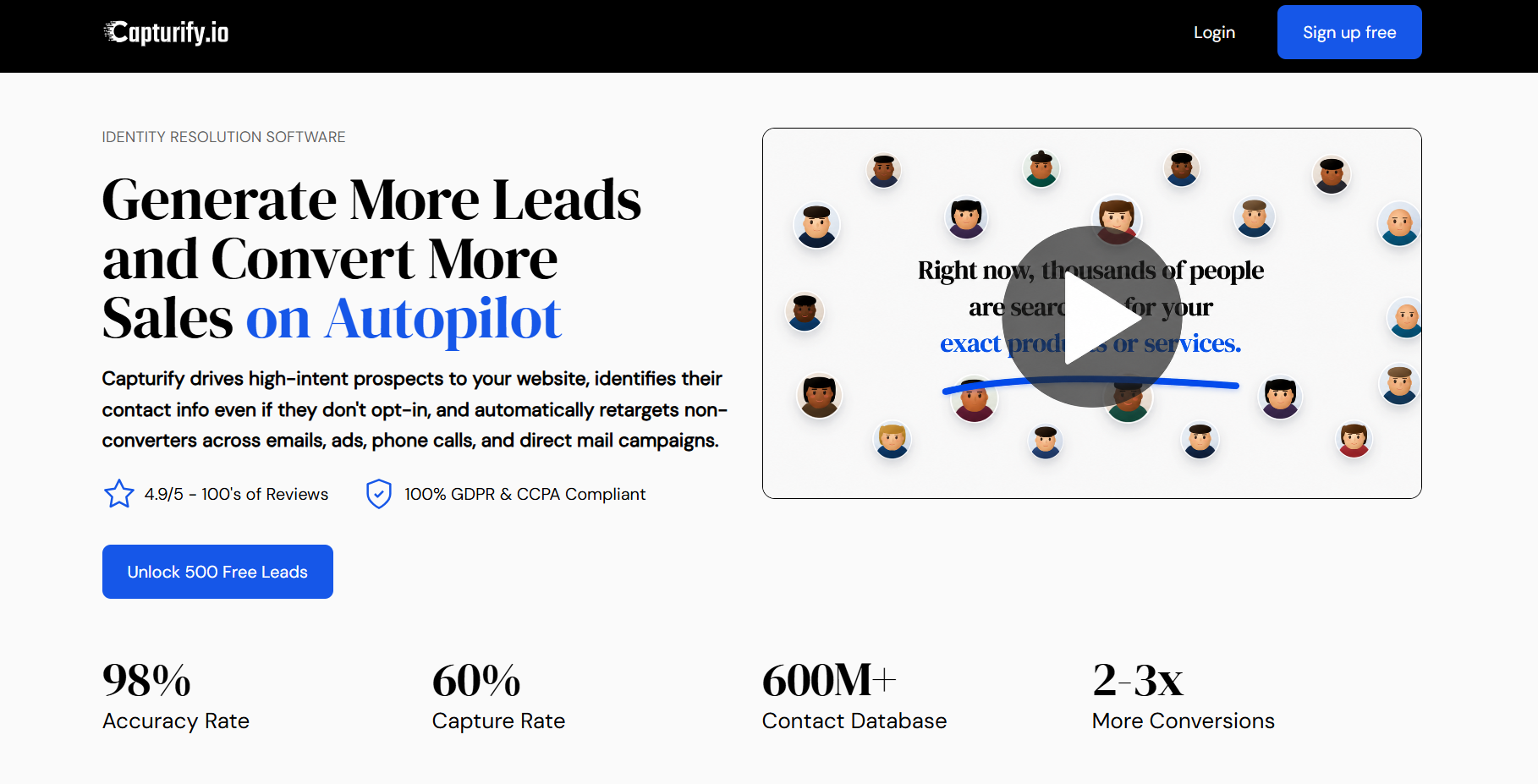
Its buyer intent capabilities can help you target people based on recent online interests and behavior, while its visitor identification technology reveals anonymous website visitors once they reach your site.
Capturify captures more than 40 data points per visitor and reports capture rates of up to 60%. Those profiles can include contact information and behavioral data that help teams understand who is showing interest and what they may care about.
Sales teams can use those insights for more personalized outreach, while marketing teams can create audiences for Meta and Google or connect prospects with automated follow-up. Higher-tier plans can extend activation into email, phone, and direct mail.
Turn Buying Signals Into Action
A useful intent-based strategy needs a clear path from signal to action.
Capturify can help businesses find high-intent prospects based on recent behavior, identify visitors who arrive on the website, and send that information into the systems used for follow-up.
For example, a prospect researching a relevant topic could enter your target audience before visiting your site. If that person later arrives and views a high-value page, Capturify can add another layer of first-party behavioral data and identity information to help your team decide what to do next.
Existing customers can be segmented separately from net-new potential customers, while high-intent prospects can move into advertising, CRM, or outreach workflows based on the signals your team cares about.
Want to turn more buying signals into people you can actually reach? Capturify gives you the buyer intent, contact data, and activation tools to move from interest to action.
Get started with 500 free leads today!
FAQs About Intent-Based Marketing Tools
What is intent-based marketing?
Intent-based marketing is a strategy that uses buyer intent data and behavioral signals to identify people or accounts that may be actively researching a product, service, or related topic. Marketing teams can use signals such as website visits, search activity, content consumption, or third-party research to understand purchase intent and focus campaigns on prospects who appear more likely to engage. The approach can help sales and marketing teams prioritize high-intent prospects, personalize outreach, and align marketing efforts with where potential customers are in the buying journey.
What is an example of intent-based marketing?
A simple example of intent-based marketing is when a company uses intent data to target businesses that are actively researching CRM software. The marketing team can focus messaging on prospects showing buying intent through search behavior, content consumption, or activity on relevant websites.
Sales teams can then prioritize high-intent leads and tailor outreach to the topics or products those prospects have been researching.
What are intent tools?
Intent tools are platforms that collect and analyze behavioral signals to identify when potential customers may be actively searching for a product or service. They can use first-party data, third-party data, or a combination of both to detect buyer intent and account behavior.
Useful platforms turn those signals into account intelligence, audiences, alerts, or actionable sales leads that marketing and sales teams can use in existing workflows.
What is intent-driven marketing?
Intent-driven marketing is a strategy that uses intent data to guide marketing efforts based on what a target audience appears to be researching or interacting with online.
It is closely related to intent-based marketing and can use buying signals such as website activity, content consumption, search behavior, and third-party research. Teams can then use those signals to adjust marketing content, targeted ads, lead prioritization, and personalized outreach.
What are the four main marketing tools?
The four main marketing tools traditionally include advertising, public relations, sales promotion, and direct marketing. Modern marketing teams often support those activities with digital platforms, customer data, analytics, automation, and intent-based tools that help them understand customer behavior and improve customer acquisition.