

Identifying the people who visit your website and leave without filling out a form can open up a much larger audience for follow-up. But for many businesses, the harder part is choosing a platform that fits what you want to do with those visitors afterward.
Opensend and Retention both focus heavily on identity resolution for ecommerce brands, but their products have developed in different directions.
Capturify offers another approach, combining visitor identification with buyer intent targeting and automated activation.
So how does Opensend vs. Retention compare, and where does Capturify fit?
In this guide, we’ll look at their core features, pricing, ideal users, and the differences that could affect your lead generation and customer retention strategy.
TL;DR
- Opensend is generally better suited to DTC brands focused on identifying anonymous ecommerce visitors and feeding them into existing marketing flows, while Retention offers broader identity resolution, enrichment, and data infrastructure.
- Opensend is a good fit if your main priority is recovering anonymous US shoppers and adding more contacts to an established email program.
- Retention makes more sense for businesses that need deeper identity data, APIs, enrichment capabilities, or custom solutions alongside visitor identification.
- Capturify is the strongest all-around option if you want to identify existing visitors and generate net new leads through buyer intent targeting, then activate those audiences through multiple channels.
What Is Opensend?
Opensend is a visitor identification platform built primarily for ecommerce businesses that want to identify anonymous website visitors and turn them into reachable contacts.
Its Connect product uses proprietary technology to match anonymous traffic with consumer identities.
According to Opensend, it typically identifies around 25% to 35% of anonymous visitors, although the actual match rate depends on the traffic coming to your site. Its coverage currently focuses on US shoppers.
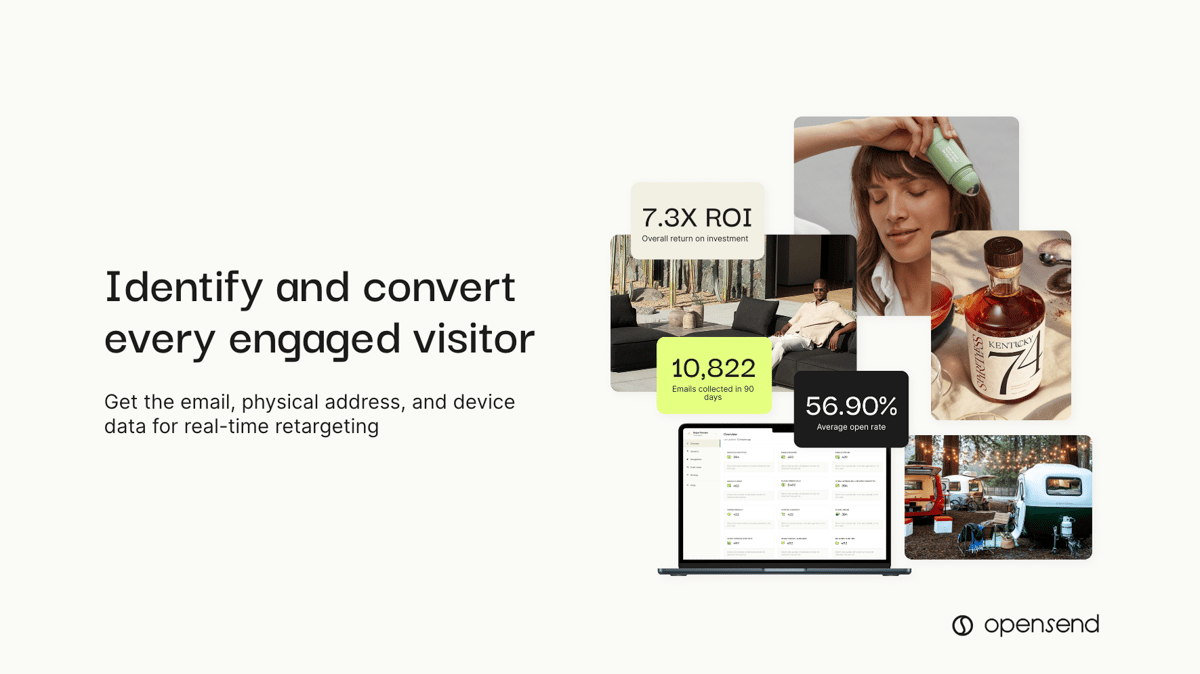
Once Opensend identifies a visitor, it can send the contact to marketing tools such as Klaviyo. Brands can then use their existing email program or other connected systems to follow up.
Opensend also offers products for maintaining identity between sessions and improving behavioral data. Cross-device recognition can help brands keep customer activity connected when visitors move between browsers or devices.
What Is Retention?
Retention is an identity resolution and data enrichment company that helps businesses turn anonymous traffic into person-level data.
For direct-to-consumer (DTC) brands, its website visitor identification tools can identify anonymous visitors and send verified email contacts into an existing marketing stack.
Retention's system matches visitors against consented profiles and focuses its DTC identification service on US traffic.
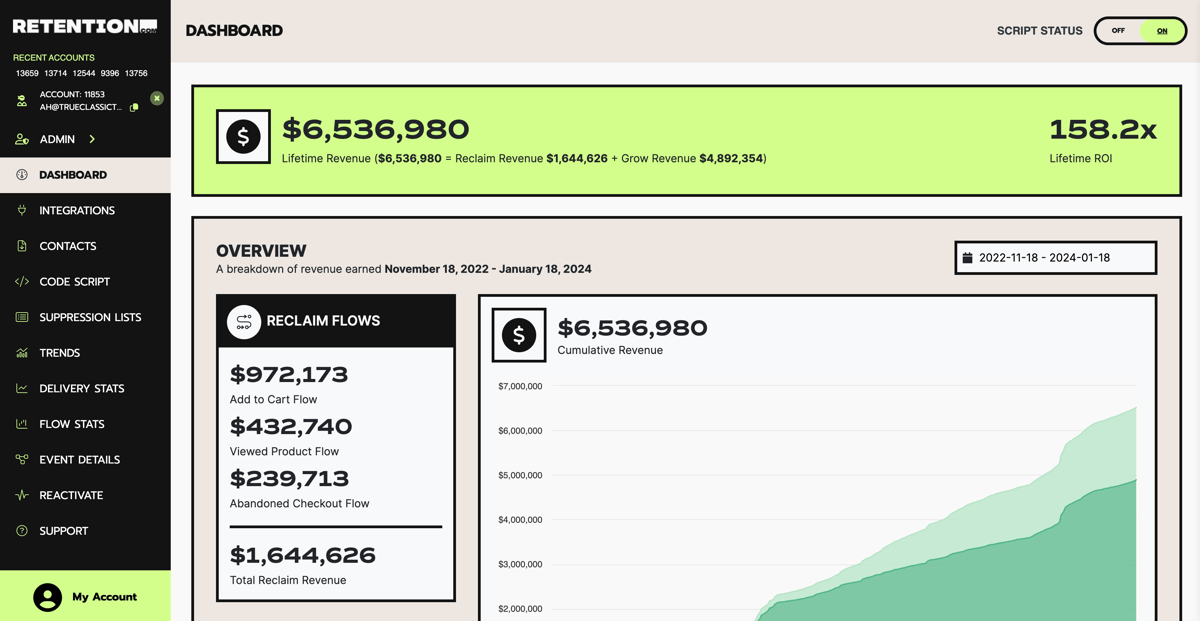
The platform now extends well beyond visitor identification. Retention offers identity APIs, consumer and business enrichment, intent data, contact data, and tools for connecting identifiers such as emails and device signals.
Its identity graph covers more than 250 million US identities, according to the company.
For ecommerce teams, products such as Grow can support email list growth and abandonment recovery. Existing contacts can be suppressed so businesses avoid paying to identify people already in their database.
What Is Capturify?
Capturify is an AI-powered lead generation and identity resolution platform designed to help businesses find new prospects and identify the unknown visitors already reaching their website.
Visitor identification is one part of the platform. Capturify captures anonymous website traffic and returns more than 40 data points per visitor, with records sent to connected customer relationship management (CRM) and marketing systems for follow-up.
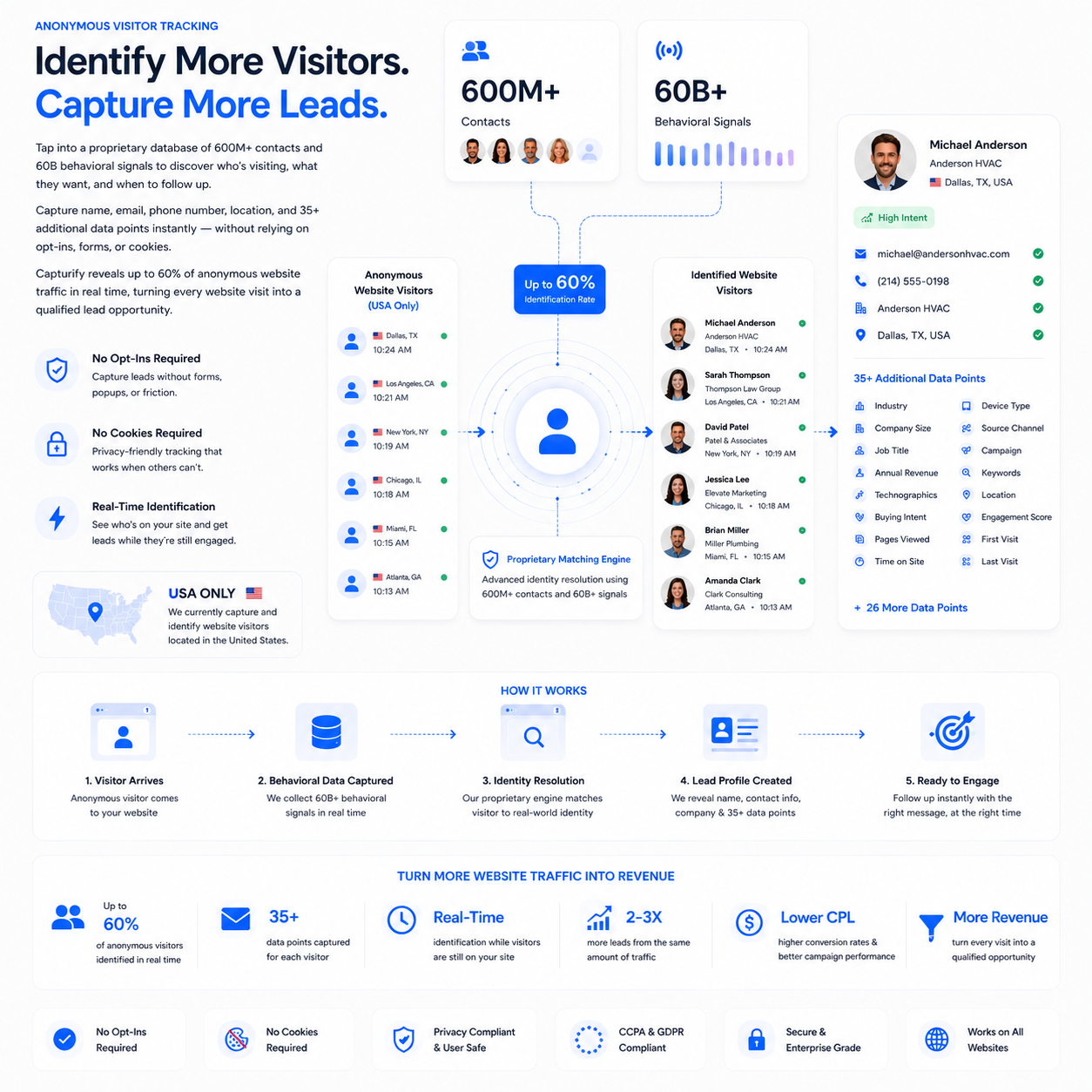
Capturify also reaches beyond people already on your site. Its buyer intent targeting uses behavioral data to find people showing interest in relevant topics, then lets businesses build audiences for channels such as Meta and Google.
Plus, its Automate plan adds AI-personalized email follow-up and connections to other channels, including direct mail. The platform's wider reach can be useful if you want visitor identification and net new leads under the same platform rather than relying entirely on existing website traffic.
Opensend vs. Retention vs. Capturify: How They Compare
All three platforms help businesses identify anonymous visitors and turn that traffic into usable customer data. The main difference is what each platform helps you do next.
Let's compare each tool more closely:
Identifying Anonymous Website Visitors
Opensend is closely centered on ecommerce identity resolution and improving the performance of existing lifecycle marketing. Its tools help brands identify anonymous website visitors, preserve identity throughout sessions, and send that data into other marketing tools.
Retention has a wider identity-data focus. Its technology can resolve anonymous traffic, enrich existing records, connect identifiers, and supply data through APIs or other delivery methods. DTC brands can use those capabilities for customer retention, list growth, and abandonment recovery.
Capturify takes a broader lead generation approach. Businesses can identify existing website visitors, target high-intent people who have not reached the site yet, and activate those audiences through multiple channels.
Your best fit depends on the role you want identity data to play. A DTC brand focused mainly on email may prioritize differently from a business looking for wider prospecting and multi-channel retargeting.
Key Features
The feature sets overlap in a few areas, but each platform puts its emphasis somewhere different.
Opensend's Key Features
Opensend leans heavily toward ecommerce lifecycle marketing and visitor identification.
Key capabilities include:
- Anonymous visitor identification: Connect matches qualifying website visitors with known consumer profiles.
- Cross-device tracking: Reconnect helps maintain customer identity between devices, browsers, and sessions.
- Marketing integrations: Identified contacts can flow into tools such as Klaviyo and other major platforms.
- Behavioral data: Ignite captures customer activity and sends structured event data into connected systems.
- Rollover credits: Unused identification credits on eligible plans can roll into future months.
- Data hygiene: Opensend says it performs ongoing cleaning and spam-trap removal to support email deliverability.
Retention's Key Features
Retention combines visitor identification with a broader identity graph and extensive data access options.
Its capabilities include:
- Visitor identification: The Resolution Tag can connect anonymous sessions with known identities.
- Identity enrichment: Businesses can add consumer, professional, and behavioral attributes to existing records.
- Identity APIs: Developers can resolve or enrich contacts programmatically.
- Abandonment recovery: Ecommerce brands can identify shoppers who would otherwise leave anonymously.
- Audience activation: Identified data can feed email, SMS, paid media, and other marketing systems.
- Suppression controls: Existing contacts can be excluded from collection to avoid unnecessary credit usage.
Capturify's Key Features
Capturify connects identity resolution with intent-based lead generation and activation.
Features include:
- Anonymous visitor identification: Capture unknown visitors and return more than 40 visitor data points.
- Buyer intent targeting: Find prospects using more than 40,000 interest-based keywords and a rolling behavioral window.
- Audience activation: Send targeted audiences into Meta and Google advertising.
- AI-powered tools: Automate personalized email follow-up based on visitor and behavioral data.
- CRM integrations: Push identified contacts into systems your team already uses.
- Multi-channel activation: Connect follow-up with channels such as direct mail and phone platforms.
Capturify can support businesses that want broader reach beyond people who have already visited the site. Testing real traffic is still the best way to compare match rate, lead quality, open rates, and click rates.
See how Capturify works. Book a demo today.
Who It's Best For
Generally, Opensend is a strong fit for US-focused DTC brands that already generate steady website traffic. If your email program is performing well and you mainly want to identify more shoppers who leave without signing up, its ecommerce focus can make sense.
Retention tends to suit a broader range of companies. DTC brands can use its visitor identification products, while larger retailers and technology companies may get more from its identity graph, APIs, enrichment capabilities, and custom data solutions.
For teams with more complex data requirements, that wider infrastructure may be useful.
Capturify, meanwhile, is better suited to businesses that want to generate new demand alongside recovering anonymous traffic. It can support B2C businesses and certain B2B use cases where intent targeting and visitor identification need to work together.
In particular, companies looking for new customers beyond their existing website audience may find Capturify's acquisition features more relevant.
Pricing
Pricing varies quite a bit between the three platforms, so the published monthly rate only tells part of the story. Please note that credit limits, overages, traffic volume, and annual billing can all change the real cost.
Opensend Pricing
Opensend publishes tiered pricing for its Connect visitor identification product.
Current monthly billing tiers include:
- Tier 1: $500 per month. Includes 2,000+ identified visitors.
- Tier 2: $1,000 per month. Includes 4,300+ identities.
- Tier 3: $2,000 per month. Includes 9,500+ identities, with enterprise pricing available separately.
- Enterprise: Custom pricing with a custom number of identified visitors.
Opensend uses identity credits, and eligible unused credits can roll over. Businesses can also cap the number of identities received, which may help keep costs more predictable as traffic changes.
Annual billing comes with a lower monthly price than month-to-month billing, and Opensend offers a lower-cost trial before moving to a standard plan.
When looking at Opensend compared with other options, check the cost per usable identity rather than the plan price alone. Match quality, email performance, and possible effects on domain reputation can have a much bigger impact on the return you actually get.
Retention Pricing
Retention does not publish one simple pricing table for its full product range.
Its pricing can vary based on the product and level of data access:
- Self-service options: Available for DTC brands using visitor identification and related tools.
- Usage-based pricing: Monthly contact allowances, credits, and overages may affect the final cost.
- Custom plans: Larger retail, API, and data clients may receive pricing based on their traffic and technical requirements.
Traffic volume can make a noticeable difference here. A site with high page views may move through monthly allowances much faster than a smaller store.
Before signing up, ask how credits are calculated, what happens after you reach your limit, and which unique features are included in the quoted price. It is also worth checking for any additional charges that could function like hidden fees once usage grows.
Capturify Pricing
Capturify has three main pricing tiers:
- Identify: $97 per month. Includes anonymous visitor identification, more than 40 visitor data points, CRM integrations, and up to 500 lead captures per month.
- Accelerate: $197 per month. Adds buyer intent targeting, geo-level targeting, and direct Meta and Google integrations.
- Automate: $397 per month. Adds AI-personalized email campaigns plus activation options such as phone and direct mail.
Quarterly payment options are available at discounted rates, while customers can upgrade, downgrade, or cancel as their needs change.
Identify may work well for businesses that want to supplement organic signups with identified website visitors. The higher tiers make more sense if you also want to reach new prospects and activate them through additional channels.
Compared with platforms that require heavier annual commitments or custom quotes, Capturify's transparent pricing can make initial budgeting easier.
Which One Is Best for Your Team?
Your best option really comes down to what you want to do with visitor data after someone is identified.
Opensend can work well for ecommerce teams that already have a strong lifecycle marketing setup and mainly want more identified shoppers flowing into existing campaigns.
Retention is a better fit if you need deeper identity infrastructure. Its APIs, enrichment tools, and large US identity graph can be useful for businesses with more complex data requirements.
Capturify, though, is the strongest all-around option for teams that want to go further than recovering anonymous website traffic.
Along with visitor identification, you can use buyer intent data to find high-interest leads before they reach your site, then activate those audiences through your existing marketing stack.
That gives Capturify a stronger position for businesses that want to improve conversions while building a larger pipeline of new customers.
Before making a final choice, run a real traffic test if possible. Compare match rate, lead quality, and incremental revenue to see which platform produces the most usable results for your business.
Turn More Anonymous Traffic Into Revenue With Capturify
Opensend and Retention both offer capable identity resolution technology, particularly for brands that want to recover more value from their existing US website traffic.
Capturify gives you another route when visitor identification is only part of the growth strategy.
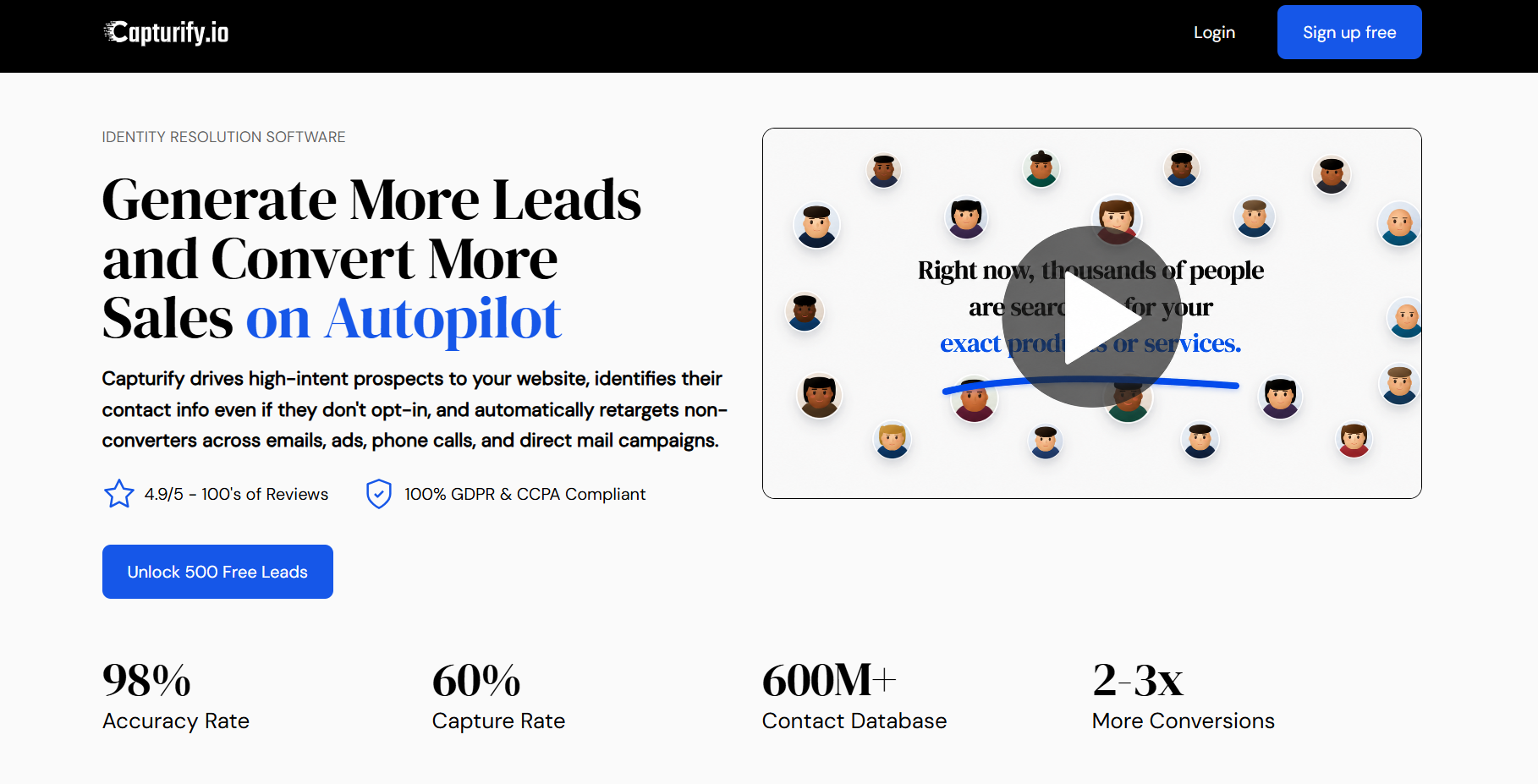
You can identify anonymous website visitors, enrich those records, and send them into your existing systems. Buyer intent targeting can then help you reach new prospects who have not yet reached your website, giving your campaigns a larger addressable audience.
Add AI-powered follow-up and multi-channel activation, and Capturify can support the journey from initial intent through conversion from one platform.
See how many visitors and high-intent prospects your business could identify. Get 500 free leads today.
FAQs About Opensend vs. Retention
What is the main difference between Opensend and Retention?
Opensend is primarily focused on helping ecommerce brands identify anonymous website visitors and feed those contacts into existing marketing workflows. Retention covers visitor identification too, but its platform has expanded further into identity APIs, enrichment, audience data, and infrastructure that can support retailers and technology platforms alongside DTC brands.
Can visitor identification software identify every website visitor?
No. Visitor identification depends on available identity signals, geography, traffic quality, consent, and the data partner behind the platform. For example, Opensend says it typically identifies roughly 25% to 35% of anonymous visitors. Actual performance can vary considerably from one website to another, so your own traffic is the best test.
What should you compare when choosing a visitor identification platform?
Look beyond the advertised match rate. Compare the quality of each identified visitor, geographic coverage, integrations, compliance controls, pricing model, and how easily the resulting contacts fit your current marketing strategy. For email-heavy use cases, factors such as deliverability and engagement are useful indicators of how valuable the captured contacts actually are.
Can anonymous visitor identification help increase revenue?
It can create additional opportunities to convert traffic that would otherwise leave unidentified. Businesses may use those contacts for email follow-up, abandonment recovery, advertising audiences, or other approved marketing workflows. Actual incremental revenue depends on factors such as traffic quality, match accuracy, campaign execution, and the percentage of identified contacts that become customers.