
Finding the right tool to manage your leads can take some comparison, particularly when your current platform no longer fits your budget, workflow, or growth plans.
Opensend has several useful capabilities, but businesses may want different pricing, broader integrations, higher identification accuracy, or more ways to activate the data they collect.
Fortunately, there are several Opensend competitors and visitor identification tools worth considering. Below, we’ll look at five top alternatives that can help you capture leads, reach new customers, and support stronger lead generation in 2026.
TL;DR
These are the best Opensend competitors of 2026:
- Capturify
- Lead Forensics
- Retention
- FullContact
- Zoho SalesIQ
What Is Opensend?
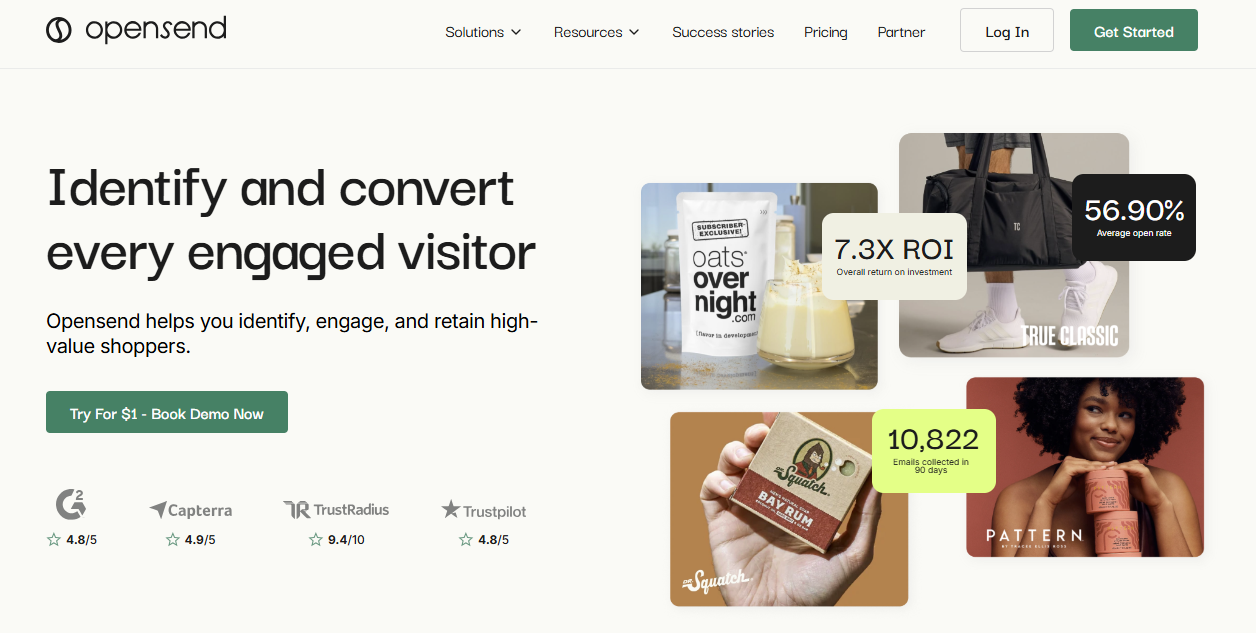
Opensend is a software platform designed to identify and engage with anonymous website visitors. It helps businesses identify people who browse their site without completing a form or otherwise providing their contact information.
Once a visitor is identified, businesses can use that data to reconnect through email, advertising, and direct mail.
Key Features
- Visitor identification: Turns anonymous website visitors into identifiable leads and provides available contact information.
- Email list growth: Captures visitor emails that businesses can use to expand eligible email lists and marketing audiences.
- Multi-channel retargeting: Helps businesses reconnect with visitors through email, targeted ads, and direct mail campaigns.
- Easy integrations: Connects with marketing platforms such as Shopify and Klaviyo to support existing workflows.
- Real-time notifications: Alerts users when new leads are identified so teams can follow up quickly.
- Analytics dashboard: Provides insights into visitor behavior and engagement that marketers can use to refine targeting.
Opensend may work well for businesses focused on identifying and remarketing to website visitors. Your needs may call for a platform with different pricing, stronger segmentation, broader data coverage, or higher identification rates.
Reviewing Opensend alternatives can help you find a solution that better fits how your organization plans to use visitor data.
Why You Might Need an Alternative to Opensend
Your ideal platform depends heavily on what you want to do once a visitor has been identified.
Some businesses want straightforward website visitor identification. Others need deeper lead management, audience segmentation, data enrichment, or multi-channel delivery that lets them activate prospects through several systems.
Here are a few factors worth considering before choosing an alternative.
Pricing May Not Fit Every Budget
For startups and small businesses, Opensend’s pricing may be a hurdle. As of 2026, its Tier 1 plan costs $500, which can be a significant commitment for companies working with limited marketing budgets.
Look beyond the monthly price when comparing tools. Consider usage limits, overage charges, contract terms, and any hidden fees that could affect your total cost.
You can then compare that investment against the number and quality of contacts generated, resulting sales, and the incremental revenue those leads produce.
Features May Not Cover All Needs
Opensend offers tools for visitor identification and engagement, but your marketing strategy may require a broader set of features.
Depending on your goals, you may need:
- Advanced analytics
- Stronger automation
- Flexible audience segmentation
- Broader audience activation
- Additional data enrichment
- Connections to more marketing and sales systems
Identification accuracy deserves attention too. High identification rates may sound impressive, but the resulting data has to be accurate enough for your team to contact, segment, and market to those visitors effectively.
User Experience Can Impact Productivity
Daily usability can make a noticeable difference when your team relies on a platform for ongoing campaigns.
A clean interface, simple setup, and clear reporting can help marketers spend less time managing tools and more time putting behavioral data to use.
Consider how easily users can find prospects, review activity, create segments, and transfer leads into the systems your team already uses. A technically capable platform can still create extra work if routine tasks take too many steps.
Growth and Scalability Challenges
Software requirements often become more complex as a business grows.
Larger and enterprise teams may need a platform that can support:
- Increasing lead volumes
- Multiple marketing channels
- CRM and marketing integrations
- Advanced audience segmentation
- API access and custom workflows
- Data from multiple sources
Scalability becomes more important when visitor identification feeds a broader customer data platform, CRM, advertising stack, or sales process.
Industry-Specific Requirements
Businesses can use the same visitor data in very different ways.
For example, an ecommerce brand may want to send emails after someone browses particular products. A home services company may focus on generating qualified calls, while B2B organizations may care more about identifying companies and connecting activity with sales outreach.
Privacy regulations, consent requirements, email deliverability, audience quality, and available integrations can influence which platform is the best fit for your industry.
With those factors in mind, here are five of the top alternatives to Opensend.
5 Best Alternatives to Opensend in 2026
If Opensend feels too limited for what you want to do next, you have plenty of other options to consider:
1. Capturify
Capturify is an identity resolution and lead generation platform that helps businesses identify anonymous website visitors and reach high-intent prospects.
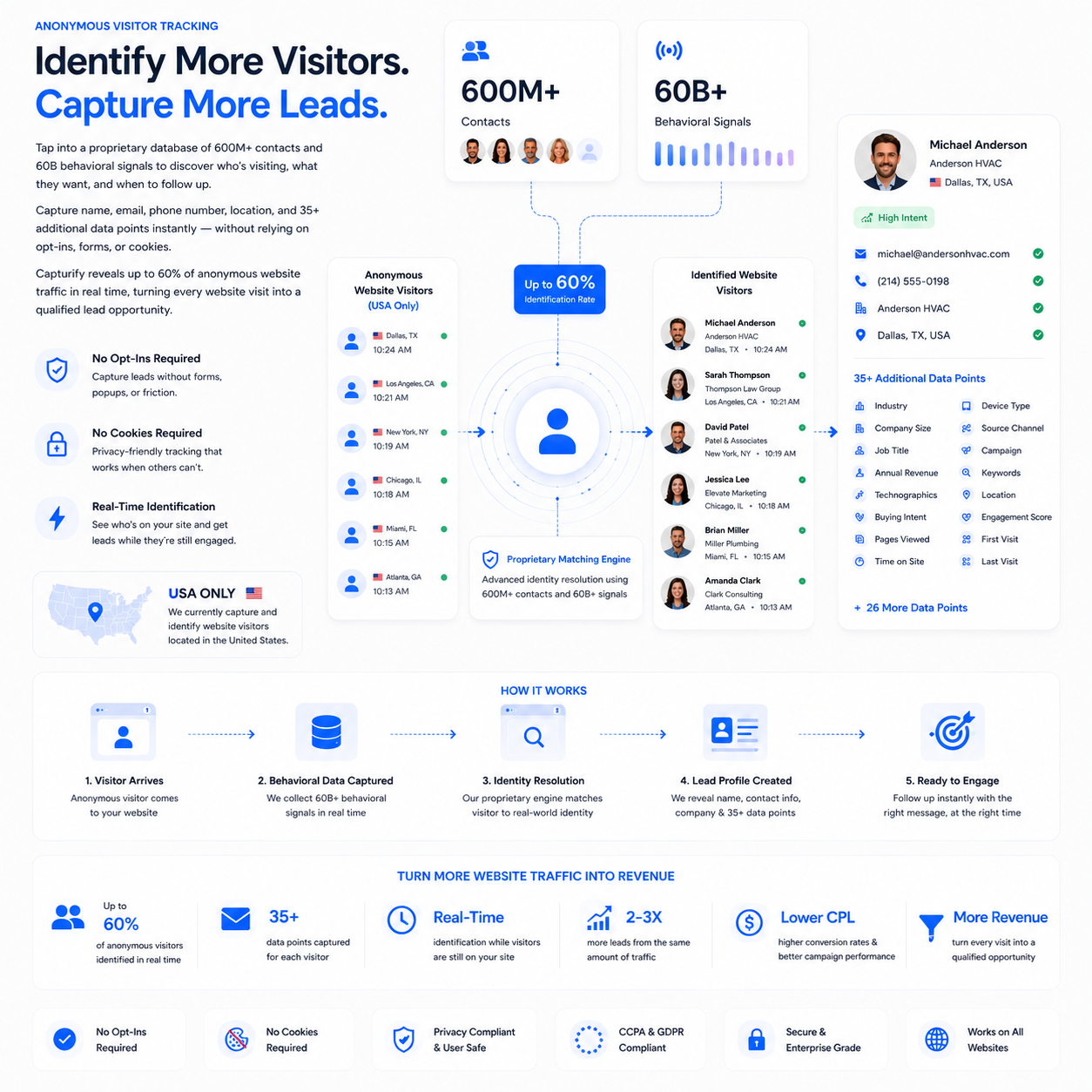
Capturify can identify people already browsing your website, and its reach extends into off-site buyer intent. Businesses can use recent behavioral data to find prospects researching relevant products or services and build audiences for platforms such as Meta and Google.
The platform can therefore support customer acquisition before and after someone reaches your site.
Best Features
- High-intent lead delivery: Uses consumer profiles and behavioral signals to surface people showing relevant purchase intent.
- Anonymous visitor identification: Reveals previously anonymous visitors and provides available contact and profile data.
- Buyer intent targeting: Finds people showing recent interest in relevant products, services, and topics before they visit your website.
- Audience segmentation: Helps businesses create targeted audiences based on interest, behavior, location, and other available data.
- Ad audience activation: Sends audiences to Meta and Google for more targeted advertising.
- Multi-channel delivery: Supports activation through email, advertising, CRM workflows, direct mail, phone, and other channels.
- Flexible integrations: Connects visitor and prospect information with the systems businesses already use.
Pros
- Combines website visitor identification with off-site buyer intent
- Gives marketers access to detailed data on identified prospects
- Supports both lead generation and revenue recovery use cases
- Offers flexible plans for businesses with different traffic and lead volumes
- Real-time delivery helps teams act quickly on high-intent leads
- Supports customer acquisition through several channels
Pricing
Capturify currently offers three main plans based on how much of the customer acquisition workflow you want to cover:
- Identify Plan: Starts at $97/month. It focuses on identifying anonymous website visitors, capturing 40+ data points per visitor, and sending those leads into your CRM for follow-up.
- Accelerate Plan: Starts at $197/month. It adds buyer intent targeting, access to 40,000+ interest-based keywords, geo targeting, and integrations with Meta and Google Ads.
- Automate Plan: Starts at $447/month. It adds automated email follow-up with AI-personalized messaging, along with integrations for phone calls and direct mail to support broader multi-channel campaigns.
All three plans include Capturify’s visitor identification capabilities. Higher tiers add more options for finding high-intent visitors, creating audiences, and turning identified demand into more revenue.
Capturify currently offers a 14-day free trial with 500 free leads.
Check out the Pricing page to learn more.
Sign up for a free trial today and get 500 free leads!
2. Lead Forensics
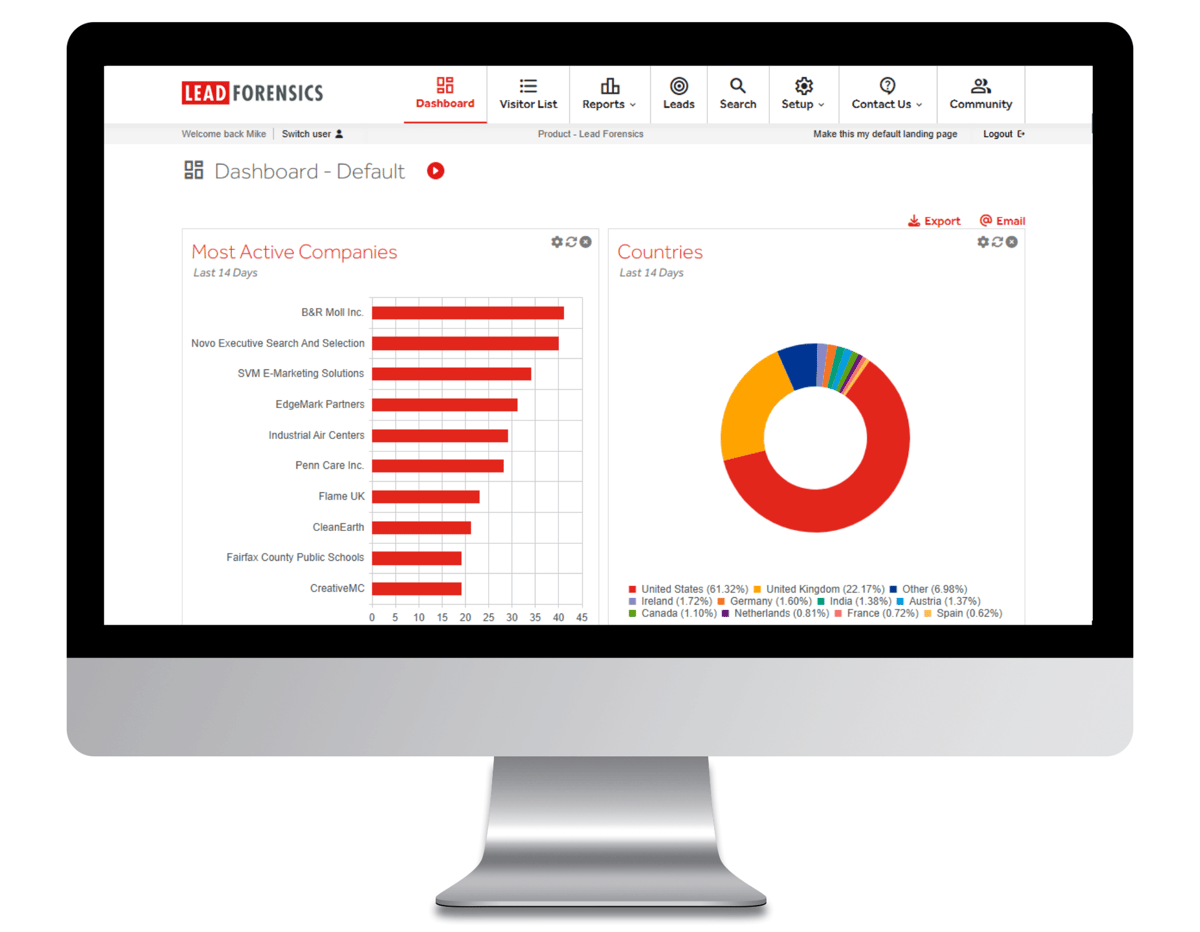
Lead Forensics helps businesses identify companies visiting their websites and gives sales teams information they can use for outreach.
Its focus makes it particularly relevant to B2B organizations that want to connect website activity with account-level lead management.
Best Features
- Real-time visitor identification: Shows which companies are browsing your website so your team can prioritize timely follow-up.
- Detailed company insights: Provides firmographic data such as company size and industry to give sales teams more context.
- Behavioral analytics: Tracks visitor behavior to show which pages and content appear to be drawing interest.
- Lead scoring: Uses engagement metrics and other factors to help teams prioritize promising accounts.
Pros
- Strong focus on B2B website traffic
- Provides real-time alerts for sales teams
- Helps users identify companies showing stronger engagement
- Can support account-based marketing and sales workflows
- Adds behavioral context to identified businesses
Pricing
Lead Forensics offers customized pricing based on factors such as website traffic and business requirements. Exact figures are not publicly disclosed.
3. Retention
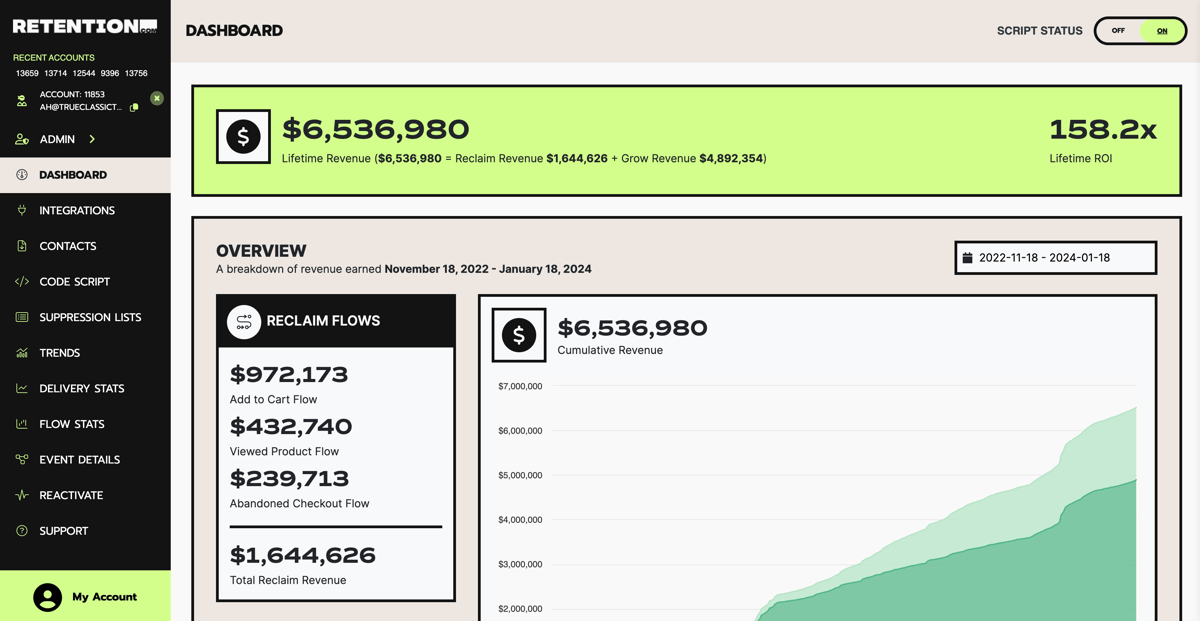
Retention focuses heavily on ecommerce identity resolution and email marketing.
It helps businesses identify anonymous visitors and use those identities to support abandonment campaigns, email list growth, and lifecycle marketing.
Best Features
- Identity resolution: Connects anonymous website visitors with usable customer identities.
- Abandonment recovery: Helps businesses follow up with shoppers who browse the site or leave carts behind.
- Integration capabilities: Connects with ecommerce and email marketing platforms such as Shopify and Klaviyo.
- Email audience growth: Expands the number of identified visitors that may be available for eligible lifecycle campaigns.
- Compliance tools: Supports privacy and consent considerations around identity data and marketing activation.
Pros
- Focuses on ecommerce use cases
- Helps recover visitors who leave before converting
- Connects with popular ecommerce and email systems
- Can expand addressable audiences for retention campaigns
- Supports automated customer engagement after a site visit
Pricing
Retention does not publicly list standard pricing on its website.
4. FullContact
FullContact is an identity resolution platform designed to connect customer information from multiple sources.
It can help organizations consolidate fragmented records, enrich existing profiles, and create a clearer view of individual customers.
For companies already using a customer data platform or another central data system, FullContact can provide additional identity and enrichment capabilities.
Best Features
- Identity resolution: Links different customer identifiers to create a more complete profile.
- Data enrichment: Adds available demographic and profile information to existing customer records.
- Real-time API integration: Lets businesses bring enriched customer data into other systems.
- Identity infrastructure: Gives technical and enterprise teams more control over how customer identities move through their stack.
- Privacy capabilities: Provides controls intended to support responsible handling of personal data.
Pros
- Useful for combining customer information from multiple sources
- Supports enrichment and identity matching
- API access allows for more flexible implementations
- Can fit larger organizations with complex data requirements
- Useful when identity data needs to connect with several internal systems
Pricing
FullContact does not publish standard pricing on its website.
5. Zoho SalesIQ
Zoho SalesIQ takes a different approach from dedicated identity resolution tools.
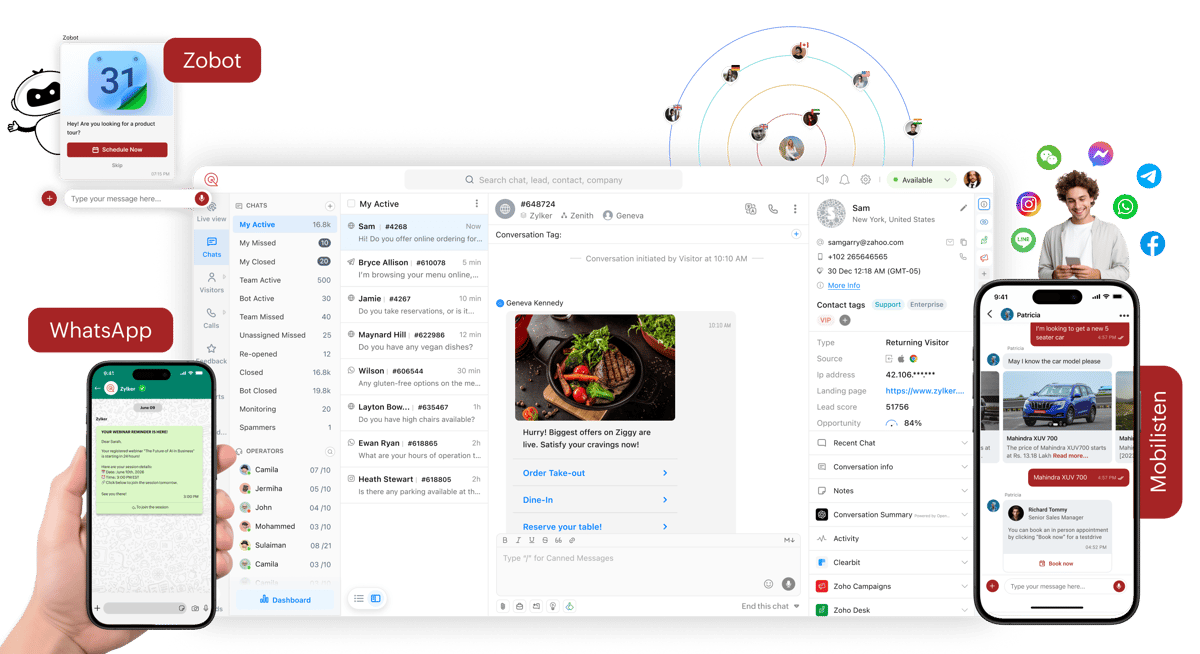
It combines website visitor tracking, live chat, chatbots, and lead scoring to help businesses engage visitors while they are actively browsing.
Best Features
- Live visitor tracking: Monitors visitors as they browse your site and provides behavioral information.
- Codeless bot builder: Lets businesses create chatbots that answer questions and capture visitor information.
- Multi-channel integration: Supports customer engagement through channels such as WhatsApp, Instagram, Facebook Messenger, and Telegram.
- Lead scoring: Ranks visitors based on engagement so teams can focus on stronger opportunities.
- Proactive chat triggers: Starts conversations based on specific visitor actions.
Pros
- Combines visitor tracking with real-time engagement
- Integrates closely with Zoho CRM and other Zoho products
- Can be useful for small businesses that want an accessible engagement tool
- Helps capture contact details through chat and bot interactions
- Gives teams another way to engage website visitors before they leave
Pricing
Zoho SalesIQ offers several pricing tiers, including an entry-level option and higher plans with more advanced visitor tracking, bot, and messaging features. The Basic plan starts at $10 per operator per month.
Turn More Buyer Interest Into Revenue With Capturify
The right choice among Opensend competitors depends on how far you want your platform to extend beyond basic visitor identification.
Capturify brings buyer intent targeting, website visitor identification, and automated revenue recovery into one system.
You can find people showing recent interest in what you offer, identify anonymous visitors once they reach your site, and continue engaging prospects who leave before converting.
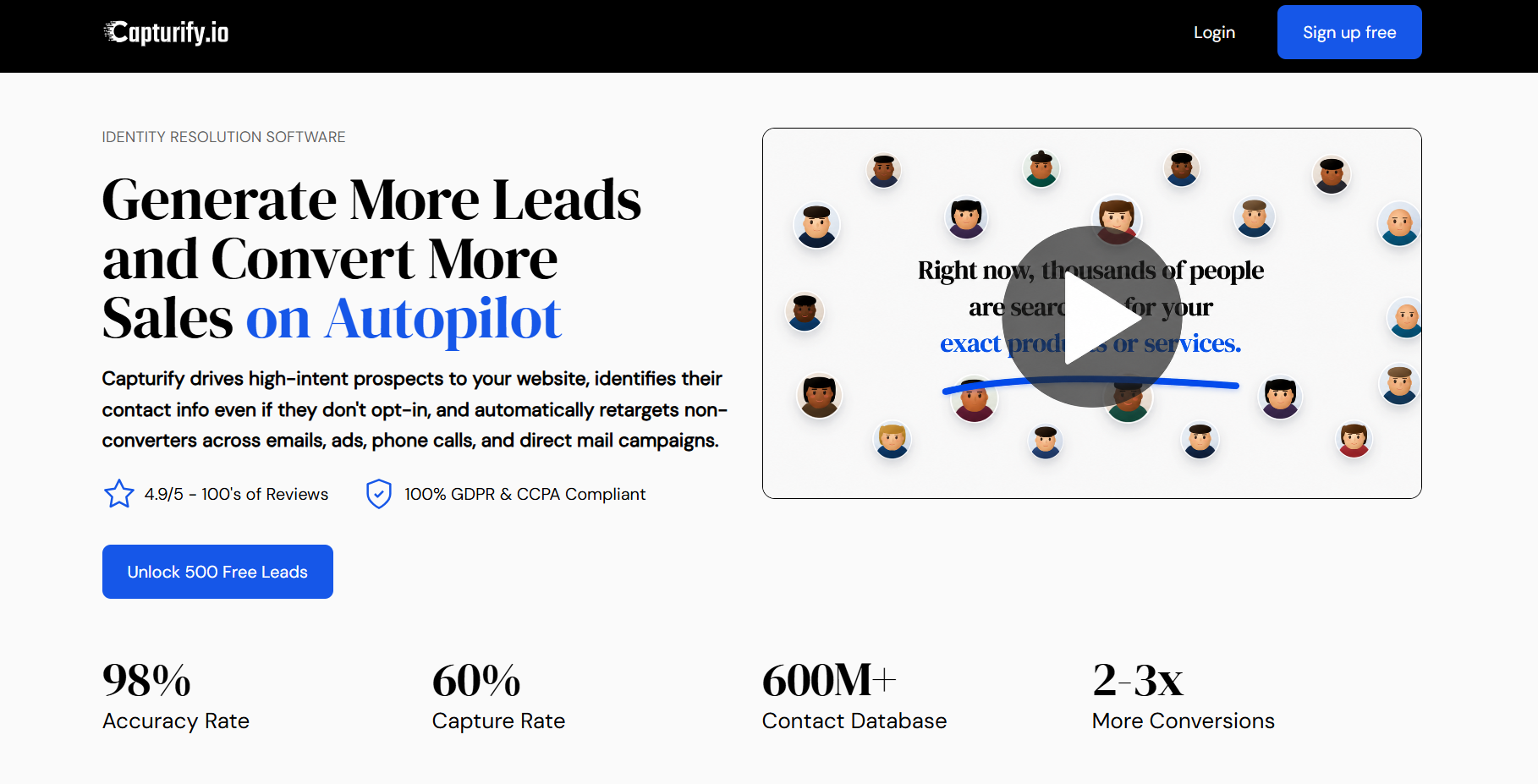
Identified visitor profiles can include contact information and 40+ data points, while Capturify identifies rates of up to 60% of anonymous website traffic. Its buyer intent tools can build audiences using 40,000+ interest-based keywords and a 30-day behavioral window.
For follow-up, Capturify can connect leads with your CRM and support automated outreach through email, Meta and Google ads, phone calls, and direct mail.
Businesses can use those options to keep engaging interested prospects after a visit and turn more existing demand into revenue.
Sign up and get 500 free leads today!
FAQs About Opensend Alternatives
What does Opensend do?
Opensend is a visitor identification and engagement platform that helps businesses identify anonymous website visitors and reconnect with them through channels such as email, advertising, and direct mail.
What’s the best Opensend alternative for small businesses?
Capturify can be a good option for small and mid-sized businesses that want website visitor identification alongside lead generation and intent-based audience targeting. Its plans cover different levels of identification, prospect targeting, and automated follow-up, so businesses can choose a setup that fits their growth strategy.
What should you look for in an Opensend alternative?
Compare identification accuracy, identification rates, data quality, pricing, integrations, privacy controls, segmentation, and available activation channels. Look at how easily the platform can move identified leads into your existing marketing and sales systems, too. The best solution should give your team usable data rather than simply producing the highest possible volume of matches.
Are Opensend alternatives only for ecommerce businesses?
No. Ecommerce brands are a common use case, but visitor identification tools can support B2B companies, professional services, home services, automotive companies, and enterprise organizations. The best fit depends on your audience, traffic, sales process, and how you plan to use the resulting data.
Who is Opensend’s biggest competitor?
There is no single Opensend competitor that is best for every business. Capturify is a strong alternative for companies that want to combine anonymous visitor identification with buyer intent targeting and multi-channel activation. Retention focuses more heavily on ecommerce identity and email use cases, while Lead Forensics is oriented toward B2B company identification. The strongest option depends on the type of visitors you want to identify and what you plan to do with the data afterward.