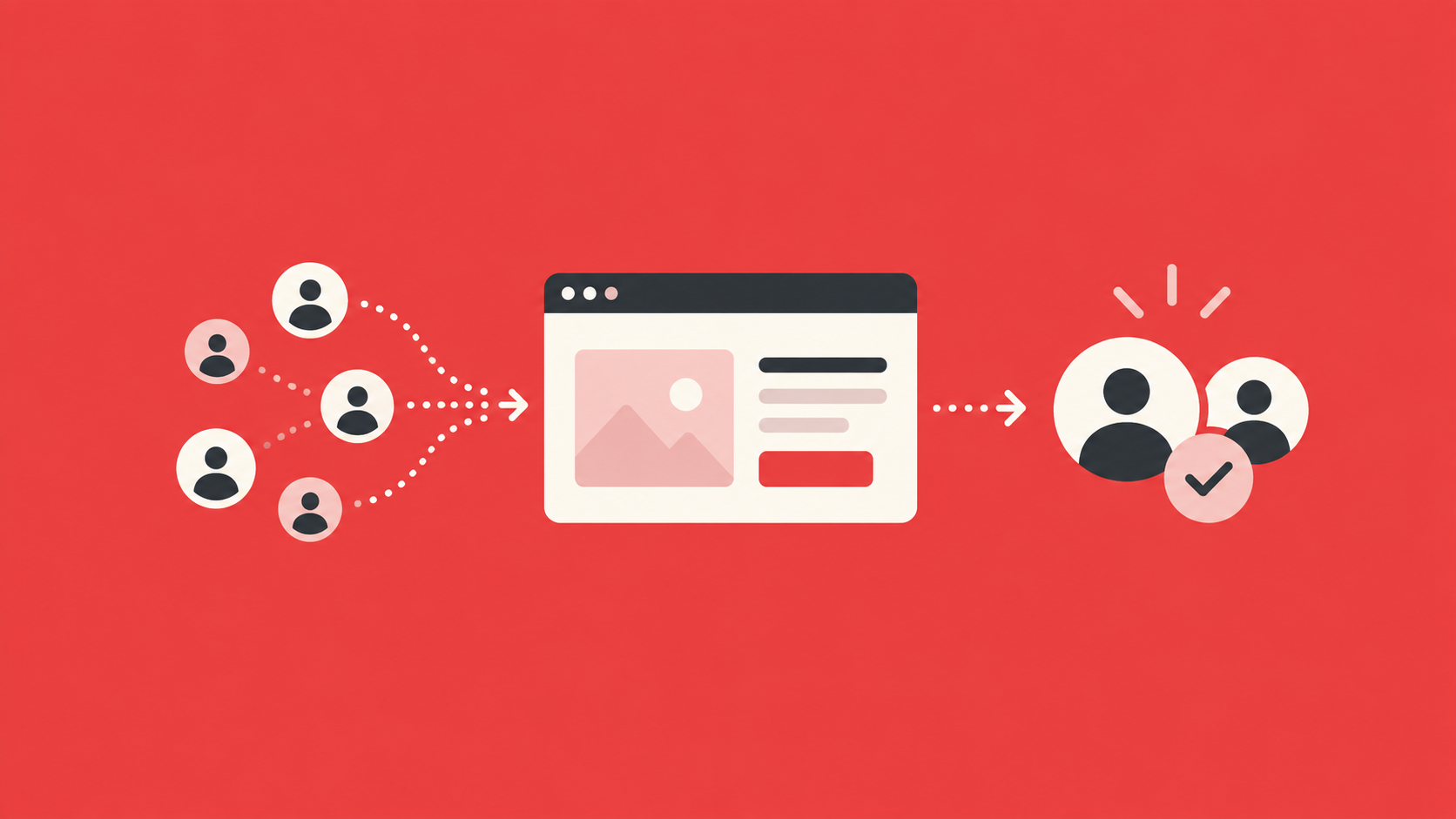

A lot of money goes into getting people to a website. Paid ads, organic search, partnerships, and other marketing channels can all drive traffic, yet most visitors still leave without filling out a form or making a purchase.
For marketers, those anonymous website visitors represent interest you may never get another chance to act on. Visitor identification tools try to close that gap by helping businesses connect anonymous traffic with usable customer or prospect data.
The bigger question is what happens after someone is identified.
Some businesses mainly want to recover abandoned carts and grow an email list. Others need broader audience targeting, sales follow-up, or activation through channels like Meta and Google.
That difference sits at the center of the Retention.com vs. Capturify comparison.
TL;DR
- Retention.com vs. Capturify mainly comes down to focus. Retention.com is geared toward ecommerce retention and shopper recovery, while Capturify supports broader B2B and B2C identification and activation.
- Retention.com is a stronger fit for brands focused heavily on email and SMS lifecycle marketing, abandoned carts, and Shopify-based retention workflows.
- Pricing and use case differ significantly. Retention.com generally sits at a higher price point, while Capturify offers a lower-cost entry for teams testing visitor identification.
- Activation options are another major difference. Retention.com centers on ecommerce follow-up, while Capturify can connect identified audiences with CRM workflows, paid ads, outreach, and other channels.
- Capturify is built for businesses that want visitor identification, buyer-intent data, and multi-channel activation in one platform. Sign up for free today.
What Is a Visitor Identification Platform?
A visitor identification platform helps businesses learn more about anonymous visitors who arrive on their site without filling out a form.
Depending on the tool, the platform may identify a person or company, enrich the record with additional data, and make the information available for marketing or sales follow-up.
For ecommerce brands, visitor identification can support activities such as abandonment recovery or email engagement. Other companies may use the same type of data to build audiences, prioritize leads, or connect website traffic with their CRM.
The process generally starts with a tracking pixel or similar setup on the site. From there, the platform attempts to match visits with known identities in its data network.
Available features vary widely, so the useful question is not simply how many visitors a platform identifies. You also need to look at what your team can actually do with those contacts once they appear.
Capturify vs. Retention.com: Core Platform Positioning
Both platforms help companies make more use of visitors who might otherwise remain unknown. Their product direction begins to separate once you look at the type of business each one serves and how identified data can be activated.
Capturify: Full-Funnel Visitor Identification and Revenue Automation
Capturify is built around identifying anonymous website visitors and giving businesses several ways to use that information afterward.
Profiles can include more than 40 data points, giving marketers and sales teams additional context about an identified visitor. Capturify also supports buyer-intent targeting, so businesses can reach people showing relevant interest even before they visit the company’s site.
The platform serves both B2C and B2B use cases. Ecommerce businesses can use it for audience development and follow-up, while SaaS companies, agencies, service businesses, and other organizations can connect identified leads with their existing sales or marketing process.
Activation is a major part of the platform. Capturify can feed audiences into tools such as Meta and Google, sync data with CRM systems, and support automated outreach.
For teams that want identification tied closely to acquisition and revenue activity, Capturify takes a fairly broad approach.
Retention.com: Ecommerce-Focused Shopper Identification
Retention.com has a much stronger ecommerce orientation.
Its platform focuses on identifying shoppers who visit an online store and helping brands reconnect with people who leave before completing a desired action. A large part of the product experience revolves around email and SMS workflows, including cart abandonment and retention campaigns.
Shopify stores and other ecommerce businesses are a natural fit because those companies often already have lifecycle marketing flows in place. Identification can add more contacts to those existing systems and give the brand another chance to bring interested shoppers back.
Retention.com also places considerable emphasis on revenue recovered through email engagement.
For a team already focused heavily on retention strategy, repeat purchase activity, and ecommerce messaging, those capabilities line up closely with familiar workflows.
Companies looking for B2B prospecting or a wider range of sales activation options may find the platform less aligned with their process.
Capturify vs. Retention.com: Feature Comparison
Feature lists can look similar at first glance because both companies work with identity and visitor data. The difference becomes clearer once you look at how each platform moves identified people into the next stage of the customer journey.
Capturify Features
Capturify combines identification, intent data, and activation in one platform. Some of its main capabilities include:
- Visitor identification: Capturify can identify anonymous website visitors for both B2B and B2C use cases and turn those visits into usable profiles.
- Data enrichment: Identified profiles can include more than 40 data points to give your team additional information to work with.
- Buyer-intent targeting: Businesses can find prospects based on recent online behavior and build audiences around higher-intent signals.
- Audience activation: Identified or targeted audiences can connect with channels such as Meta and Google Ads.
- CRM and workflow integrations: Visitor data can move into existing systems for sales follow-up or automated marketing activity.
- Outreach options: Capturify supports additional activation methods, including email workflows, direct mail, and phone outreach integrations.
The range of tools gives businesses more flexibility in deciding how identified data becomes part of their acquisition process.
Retention.com Features
Retention.com concentrates more heavily on ecommerce identification and lifecycle engagement. Its feature set includes capabilities such as:
- Shopper identification: The platform identifies anonymous visitors so ecommerce brands can reconnect with people who showed interest.
- Email list growth: Identified shoppers can become part of email workflows designed to drive future engagement or conversions.
- Abandonment recovery: Retention.com supports campaigns aimed at people who left after viewing products or starting a purchase flow.
- SMS and email activation: Brands can use identified contacts in lifecycle messaging and remarketing campaigns.
- Shopify integrations: The platform is designed to fit closely with ecommerce stores and the marketing tools commonly used around them.
- Retention workflows: Existing customers can also be reached through campaigns focused on repeat purchases and ongoing engagement.
The feature mix makes the platform particularly relevant for brands that already rely heavily on ecommerce lifecycle marketing.
Capturify vs. Retention.com: Pricing Comparison
Pricing can change how practical either platform is for your team, particularly if you are still testing visitor identification as part of your growth strategy.
Capturify Pricing
Capturify offers three main plans, with each tier adding more ways to identify and act on high-intent prospects.
- Identify: $97/month. Includes anonymous visitor identification, more than 40 data points per visitor, CRM integrations, and up to 500 lead captures per month.
- Accelerate: $197/month. Adds buyer intent targeting, geo-level targeting, a 30-day behavioral window, and direct Meta and Google integrations.
- Automate: $397/month. Adds AI-personalized email follow-up plus integrations for phone outreach and direct mail campaigns.
Discounted payment options are also available, and Capturify lets customers upgrade, downgrade, or cancel as their needs change. A 14-day free trial includes up to 500 free leads, so you have a chance to test the platform with your own traffic before committing.
Start your 14-day free trial and unlock up to 500 free leads.
Retention.com Pricing
Retention.com does not currently publish a standard pricing table on its website.
The company directs prospective customers to book a call to discuss its identity resolution and visitor identification solutions. Pricing can therefore depend on the product, traffic volume, data needs, and how the platform will be used.
Retention.com offers solutions for several types of customers, including DTC ecommerce brands, B2B companies, publishers, and platforms. Its website also highlights capabilities such as visitor identification, customer enrichment, and integrations with marketing and sales tools.
If you’re comparing Retention.com with Capturify, you’ll need to request a quote from Retention.com to compare the actual cost for your use case.
Capturify vs. Retention.com: Match Rates and Data Capabilities
A headline match rate can be useful, but it rarely tells the whole story. Audience composition, traffic quality, available data, and the visitors themselves can all affect identification performance.
Capturify Match Capabilities
Capturify reports capture rates of up to 60%, with actual performance depending on the traffic and audience involved.
Identified profiles can contain more than 40 data points, which gives users information that can support segmentation and follow-up. The platform is also designed to work with both B2B and B2C traffic, which gives it a wider range of possible use cases.
Raw volume is only part of the equation, though.
A company still has to decide what it wants to do with an identified lead. Capturify connects its visitor data with activation options such as paid ads, CRM workflows, and outreach channels.
For teams comparing tools, testing with real site traffic can give you a better picture than relying on a single published figure. Identification rates can look very different from one audience to another.
Retention.com Match Positioning
Retention.com has publicly referenced visitor identification rates that can reach roughly 35% to 40% in certain use cases, based on the information included in the source draft. Lower rates may also occur depending on the store and its traffic.
The platform’s data capabilities are closely tied to ecommerce workflows. Identified shoppers can enter email or SMS campaigns aimed at recovering lost revenue or encouraging another purchase.
Questions around data quality, deliverability, consent, and compliance deserve attention with any visitor identification service.
For example, marketers using identified contacts for email need to understand applicable rules such as CAN-SPAM as well as the platform’s own opt-in and data handling process. Local requirements may differ depending on where your visitors are located.
Published match figures are useful for comparison, but your own store data will give you a much stronger benchmark.
Capturify vs. Retention.com: Multi-Channel Activation
Identification becomes far more useful when the resulting data can move directly into the channels your team uses to generate sales.
Capturify’s Multi-Channel Revenue Approach
Capturify gives businesses several options for activating visitor and intent data.
An identified audience can feed into email campaigns or existing CRM workflows. Businesses can also connect audiences with advertising platforms like Meta and Google, which can help support retargeting or prospecting campaigns.
Additional integrations can extend activation into areas such as direct mail or phone outreach.
The broader setup can be useful if your customer journey involves several touchpoints before someone becomes a customer.
A visitor may first interact with an ad, return to your site later, and eventually enter a sales process. Capturify gives teams more ways to carry identity data through those stages.
Companies with both marketing and sales activity may find the flexibility useful because the data does not have to remain locked inside a single email flow.
Retention.com’s Ecommerce-Centric Activation
Retention.com keeps its activation model closer to ecommerce lifecycle marketing.
Email and SMS play a major role. Identified shoppers can enter campaigns built around actions like browsing products, leaving the store, or abandoning a purchase.
The approach fits Shopify brands that already depend on lifecycle messaging to turn existing interest into revenue.
A shopper who leaves without purchasing may still be reachable through a later email or SMS flow, giving the store another opportunity to convert the visit.
Retention.com can therefore fit naturally into an ecommerce retention strategy where the main priority is recovering revenue from traffic the brand already paid to acquire.
B2B sales activity receives less emphasis in the positioning described in the source draft. Companies that need workflows tied to CRM-driven sales, direct mail, or phone outreach may want to compare the available integrations carefully before choosing a platform.
Which Platform Is Better for Different Business Types?
The right fit changes with your business model. Ecommerce teams, B2B companies, and agencies often want very different outcomes from visitor identification.
Best for Ecommerce Brands
Retention.com lines up closely with ecommerce teams that want to identify shoppers and bring them back through lifecycle marketing.
Its focus on abandoned carts, email list growth, and SMS makes sense for brands that already run established retention flows. Shopify integrations also make it easier to connect identification with store activity.
Capturify can serve ecommerce brands too, but its use cases extend further into intent targeting and paid audience activation. A store might use identified visitors for email follow-up while also building audiences for Meta or Google campaigns.
Price may also influence the choice. Capturify has a cheaper entry point based on the figures referenced in this comparison, which can make testing easier for a smaller brand.
Your existing marketing stack should carry a lot of weight here. A store heavily invested in email recovery may lean toward a different feature set from one trying to expand acquisition channels.
Best for B2B Companies
Capturify is more closely aligned with the B2B workflows described in the source material.
The platform supports CRM syncing, buyer-intent segmentation, and activation methods that can connect visitor data with an existing sales process. Identified leads can also become part of broader marketing audiences.
A B2B buying journey often involves several interactions before someone reaches out to sales. Visitor identification can give a team more context on people showing interest before a form submission ever happens.
Retention.com has a much stronger ecommerce orientation, so its core shopper identification and abandonment tools may have less relevance for companies selling through longer sales cycles.
B2B teams should still look closely at their own process before they decide. A useful platform needs to fit how your company handles lead routing, follow-up, advertising, and CRM data after someone has been identified.
Best for Agencies and SMBs
Capturify may be easier for agencies and smaller businesses to test because of its lower entry price and wider range of use cases.
An agency serving several types of clients may need visitor identification for an ecommerce account one month and lead-generation support for a service business the next. Broader B2B and B2C coverage gives the platform more room to handle those differences.
Smaller companies also tend to watch acquisition costs closely. Paying several hundred dollars per month for a new marketing platform can be difficult to justify before the team knows how much revenue it will produce.
Capturify’s lower-cost plans give businesses a way to evaluate the software with less upfront spend.
Price alone should not make the decision, though. Agencies and SMBs still need to compare data quality, setup requirements, integrations, and how easily identified contacts can move into the tools they already use.
How Capturify Differentiates Itself
Capturify’s main point of difference is the range of activities it connects to identity data.
1. Full-Funnel Revenue Automation
Visitor identification can feed directly into marketing or sales workflows. Capturify also adds buyer-intent targeting, so companies unlock another source of prospects outside their existing site traffic.
2. B2B and B2C Flexibility
The platform can support businesses in ecommerce as well as companies with sales-led models. Agencies may also benefit when their clients span several industries.
3. Multi-Channel Activation
Identified audiences can move into channels such as email, paid advertising, CRM workflows, direct mail, or phone outreach. Teams can choose the activation method that fits their process.
4. Accessible Entry Pricing
Lower starting plans can make visitor identification easier to test before a business commits to a larger monthly budget.
5. Buyer-Intent Targeting
Capturify can also surface people showing recent interest beyond the visitors already reaching your site, giving marketers another way to build an active audience.
Best Practices When Choosing a Visitor Identification Platform
Start with what you want to happen after a visitor has been identified. Different platforms can look similar on the surface, but the useful differences usually show up in how the data fits your existing process.
- Match the platform to your use case: Ecommerce brands may care more about abandoned-cart recovery and SMS, while B2B teams may need stronger CRM and sales integrations.
- Look beyond the monthly price: Compare the cost with the quality of the contacts, available features, and how easily your team can turn identified traffic into revenue.
- Check data quality: Ask how profiles are matched, how often records are refreshed, and what information becomes available after identification.
- Review compliance requirements: Look at how the platform handles consent, contact data, and outreach rules in the markets you serve.
- Test with real traffic: A trial can show you how the platform performs on your own audience before you make a longer commitment.
Whatever the case may be, the best choice should fit naturally into the tools and workflows your team already uses.
Visitor Identification Is Becoming a Core Growth Lever
Paid traffic becomes far less useful when interested visitors disappear without leaving any contact information.
Retention.com and Capturify both help businesses recover more value from anonymous traffic, but their focus differs.
Retention.com is closely tied to ecommerce retention, with features aimed at areas such as email growth, abandoned-cart recovery, and SMS engagement for Shopify brands.
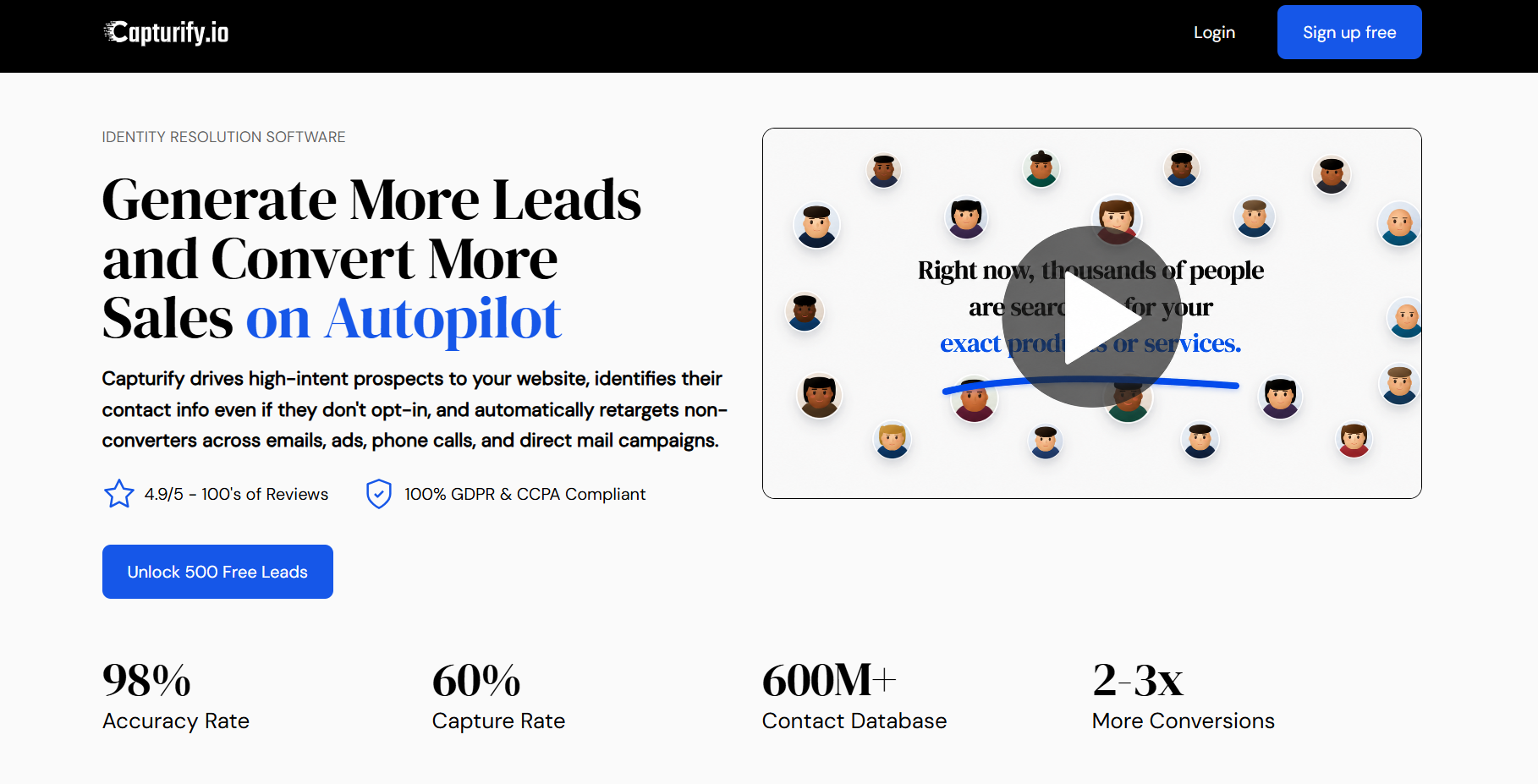
On the other hand, Capturify gives you more ways to act on buyer interest. The platform combines visitor identification with buyer-intent data, then helps you move those prospects into channels you already use, such as paid ads, CRM workflows, direct mail, or email.
For businesses that want to do more than recover missed ecommerce revenue, Capturify gives you a broader path from anonymous interest to active outreach.
If you want to see who is showing interest and start turning more of that demand into leads, start a 14-day trial and get up to 500 free leads.
FAQs About Retention.com vs. Capturify
How much does Retention.com cost?
Retention.com does not publish standard pricing on its website. Costs may vary based on the product, traffic volume, and specific account requirements.
What are the three R's of customer retention?
The three R's of customer retention are commonly described as retention, related sales, and referrals. Retention focuses on keeping customers active, related sales involve encouraging additional purchases, and referrals come from customers bringing new people to the business. The framework gives marketers a simple way to look beyond the first purchase and consider the longer customer relationship.
What's the difference between customer acquisition and retention?
Customer acquisition focuses on bringing new customers into the business, while retention focuses on keeping existing customers engaged and encouraging future purchases. Acquisition may involve channels such as paid ads, search, partnerships, or outbound sales. Retention tends to rely more on customer experience, lifecycle communication, loyalty efforts, and ongoing engagement. Most growing companies use both because new customers create growth while retained customers can improve long-term revenue efficiency.
What are some effective tools for retention marketing?
Retention marketing tools can include email and SMS platforms, customer data platforms, loyalty software, analytics tools, and visitor identification services. Ecommerce brands may also use platforms that help recover abandoned carts or identify shoppers who leave without joining an email list. The right mix depends on your store, audience, and existing marketing stack. Look for tools that integrate with the systems your team already uses and give you a clear way to track engagement, conversions, and revenue.