
Making good decisions gets harder when your database is full of missing fields, old contact details, records with little context, and many other major or minor issues.
B2B data enrichment fills those gaps with additional information about the people and companies you want to reach. Depending on the data enrichment solution you use, you might add contact data, firmographic data, behavioral signals, or other details that make each record more useful.
Better data can support prospecting, segmentation, lead scoring, and plenty of other marketing and sales efforts.
So, which B2B data enrichment tools are worth considering?
In this guide, we’ll explain how enrichment works, compare seven tools, and look at practical ways to use enriched data.
TL;DR
These are the top B2B data enrichment tools in 2026:
- Capturify
- Leadfeeder
- Kaspr
- Cognism
- Breeze Intelligence for HubSpot
- ZoomInfo
- Lusha
What Is B2B Data Enrichment?
B2B data enrichment is the process of adding useful information to existing business records.
You might start with a name and company email, for example. An enrichment process can add information such as a job title or company size. Other platforms may provide company revenue, technographic data, employee count, or intent signals.
The extra context gives sales and marketing teams a clearer picture of each prospect. Marketing teams can create more relevant segments, while sales teams can prioritize accounts that fit their target profile.
Data enrichment can also improve data quality when existing records contain missing or outdated fields. Combined with regular data cleansing, it can help keep CRM data more useful as contacts change roles or companies.
The exact information available depends on the provider, its data coverage, and how frequently it refreshes its database.
What Is a B2B Data Enrichment Tool?
A B2B data enrichment tool adds new information to the records you already have, often without requiring your team to research every contact manually.
Depending on the platform, you may be able to:
- Complete missing fields: Add information such as job titles, contact details, or company data.
- Improve CRM records: Update existing records with fresher information.
- Build richer prospect profiles: Add firmographic or behavioral information for better targeting.
- Connect enrichment to your tech stack: Send enriched records into your CRM, marketing automation platform, or other systems.
Some enrichment tools focus heavily on contact information. Broader platforms can also provide identity resolution, first-party data activation, or intent data.
For larger databases, automated CRM enrichment can save substantial time and make data management easier for revenue teams.
7 Best B2B Data Enrichment Tools You Can Try Today
The right platform depends on what information you already have and what you want to add.
You may need verified contact information, deeper company records, website visitor identification, or broader prospect intelligence. Data coverage can also vary significantly between vendors, so it helps to compare each platform based on your market and workflow.
Here are seven B2B data enrichment tools to consider.
1. Capturify
Capturify combines data enrichment with identity resolution and lead identification.
The platform can identify anonymous website visitors and add information that helps businesses understand who is showing interest. Profiles can include more than 40 data points, giving marketing and sales teams additional context for follow-up and targeting.
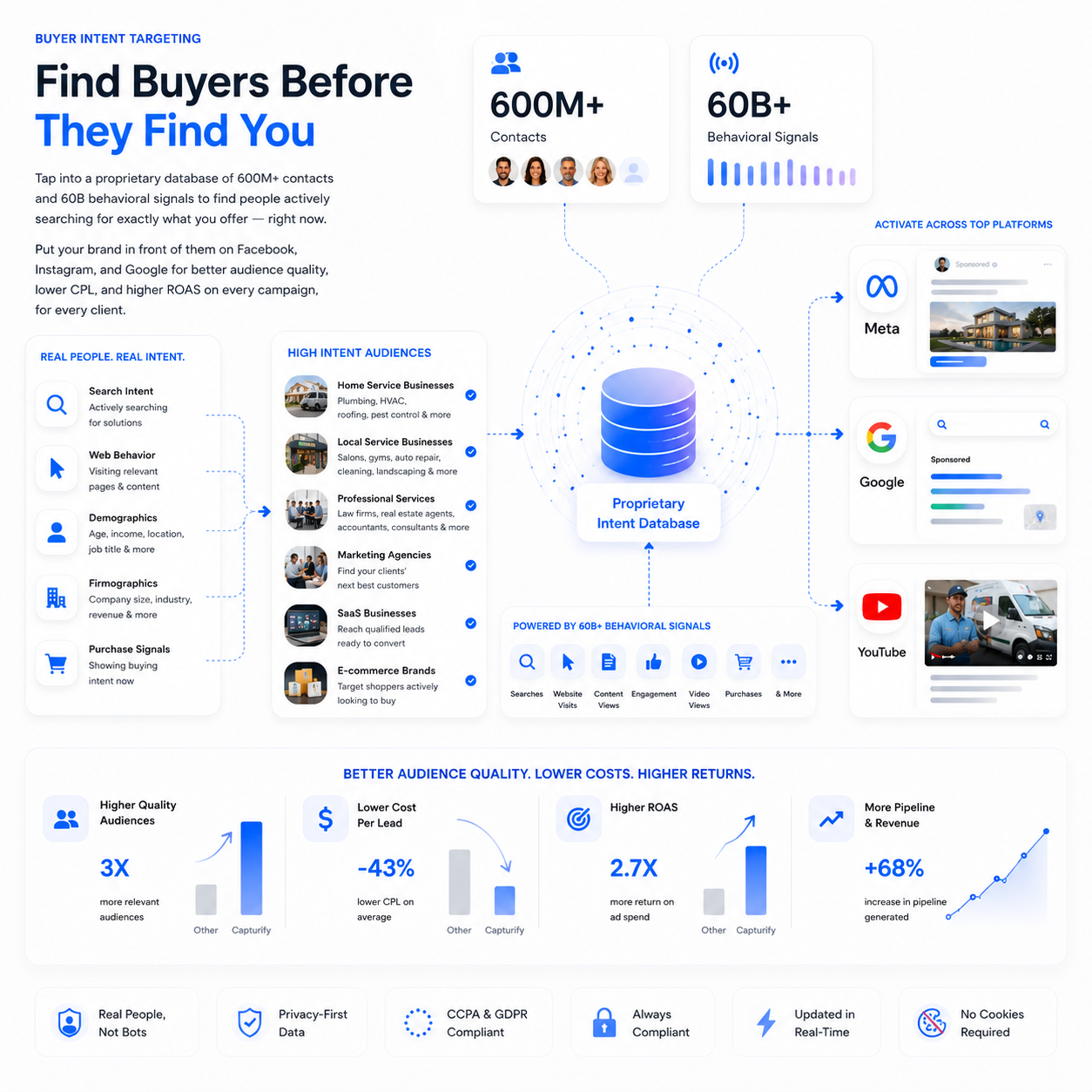
Capturify can also help companies identify anonymous visitors in real time. Businesses can use those profiles for outreach or connect audiences with other parts of their marketing stack.
Its combination of visitor identification and enrichment makes Capturify useful when you want to turn first-party website activity into more complete prospect records.
Best Features
- Detailed visitor profiles: Access more than 40 data points for identified visitors.
- Real-time identification: Reveal information about high-intent leads while interest is still recent.
- Anonymous visitor tracking: Connect previously unknown website visitors with useful identity data.
- Audience activation: Use enriched information to support retargeting campaigns.
- CRM integrations: Connect Capturify with tools your team already uses.
Pros
- Combines enrichment with website visitor identification
- Provides person-level and company-level information
- Supports real-time prospect identification
- Connects with CRM and advertising workflows
- Offers onboarding and ongoing support
Pricing
Capturify pricing is split into three main plans:
- Identify: $97/month. Includes anonymous website visitor identification, 40+ data points per visitor, CRM integrations, and up to 500 lead captures per month.
- Accelerate: $197/month. Adds buyer intent targeting, a 30-day behavioral window, geo-level targeting, and direct Meta and Google Ads integrations.
- Automate: $397/month. Adds AI-personalized email follow-up campaigns and integrations for channels such as phone calls and direct mail.
Quarterly or annual billing options can lower the effective monthly cost, depending on the plan. Capturify also lets customers upgrade, downgrade, or cancel as their needs change.
Sign up today to unlock 500 free leads and see how Capturify fits your workflow.
2. Leadfeeder
Leadfeeder is a website visitor tracking and lead generation tool built mainly around identifying companies that visit B2B websites.
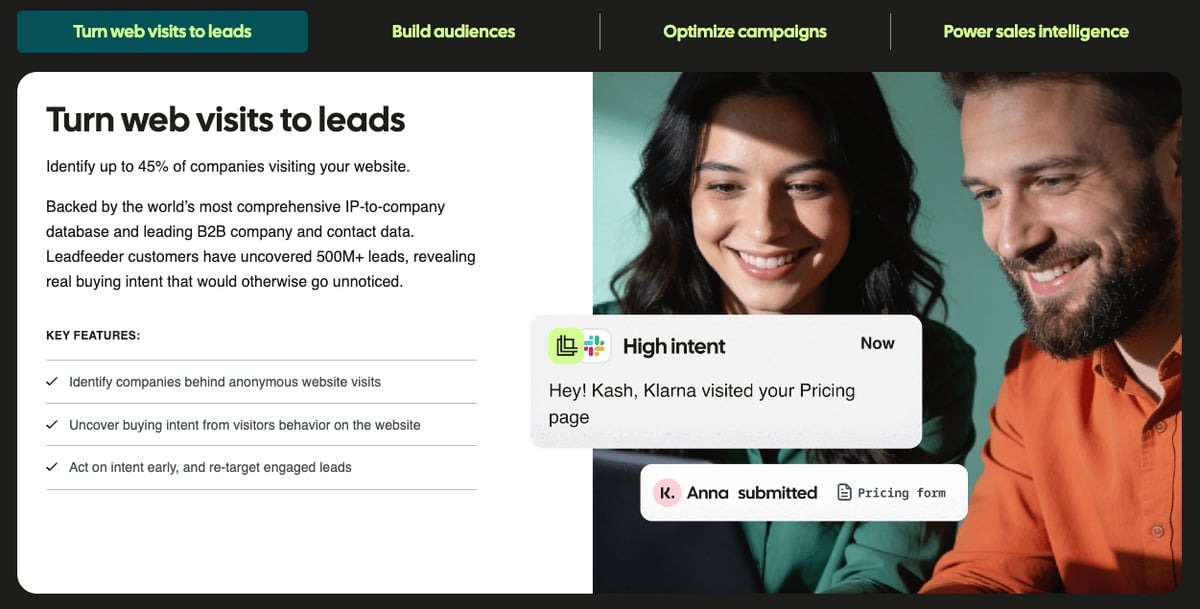
Rather than focusing on person-level identification, Leadfeeder connects anonymous website activity to company records. Sales teams can then review which organizations visited, the pages they viewed, and other engagement information.
For businesses focused on account research, the added company context can make website traffic more useful. Leadfeeder also connects with CRM platforms, allowing teams to send relevant visitor information into their existing workflows.
Key Features
- Company identification: Matches website visitors with their companies.
- Visitor behavior: Shows activity such as page visits to provide additional context.
- CRM integrations: Connects with platforms such as HubSpot and Salesforce.
- Lead scoring: Helps teams prioritize companies based on engagement.
- Notifications: Alerts users when selected accounts return to the site.
Pros
- Focused interface for B2B website visitor tracking
- Connects visitor activity with company information
- Supports lead prioritization
- Integrates with commonly used sales platforms
Pricing
Leadfeeder offers a free plan plus paid monthly options that scale with usage.
- Lite: Includes up to 100 identified companies and seven days of visitor history.
- Discover: From €113/month. Adds visitor identification, alerts, CRM syncing, and outreach features.
- Activate: From €527/month. Adds verified contact data, intent filters, CRM automation, and prospecting tools.
- Scale: From €599/month. Includes higher-volume features and automatic CRM enrichment, but it is billed annually only.
3. Kaspr
Kaspr is a prospecting and lead enrichment platform focused primarily on contact details.
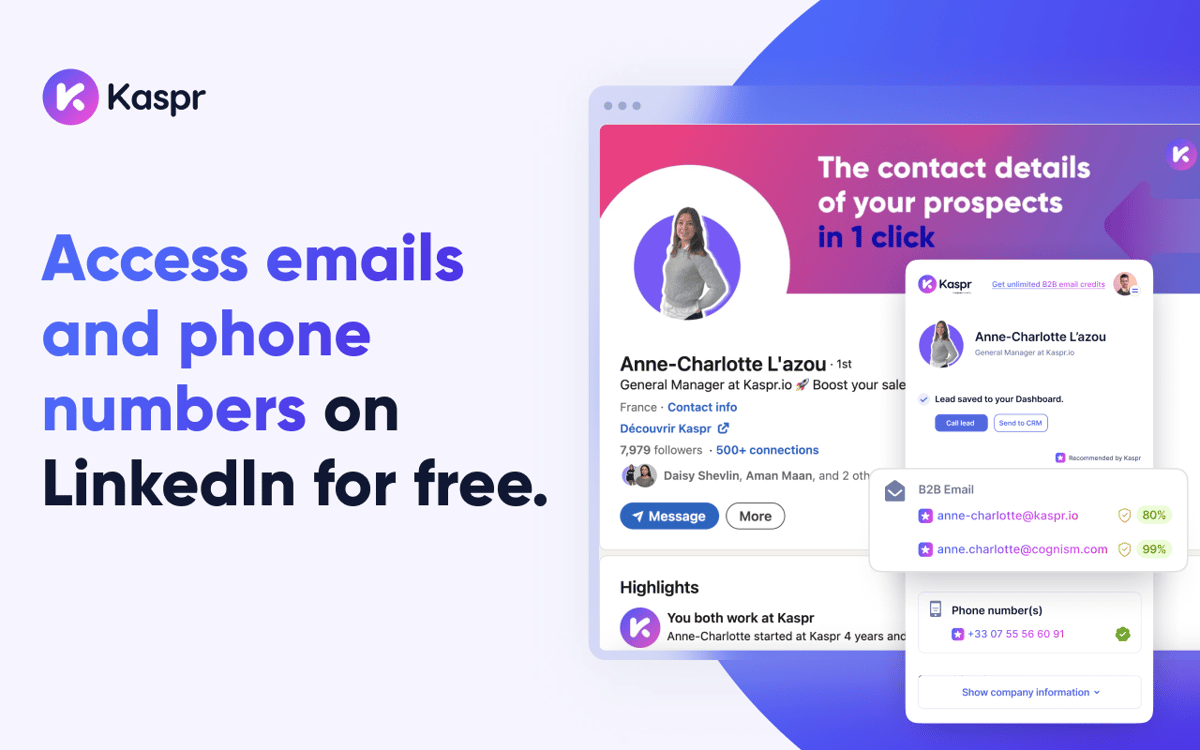
Sales teams can use it to find information such as business email addresses and phone numbers while researching prospects. Its Chrome extension is closely tied to LinkedIn workflows, which can make it useful for representatives who spend a significant amount of time prospecting there.
Kaspr also integrates with popular CRMs, allowing users to move contact data into their existing sales process without repeatedly copying information between systems.
Key Features
- Contact enrichment: Provides business emails and phone numbers.
- LinkedIn prospecting: Lets users access contact details while researching profiles.
- CRM syncing: Connects prospect information to supported CRM platforms.
- Search tools: Helps users narrow prospect lists using selected criteria.
- Contact database: Gives sales teams another source for identifying prospects.
Pros
- Fits naturally into LinkedIn-based prospecting
- Provides direct contact information
- Supports CRM workflows
- Includes options for smaller sales teams
Pricing
Kaspr offers a free plan plus paid monthly options for teams that need more contact data.
- Free: Includes limited email and phone credits, lead management, integrations, and CSV enrichment.
- Starter: $65/month. Adds unlimited B2B email credits, more phone credits, shared credits, and higher export limits.
- Business: $99/month. Adds more contact credits, API access, larger exports, and team controls.
- Enterprise: Custom pricing. Designed for larger teams with higher data and enrichment needs.
4. Cognism
Cognism is a B2B sales intelligence platform that provides company and contact information for prospecting teams.
Its database covers multiple geographic markets, making global coverage one of the main reasons companies consider it. Cognism also places significant emphasis on verified data and compliance, including its Diamond Data phone verification offering.
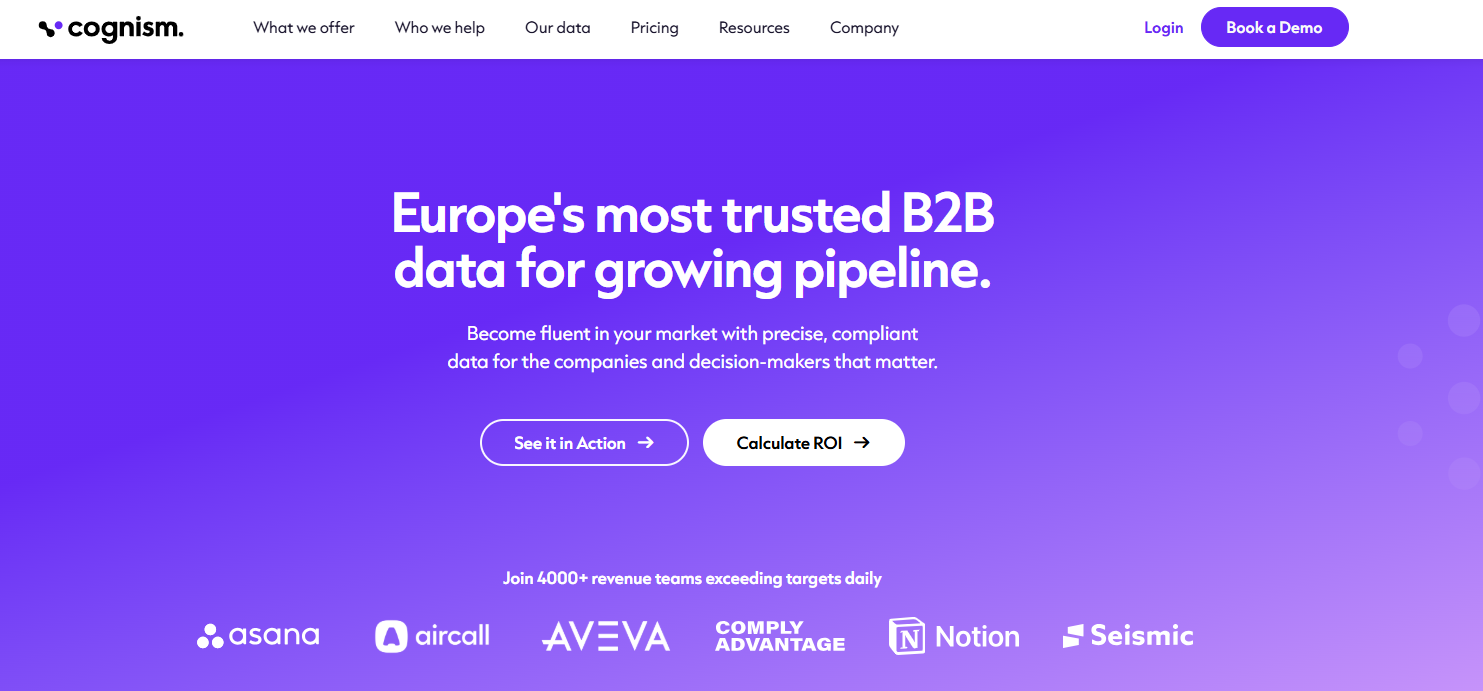
Teams can filter the database using characteristics related to the companies or people they want to reach. Enriched information can then feed prospecting workflows or existing CRM records.
For enterprise sales teams with broader geographic requirements, database reach and phone data may be important comparison points when evaluating Cognism against other data providers.
Key Features
- Contact information: Provides prospect email and phone data.
- Company filters: Supports targeting based on business attributes.
- International database: Covers contacts and companies in multiple regions.
- Diamond Data: Includes phone numbers that Cognism says are manually verified.
- CRM integrations: Connects prospect information with supported sales systems.
Pros
- Broad geographic reach
- Strong focus on phone data
- Useful filtering for prospect research
- Built for larger B2B prospecting workflows
Pricing
Cognism does not publish standard plan prices on its website.
5. Breeze Intelligence for HubSpot
Breeze Intelligence is HubSpot’s data enrichment offering and incorporates capabilities associated with Clearbit.
The product can add company and contact information to records in HubSpot, which can give teams more context without maintaining a separate enrichment workflow.
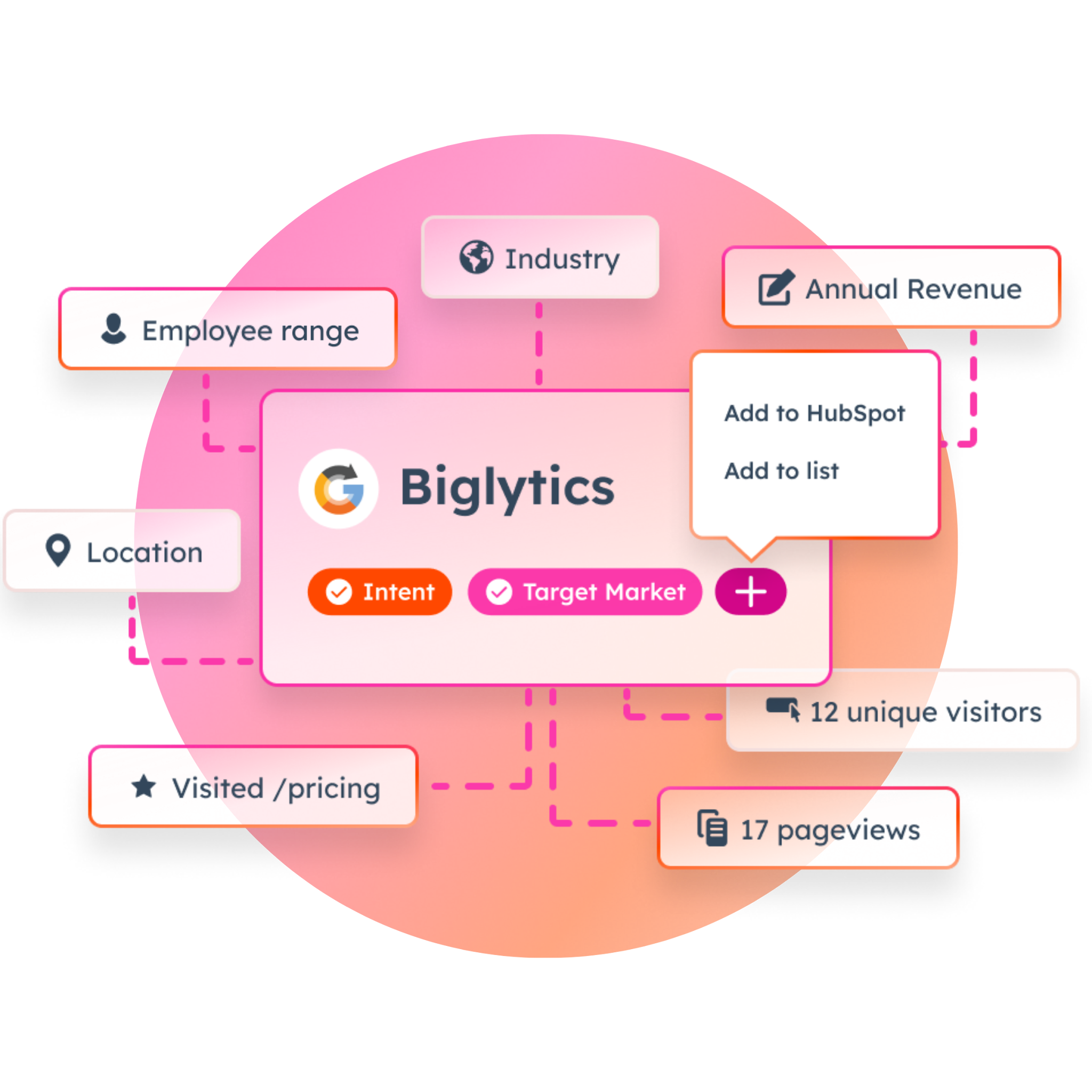
For businesses already using HubSpot, the native connection can be a major advantage. Enriched data lives closer to the marketing and sales workflows that depend on it, reducing the need to move information between disconnected systems.
Breeze Intelligence can also support form shortening and buyer intent use cases within the HubSpot ecosystem.
Key Features
- CRM enrichment: Adds information directly to HubSpot records.
- Company data: Provides business details for lead and account profiles.
- Contact enrichment: Adds available information about individual prospects.
- Form optimization: Uses enrichment data to reduce information visitors need to enter manually.
- Buyer intent: Helps teams identify companies showing relevant website activity.
Pros
- Native fit for HubSpot users
- Connects enrichment with existing CRM workflows
- Supports contact and company enrichment
- Can contribute to marketing automation workflows
Pricing
Breeze Intelligence uses a credit-based pricing model within HubSpot.
Available credits can be applied to enrichment and related features, with required volume depending on how extensively your team uses the tools.
Companies already paying for HubSpot should consider the additional credit cost alongside their existing subscription when comparing it with standalone enrichment tools.
6. ZoomInfo
ZoomInfo is a large B2B intelligence platform built around company information, professional profiles, prospecting data, and sales intelligence.
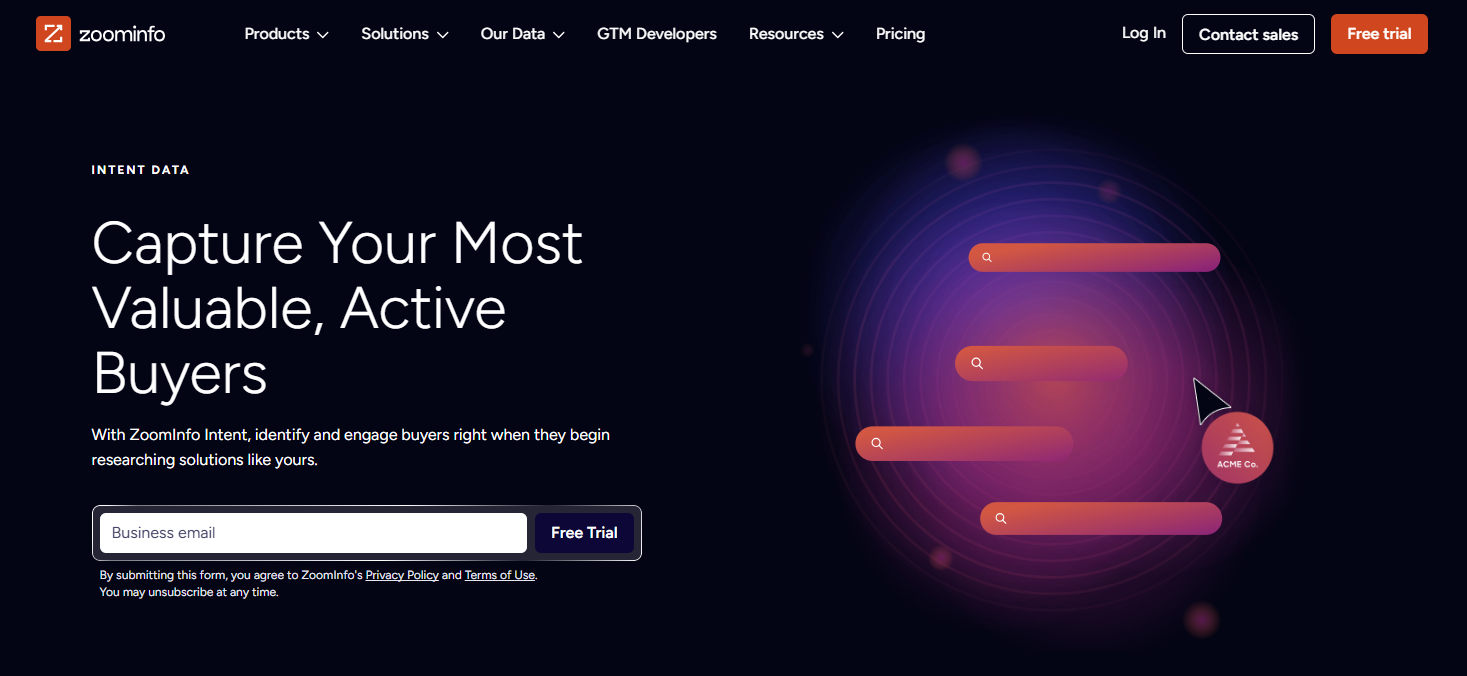
The platform gives revenue teams access to a broad contact database alongside tools for researching target accounts. Depending on the products purchased, users can also work with intent data and signals that indicate potential buying activity.
ZoomInfo is often aimed at organizations that need substantial B2B data coverage and deeper account research capabilities. Enterprise teams can connect its information with sales systems and use it to support outbound prospecting.
Key Features
- Contact database: Provides access to B2B professional and company information.
- Company research: Helps users investigate target accounts.
- Intent signals: Offers information related to potential buying activity.
- Search filters: Supports prospecting based on selected contact or company attributes.
- Integrations: Connects with major CRM and sales platforms.
Pros
- Large B2B database
- Supports detailed company research
- Combines enrichment with prospecting capabilities
- Offers tools for larger revenue organizations
Pricing
ZoomInfo does not publish standard pricing on its website.
7. Lusha
Lusha provides B2B contact and company data for sales teams, recruiters, and other prospecting users.
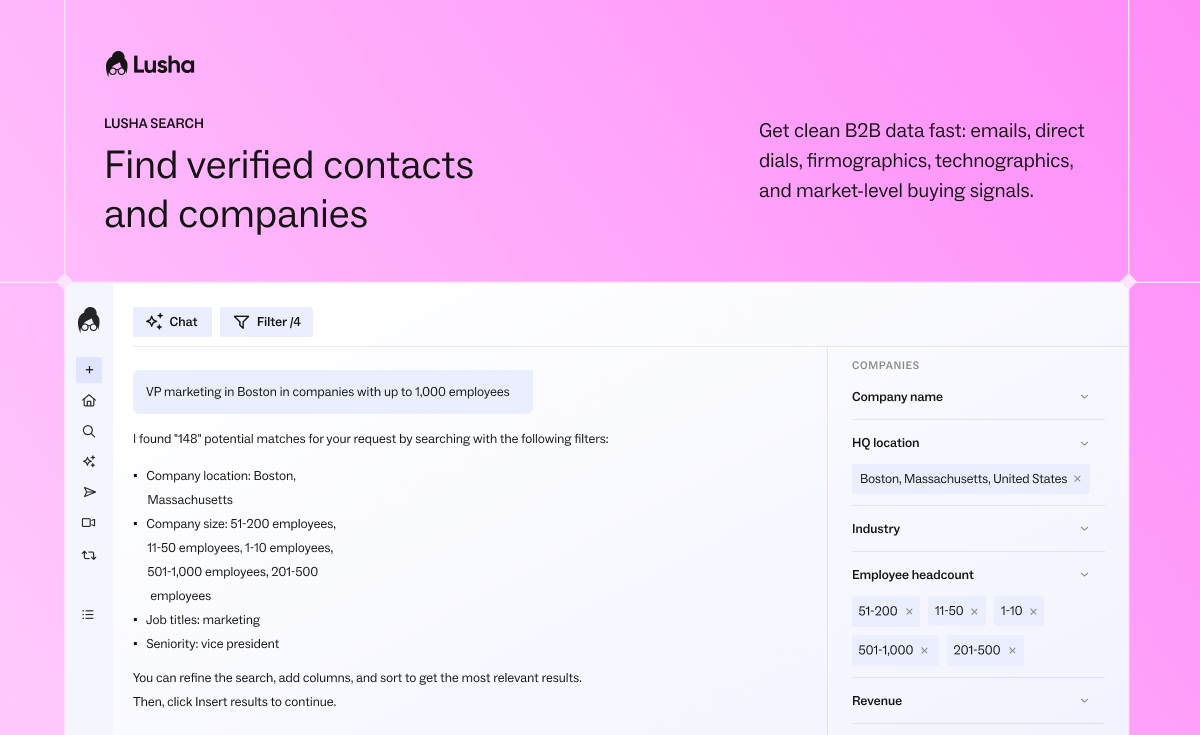
The platform can help users find business email addresses and phone numbers while researching potential contacts. Its Chrome extension makes prospect data accessible during browser-based research, including workflows involving LinkedIn or company websites.
Lusha also offers prospecting filters and integrations for moving data into sales systems. Teams looking for a relatively straightforward contact enrichment tool may find its credit-based model easier to start with than platforms geared toward large enterprise deployments.
Key Features
- Chrome extension: Access prospect information while browsing supported websites.
- Contact data: Provides business email addresses and phone numbers.
- Company information: Adds context to prospect profiles.
- CRM integrations: Sends information into supported sales systems.
- Prospecting filters: Helps users narrow their search for relevant contacts.
Pros
- Simple prospecting workflow
- Offers a free plan
- Useful for contact-focused enrichment
- Supports browser-based research
- Scales into paid team plans
Pricing
Lusha offers a free plan with limited credits and access to core prospecting features.
Paid plans increase credit allowances and can add capabilities such as CSV enrichment, team usage features, or larger contact reveal limits.
Custom plans are available for organizations with greater data requirements.
Common Use Cases for B2B Data Enrichment
Useful enrichment goes far beyond filling blank fields in a spreadsheet.
Businesses can use enriched data to improve lead prioritization, clean existing records, build better audiences, and give teams more context before outreach.
The best use case depends on the data you already collect and the decisions you want your team to make faster.
Here are several common ways B2B companies put enrichment data to work.
Launch More Personalized Marketing Campaigns
Generic outreach becomes much harder to justify when you already have information that can make your message more relevant.
Enriched customer data can tell you useful things about a prospect, such as their role or the type of company they work for. Marketing teams can use those attributes to adjust messaging around the audience they are trying to reach.
A finance executive at a large company, for example, may care about different outcomes from an early-stage founder.
Marketing automation can then use enriched fields to place contacts into appropriate workflows or audience segments.
Better context gives you more room to personalize your campaign without requiring someone to research every recipient manually.
Score and Prioritize Leads Faster
More leads do not automatically create a stronger sales pipeline.
Lead enrichment gives sales teams additional information they can use when deciding which prospects deserve attention first. Firmographic data may show how closely an account fits your ideal customer profile, while behavioral signals can add clues about current interest.
A target account that fits your preferred company profile and recently visited a high-intent page may deserve faster follow-up, for example.
Intent signals can also be combined with CRM data or first-party activity to refine lead scoring.
A stronger data foundation gives your team a more informed starting point for prioritization instead of treating every lead as equally valuable.
Segment Your Customers for Better Targeting
Enriched records give you more ways to create useful audience segments.
You can group contacts based on attributes relevant to your business, such as company size or role. Segmentation can also incorporate behavioral information when your enrichment platform supports it.
More detailed segments help you keep messaging relevant without creating an entirely separate campaign for every lead.
A company targeting multiple customer profiles, for example, could use enriched company records to route smaller organizations into one campaign and larger accounts into another.
Strong data accuracy is important here. Outdated fields can place contacts in the wrong audience, so enrichment works best when records are refreshed regularly.
Clean Up and Enrich CRM Records
CRM databases naturally become outdated as people change positions, businesses grow, and contact information changes.
Data cleansing and enrichment can update existing records, fill missing fields, and correct information that is no longer useful.
Keeping data fresh can improve everything that relies on your CRM, from segmentation to sales outreach. Clean data also reduces the amount of manual research representatives need to do before contacting a prospect.
Some companies enrich records on a schedule. Larger teams may use ongoing or automated CRM enrichment as new contacts enter the database.
For high data volume, an automated process can be much easier to manage than periodic manual cleanup.
Power Account-Based Marketing
Account-based marketing depends heavily on knowing which companies you want to reach and understanding enough about them to create relevant campaigns.
B2B data enrichment can add information such as company revenue, employee count, or technology usage to a target account.
Those details make account research faster and help your team decide how an organization fits your ideal customer profile.
Behavioral or intent data can add another layer of context. A company that fits your target criteria and is showing recent interest may deserve a different level of attention from an account with no visible activity.
Enrichment can also help keep company records current as accounts change over time.
Support Sales Prospecting
Sales representatives often spend significant time researching prospects before making contact.
Enrichment tools can reduce part of that workload by adding details directly to a prospect record. Depending on the provider, enriched records might contain contact information or useful company attributes.
Representatives can use the added context to identify prospects who fit their criteria before beginning outreach.
Tools with CRM integrations can also push information into the systems sales teams already use, reducing repetitive data entry.
For organizations using multiple data providers, waterfall enrichment may help increase coverage by checking more than one source when a field cannot be found through the first provider.
Unlock Your Data's Potential With Capturify
Capturify helps businesses connect visitor identification, B2B data, and activation in one platform.
You can identify website visitors, build richer prospect profiles, and use recent buyer activity to find people showing interest in relevant products or services.
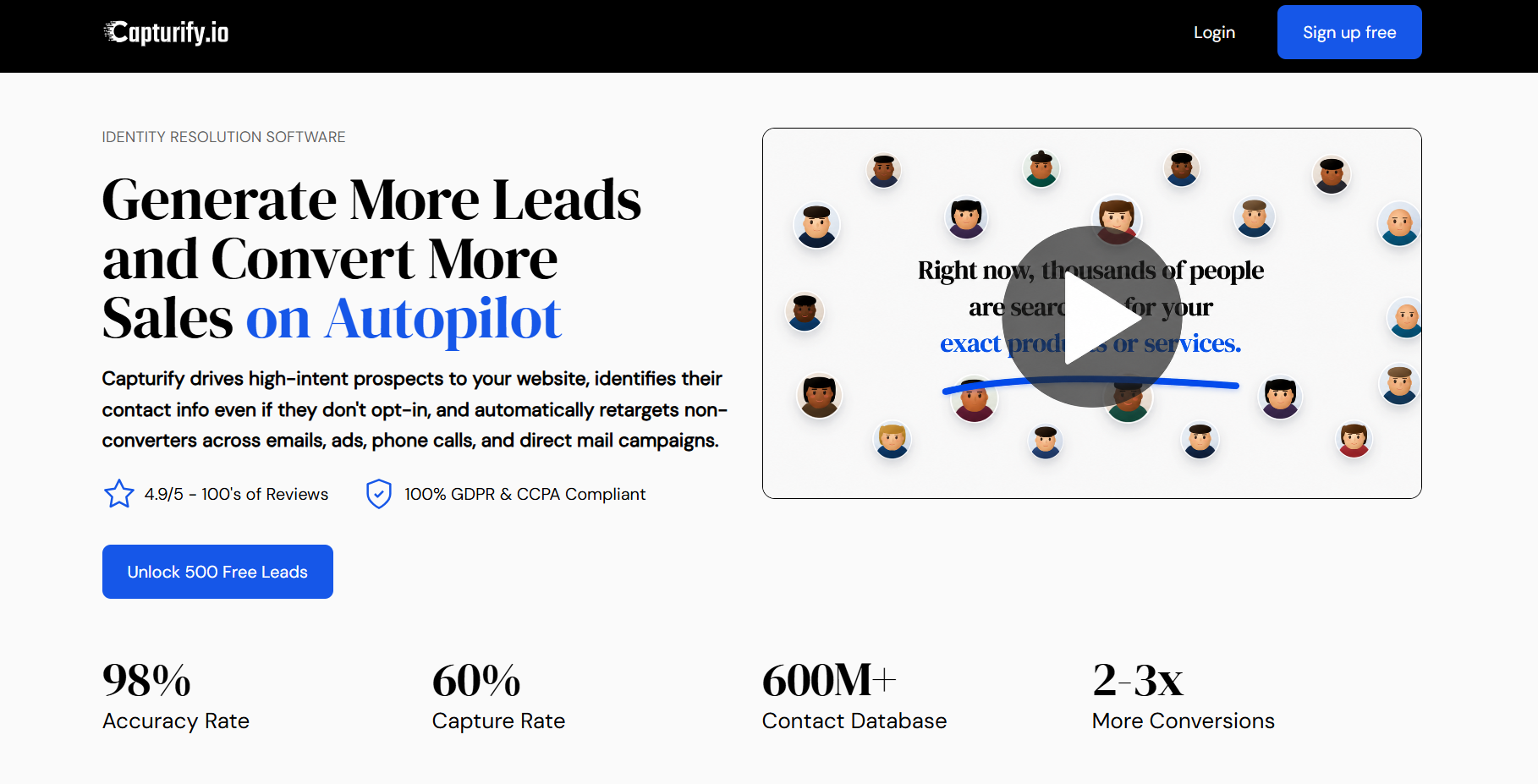
Capturify can help you:
- Identify anonymous website visitors at the person and company level
- Access more than 40 data points for identified profiles
- Find high-intent prospects based on recent behavioral activity
- Connect enriched information with CRM and marketing workflows
- Activate audiences through channels such as paid advertising or email lists
The platform can be useful when your enrichment strategy starts with first-party website activity but extends into prospecting and audience activation.
Want to see how the data fits your business?
Get started with 500 free leads and start turning more buyer activity into usable prospect data.
FAQs About B2B Data Enrichment
What are the best data enrichment tools for B2B companies?
The best B2B data enrichment tools depend on what you need to add to your records. Capturify combines visitor identification with enrichment and intent data, while platforms such as Cognism, ZoomInfo, Kaspr, and Lusha focus heavily on prospect or contact data. HubSpot Breeze Intelligence can be convenient for teams already working inside HubSpot. Compare data coverage, accuracy, integrations, pricing, and the type of information each platform provides before choosing one.
What does B2B data mean?
B2B data is information about businesses and the people who work for them. Company data can include details such as industry, size, revenue, or technologies used. Contact-level data may include a person's role, business email, or phone number. Businesses use B2B data for activities such as prospecting, segmentation, lead scoring, account research, and market analysis.
What is an example of data enrichment?
Suppose your CRM contains a prospect's name and business email but very little else. A data enrichment tool could use the company domain or other available information to add the person's job title and relevant company details. Your team now has a more complete record without researching each field manually. Enrichment can also update existing information when records have become stale.
How does B2B data enrichment work?
The data enrichment process starts with information you already have, such as an email address, name, or company domain. An enrichment provider matches the record against its own data sources and returns additional fields when a reliable match is available. Those fields can then be added to your CRM, data warehouse, or another system. Some enrichment tools run automatically as new records enter your database, while others support bulk enrichment for existing data.